
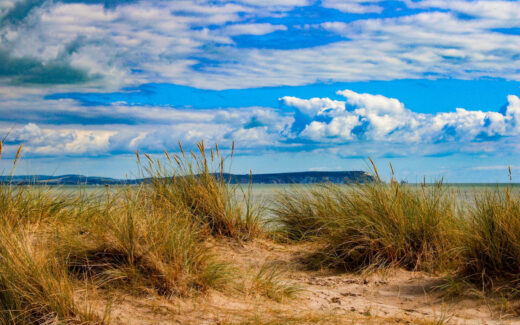
If you find yourself on the stunning south coast of England, near Bournemouth, and fancy a day out that’s more than just sun, sea, and sand, I’ve got the perfect spot for you. Just a stone’s throw from the bustling town centre, Hengistbury Head offers a wild escape – a ruggedly beautiful headland that’s a captivating blend of ancient history, diverse wildlife, and some of the most spectacular views in Dorset.

It’s one of those places you can visit time and time again and always discover something new. It has a unique ability to feel both epic and intimate at the same time. Whether you’re a history buff keen to walk through millennia, a nature lover with binoculars at the ready, or just someone looking for a glorious walk to clear your head, Hengistbury Head delivers in spades.

A Walk Through 12,000 Years of History
One of the most mind-boggling things about Hengistbury Head is the sheer depth of its history. This isn’t just a nature reserve; it’s a nationally important archaeological site, a scheduled Ancient Monument where the story of human settlement is written into the very landscape. People have been living, working, and trading here for over 12,000 years!

As you walk the paths, you’re treading in the footsteps of our ancestors. Archaeologists have found evidence of Stone Age hunters setting up camp here some 14,000 years ago, making it one of the most significant sites from that period in the country. Later, during the Bronze Age, the headland was a sacred place for burials. Just outside the modern-day Visitor Centre, a barrow was excavated to reveal the cremated remains of a high-status young woman, buried with precious items for her journey into the afterlife.

But it was during the Iron Age, around 700 BC, that Hengistbury truly came into its own. It became a bustling and vital port, arguably the most important in Britain for trading with the continent. You can still see the impressive defensive ditches, known as the “Double Dykes,” that were dug to protect the thriving settlement. Imagine the scene: merchants arriving from Gaul, their ships laden with wine, figs, and glass, trading for British iron, lead, and bronze. It’s truly humbling to stand there, feel the sea breeze, and imagine what life was like all those centuries ago.

A Paradise for Wildlife Watchers
Beyond its incredible history, Hengistbury Head is an absolute haven for wildlife. It boasts an incredible mosaic of habitats packed into one peninsula – from windswept heathland and ancient woodland to shimmering saltmarsh and tranquil freshwater ponds. This diversity means it’s home to a staggering array of creatures, some of which are nationally rare.

The reserve is a birdwatcher’s dream, with over 300 species recorded here throughout the year, thanks to its prime position on migration routes. Keep an eye out for the elusive Dartford warbler flitting among the purple heather and yellow gorse. In the reedbeds, you might hear the distinctive call of a Cetti’s warbler. The air buzzes with countless species of butterflies and dragonflies in the warmer months – see if you can spot the nationally scarce Small Red Damselfly near the Quarry Pond.

You might even spot one of the resident wild horses or a herd of hardy cattle, calmly grazing as they play a vital role in managing the vegetation through conservation grazing. And listen out on a spring evening for the incredibly loud, rattling call of the rare Natterjack toad, a protected species that thrives in the headland’s sandy pools. The on-site webcams, often streaming live from nests, offer an even more intimate glimpse into the lives of the local wildlife.
The Climb to the Top: Views You Won’t Forget
A trip to Hengistbury isn’t complete without a walk to the summit of Warren Hill. It might get your heart pumping a little, but the reward is immense. From the top, you’re treated to a breathtaking 360-degree panorama that changes dramatically with the light and the seasons.

Look east, and you’ll see the shimmering waters of Christchurch Harbour, a paradise for sailors and paddleboarders. Beyond it stands the magnificent Christchurch Priory, a landmark for over 900 years, and the golden, sandy stretch of Mudeford Sandbank. Gaze south across the vast expanse of the English Channel, and on a clear day, the chalky cliffs of the Isle of Wight seem just a stone’s throw away. To the west, the view stretches along the coastline past the beaches of Southbourne and Bournemouth and towards the distant silhouettes of the Purbeck hills. Pro tip: make the effort to be here for sunrise or sunset. Watching the sky explode with colour over the sea is a truly unforgettable experience.

The Famous Land Train and Mudeford Sandbank
If you’re not up for the full walk to the end of the spit, or are visiting with little ones, or just fancy a bit of nostalgic fun, hop on the charming land train. It’s been trundling back and forth between the Hiker Café and Mudeford Sandbank since 1968 and offers a gentle, scenic ride along the harbour’s edge.

When you get there, you’ll find a beautiful sandy beach and a world-famous collection of colourful beach huts. But these aren’t just any beach huts – they are some of the most sought-after (and expensive!) in the country, with some fetching prices higher than a house elsewhere. It’s a lovely spot to grab an ice cream, watch the little ferry bob across the water to Mudeford Quay, and soak up the unique and timeless seaside atmosphere.

Know Before You Go
- Getting There: There’s a large pay-and-display car park at the main entrance (postcode BH6 4EN), but it gets very busy, especially on sunny weekends, so arrive early. You can also get here easily by bike or on foot along the beautiful promenade from Southbourne.
- Visitor Centre: It’s well worth popping into the superb, eco-friendly Visitor Centre near the car park before you start your walk. It’s free to enter and has fantastic, interactive displays about the headland’s unique geology, archaeology, and wildlife. The staff are incredibly knowledgeable and friendly.
- Refreshments: The Hiker Café near the car park is a local institution, perfect for a pre-walk coffee or a post-walk slice of cake. At the other end, on Mudeford Sandbank, you’ll find the Beach House Café, which serves everything from fish and chips to wood-fired pizzas.
- Be Prepared: You’ll be doing a fair bit of walking, so sensible footwear is a must! The headland is very exposed, so even on a sunny day, a windproof jacket is a good idea. Don’t forget your camera and a pair of binoculars if you have them.

Hengistbury Head truly is a special place. It’s a powerful reminder of the ancient past and a vibrant celebration of the natural world, all wrapped up in one stunning coastal package. It’s a place to walk, to learn, to relax, and to be inspired. Don’t miss it.

Leave a Reply
You must be logged in to post a comment.