

In Beaulieu – 13 miles south-west of Southampton – you’ll find a motor museum that fans of two, three, or four wheels will love. The Beaulieu museum was founded in 1952 on the beautiful estate of the Montagu family. An ancestor of the museum’s founders, Lord John Montagu, was himself a pioneer of British motoring, building cars that changed its very face.
LORD JOHN MONTAGU – A PIONEER AND PROPHET OF MOTORING

Born in 1866, the young lord was no stranger to adventure. At the age of 15, he slipped out of the palace one morning, marched to Buckler’s Hard, and single-handedly jumped into a dinghy to circumnavigate the Isle of Wight. Having studied the winds and tides beforehand, he was able to return home the same day before midnight. This event instilled in him a long-lasting love for sea voyages, which culminated in his victory at the British International Trophy in 1905 in the boat Napier II. In 1885, he began studying engineering at Oxford and then apprenticed at the Railway’s Nine Elms works, where he learned about the construction of steam engines.
Despite his work on the railway, his interests were turning towards the fledgling world of motoring. In 1899, alongside Charles Rolls, he competed in the Paris-Ostend rally. John finished the race in third place in his Coventry Daimler. His medal was the first in the history of British rally drivers. The Lord also contributed to motorising the Royal Family when he invited the Prince of Wales, Edward VII, for a drive in his Daimler. Shortly thereafter, the Prince ordered a similar vehicle for himself, much to the consternation of royal officials.
In 1903, while in Parliament, he proposed increasing the speed limit from 12 to 20 miles per hour. He was also a promoter of building a high-speed road from London to Liverpool. Although funds could not be raised for it at the time, his concept was later used, and in 1958, a motorway connecting the two cities was built. In 1902, John founded one of the first motoring magazines: “The Car Illustrated”. Writing for it (as well as for “The Observer”), he accurately predicted many motoring novelties and innovations that later became reality.
In 1911, Rolls-Royce wished to design a new emblem for their luxury cars. John was asked for his suggestions on the matter. He proposed Charles Sykes for the role. Thanks to him, we came to know one of the most recognisable symbols in motoring – the Spirit of Ecstasy – which adorns Rolls-Royce models to this day.
“ONE DAY WE SHALL SIT IN CHARIOTS, RACING AT INCREDIBLE SPEEDS, WITHOUT THE HELP OF ANY ANIMALS” – ROGER BACON, 13TH CENTURY
The dream of building self-propelled vehicles inspired the minds of inventors for many centuries. However, before the invention of the internal combustion engine, all prototypes were unreliable and impractical, such as the Chinese sail-powered cars from centuries ago. This idea was also attempted in Europe, with prototypes appearing in the Netherlands around 1600. Two hundred years later, an attempt was made to travel this way from Bristol to London, but as is the case with sailboats, everything depends on the direction of the wind.
In 1769, the Frenchman Nicolas Cugnot built the first large, steam-powered vehicle. It was intended for use by the French army. However, it was terribly slow and difficult to steer. After the prototype crashed into a wall, the army lost interest in it. By 1830, steam engines had evolved, and several factories were even producing such vehicles. However, by 1859, interest in these solutions had waned when the first practical, two-stroke internal combustion engine was presented. Surprisingly, it was not powered by liquid fuel, but by gas. This engine was extremely inefficient, but its advantages were recognised by Nicolaus Otto, who used it as a basis to build the first four-stroke engine.
From that point on, the development of motoring gathered pace. Two German engineers were instrumental in this: Karl Benz and Gottlieb Daimler. It was Benz who concluded that liquid fuel was the future of internal combustion engines. In 1885, his vehicle was ready to drive and was technically far ahead of other contemporary vehicles. The Daimler-Benz duo was soon joined by Wilhelm Maybach, and for many years, this trio dictated motoring trends. Benz was responsible for the design of the vehicles, while Daimler and Maybach worked on modernising the engines. It was Maybach who invented the gear transmission and the carburettor with a float and needle, which for many years supplied engines with petrol, until the invention of the fuel injection system.
THE FIRST DRIVERS – REAL TOUGH GUYS
Today, to set off on a journey, we simply get in the car, turn the key, and go. For the first drivers, however, every journey was a great adventure, full of uncertainty. In those days, there were hardly any female drivers, as many dangers awaited on the road. The cars were extremely unreliable, and if one stalled, starting it with a crank handle could end in a dislocated shoulder or a broken arm. On top of that, it required considerable strength. The ride comfort also left much to be desired. The first cars had no suspension at all – later, leaf springs appeared, which were also fitted to, among others, the Polonez, the ‘Maluch’, and horse-drawn carriages.
Anyone who has driven one of these vehicles knows the level of comfort they provide. Combined with the lack of asphalt roads and tyres made of solid rubber, the driving experience was incredible. What’s more, the first wheels were wooden and easily broke on potholes, which, combined with the usually open bodywork and brakes of tragic inefficiency, could result in passengers being seriously knocked about.
THE BEGINNINGS OF BRITISH MOTORING
The first drivers of motor cars did not have an easy life in the United Kingdom. In 1865, the speed limit was 2 miles per hour in built-up areas and 4 mph outside them. Policemen enforced this law very scrupulously, and most judges were staunch opponents of motoring. Additionally, the ‘Locomotive Acts’ required a person carrying a red flag to run 50 metres ahead of every mechanical vehicle, warning other road users of its approach. It was not until 1896 that the speed limit was increased to 12 mph.
TIME TO BEGIN THE TOUR OF THE BEAULIEU MUSEUM
The years shown in brackets are the production date of the specific exhibit, not the start of production for the model.
19TH CENTURY
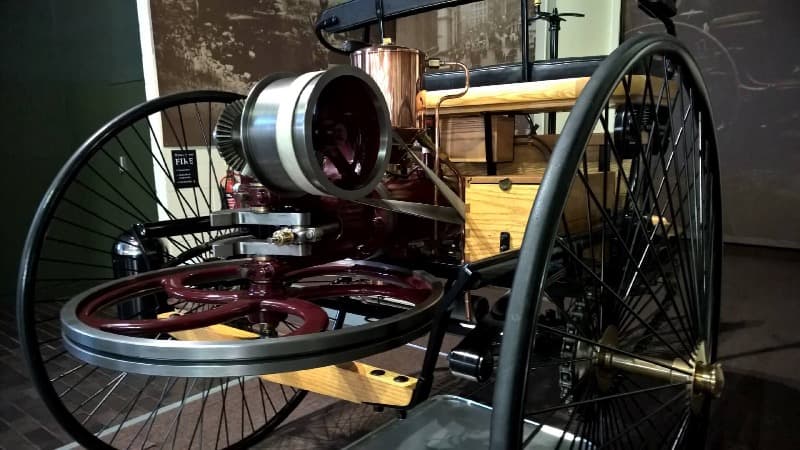
Benz Patent-Motorwagen (1886) – Our journey through time should begin with a look at the three-wheeled prototype, the Benz Patent-Motorwagen from 1886. This vehicle impresses with its quality of workmanship and technical solutions. The single-cylinder, 954cc engine was water-cooled and had side valves. The drive was transmitted via a belt and chain and allowed it to reach 9 mph.

“Knight” (1895) was built by John Henry Knight. It is one of the first petrol-powered vehicles in British history. Originally built as a three-wheeler, it was later converted into a four-wheeled vehicle; it is the four-wheeled version that is in the Beaulieu motor museum. While driving this vehicle, John was fined 5 shillings for driving without the required licence. The vehicle reaches a speed of 8 mph – twice what the regulations allowed at the time. John had previously created steam engines and vehicles but created only this single petrol-powered vehicle.

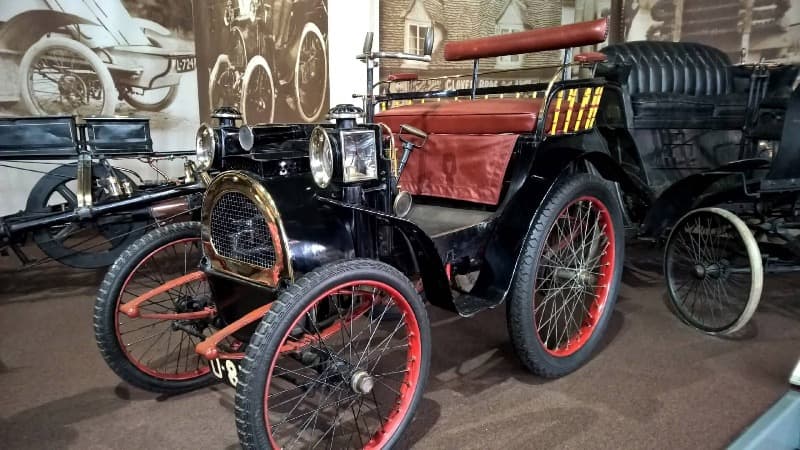
Renault 1¾ hp (1899) was the first to place the engine at the front. This tiny (273 cc), single-cylinder motor, manufactured by De Dion-Bouton, with a power output of 1.75 hp, allowed the car to accelerate to what was then a dizzying speed of 31 mph, via a three-speed gearbox.
A Trip Through Time at the Beaulieu Motor Museum: The Edwardian Era (1900-1919)
A visit to the National Motor Museum at Beaulieu is a journey back to the very dawn of motoring. Here are some of the incredible pioneers from the first two decades of the 20th century.
The Pioneers: 1900 – 1919
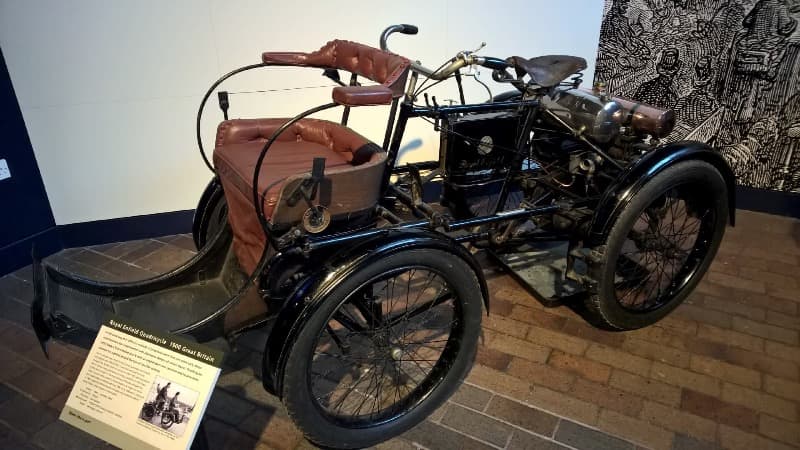
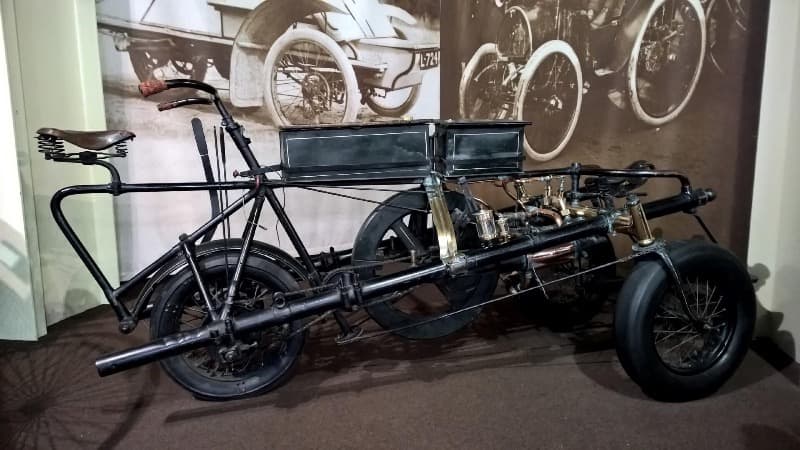
Royal Enfield Quadricycle (1900) – It’s hard to really call this a ‘car’ in the modern sense. It’s more like a curious blend of bicycle handlebars and saddle, a quad bike, and a petrol-powered rickshaw.
- Engine: 1-cylinder, 244 cc
- Top Speed: 30 mph
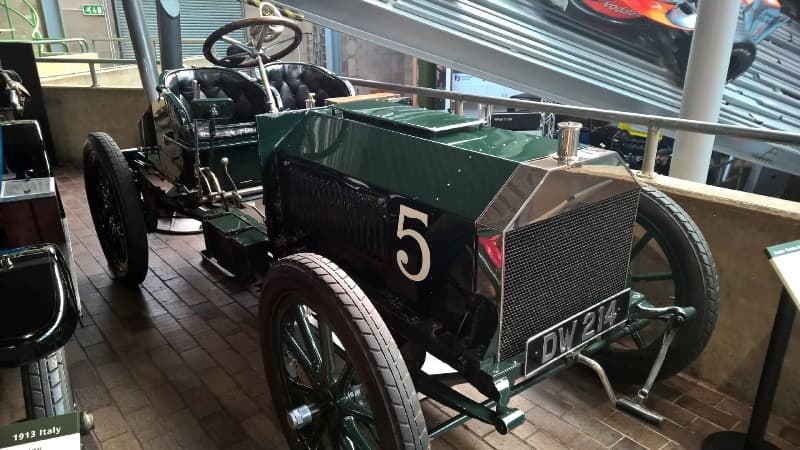
Napier Gordon Bennett (1903) – This is the oldest surviving, all-British racing car. Thanks to the Beaulieu Motor Museum, you can admire it in all its glory. During the 1903 Gordon Bennett Cup race in Ireland, it crashed on the very first lap. Thankfully, the driver, Charles Jarrott, and his mechanic walked away with only minor injuries. A year later, during the qualifiers for the Isle of Man race, driver W.T. Clifford Earp crashed it again.
- Engine: 4-cylinder, 7708 cc
- Top Speed: 75 mph
Daimler 22hp (1903) – Stylistically and technically, this car still has one foot firmly in the 19th century. Drive was delivered to the rear axle via a chain, and its 4-cylinder engine was cooled by an old-fashioned tubular radiator that took up a great deal of space. And as for a roof? You can forget it.
- Engine: 4-cylinder, 4503 cc
- Top Speed: 45 mph
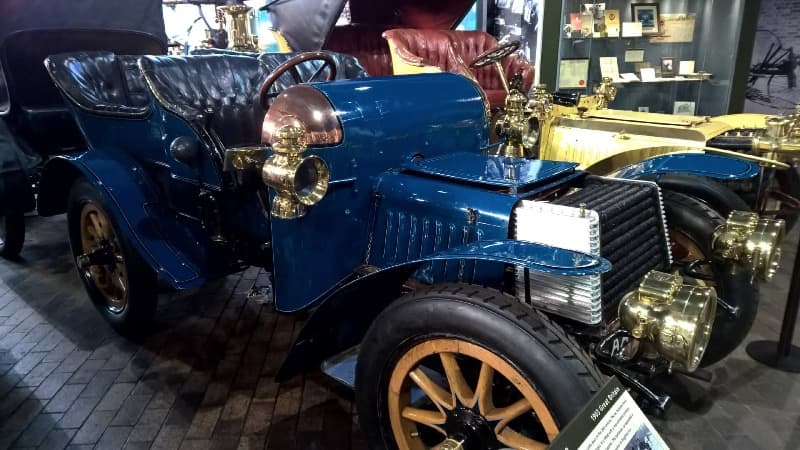
De Dietrich 24hp (1903) – Much like the Daimler, this car used a chain to drive the rear wheels. The rear bench featured a folding canopy, and the quality of the quilted leather seats is simply breathtaking. A slightly modified version with the same engine was introduced in 1904.
- Engine: 4-cylinder, 5428 cc
- Top Speed: 50 mph
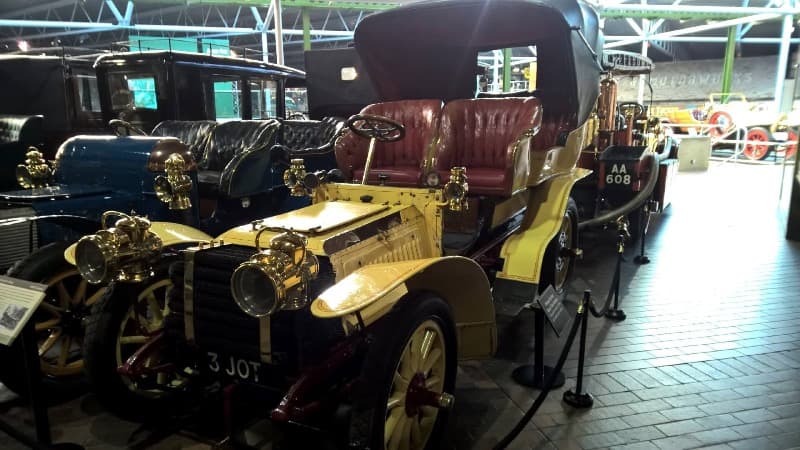
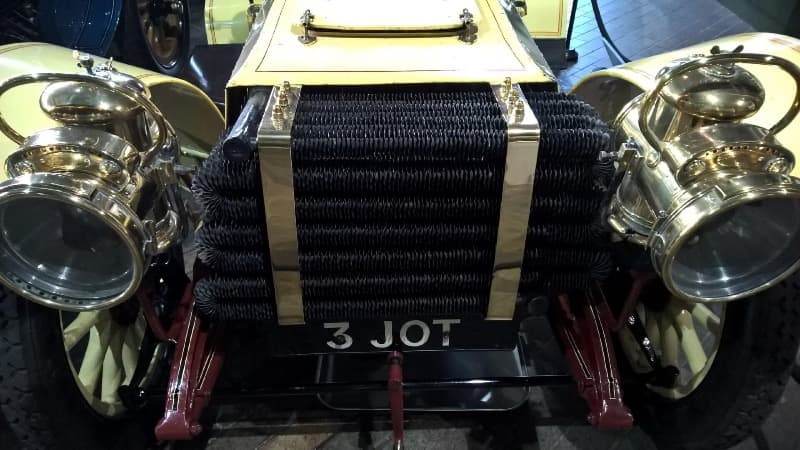
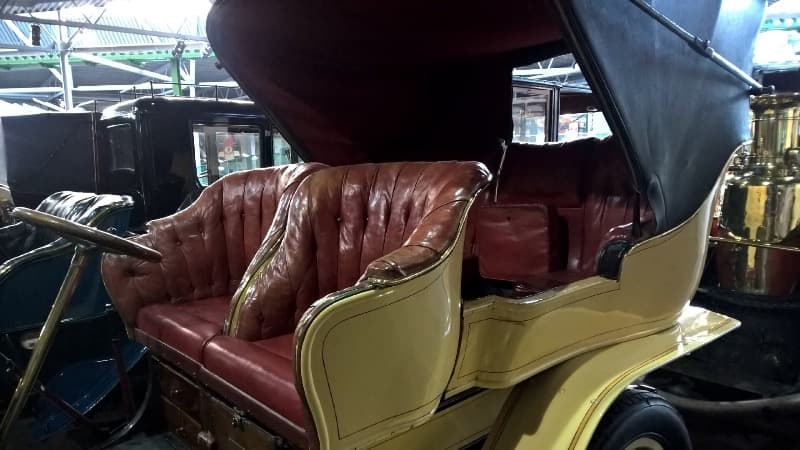
De Dion Bouton 6hp (1903) – This is one of the first five cars ever acquired for the museum. Lord Montagu found it abandoned behind a house and brought it to Beaulieu to honour his ancestor, John Montagu, a motoring pioneer. Its small, single-cylinder engine could get the car up to a respectable 30 mph.
- Engine: 1-cylinder, 698 cc
- Top Speed: 30 mph
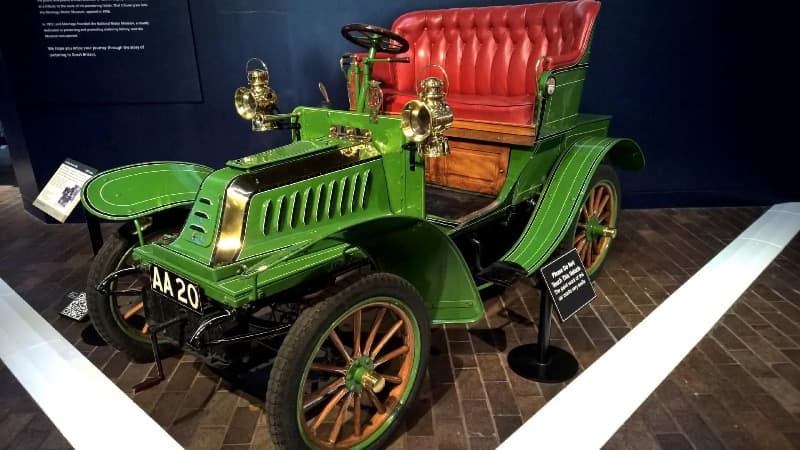
Mercedes 60hp (1903) – A true monster of its day, this Mercedes was fitted with a colossal 9.2-litre, 4-cylinder engine. This powerhouse could propel the car to an incredible 75 mph. Drive was sent to the rear axle by a heavy-duty chain, and the cabin was a bewildering array of switches and valves, looking as if the engineers had decided to move half the engine inside with the driver.
- Engine: 4-cylinder, 9236 cc
- Top Speed: 75 mph
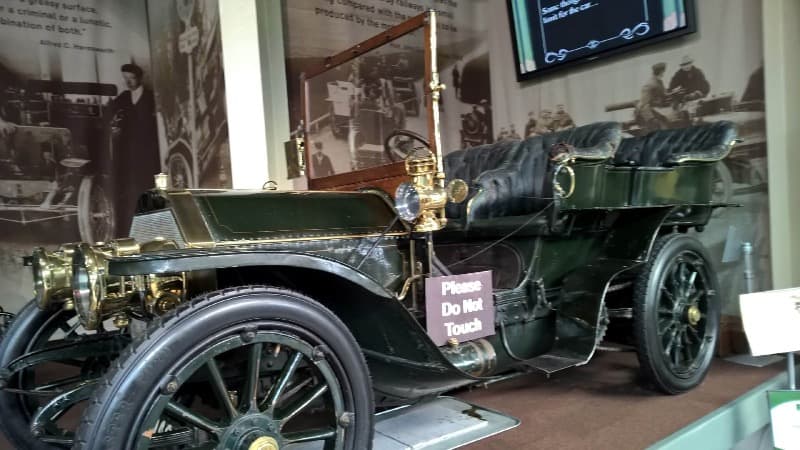
Pope-Tribune 6hp (1904) – This is a small, affordable American runabout, equipped with a single-cylinder engine. Its manufacturer was a Civil War veteran, Colonel Albert Augustus Pope, who originally started a bicycle factory in 1876.
- Engine: 1-cylinder, 798 cc
- Top Speed: 25 mph
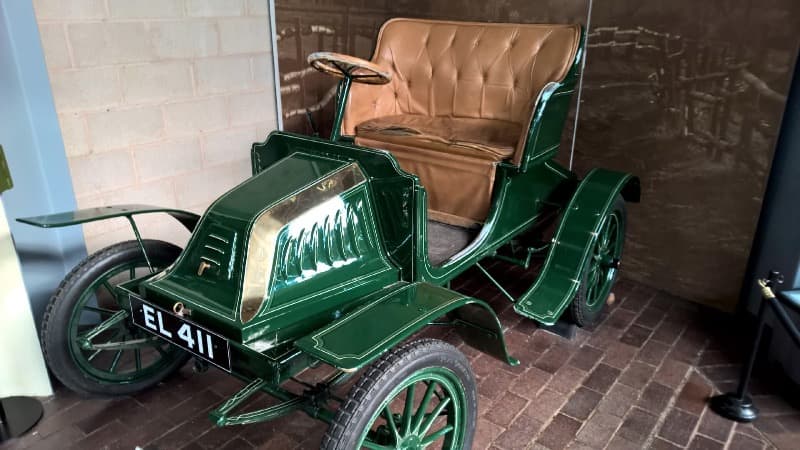
Renault 14/20hp (1906) – A car with a truly royal pedigree, this Renault was built for King Edward VII. After his death in 1910, it was used by Queen Alexandra and became her favourite vehicle for shopping trips. Later, it was also used by King George V. The car featured leather mudguards and a radiator positioned behind the engine. The front seats had no doors, only a rigid roof, while the rear compartment was fully enclosed and separated from the driver by a glass partition.
- Engine: 4-cylinder, 3054 cc
- Top Speed: 40 mph
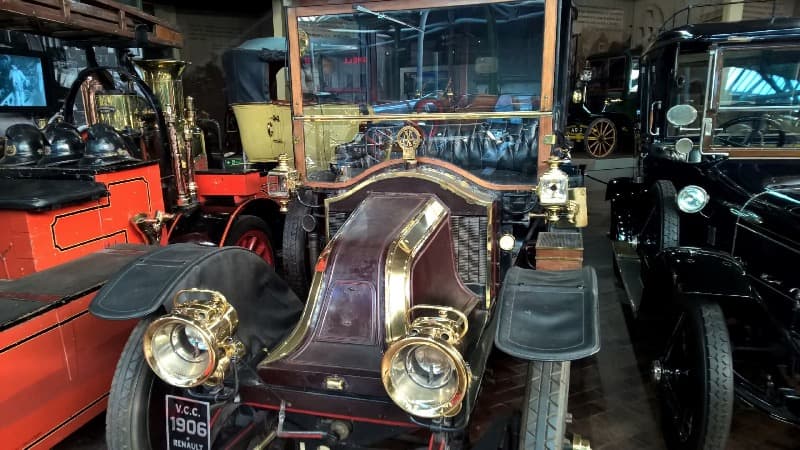
Gobron-Brillie Fire Engine (1907) – This vehicle started life not as a fire engine, but as a 7-seater tourer. It was converted for firefighting duties around 1910, when a coal-fired steam boiler was fitted to the rear. It featured a very unusual 4-cylinder engine with eight opposed pistons.
- Engine: 4-cylinder, 7600 cc
- Top Speed: 30 mph
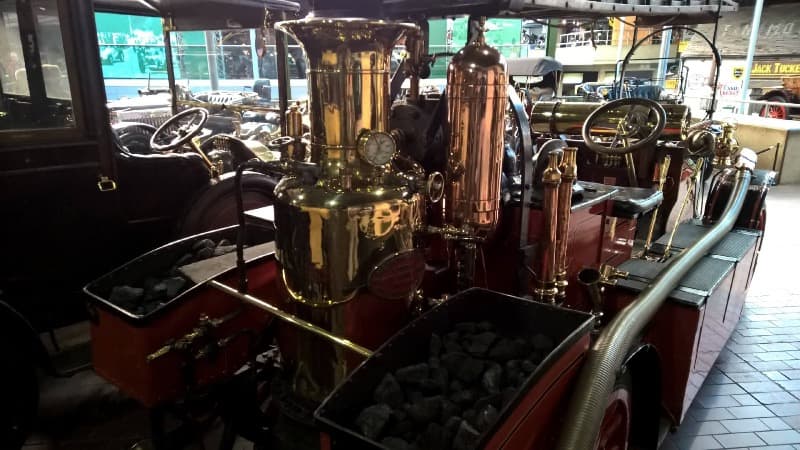
Unic 12/14hp Taxicab – This is the model that truly signalled the end for the horse-drawn hansom cab on the streets of London. It was originally fitted with a 2-cylinder engine, later replaced by a 4-cylinder unit. Passengers couldn’t sit next to the driver; the front was just for the driver’s seat and luggage space. The driver was completely exposed to the elements, without even a windscreen, but the passenger compartment at the back was fully enclosed.
- Engine: 4-cylinder, 1944 cc
- Top Speed: 30 mph
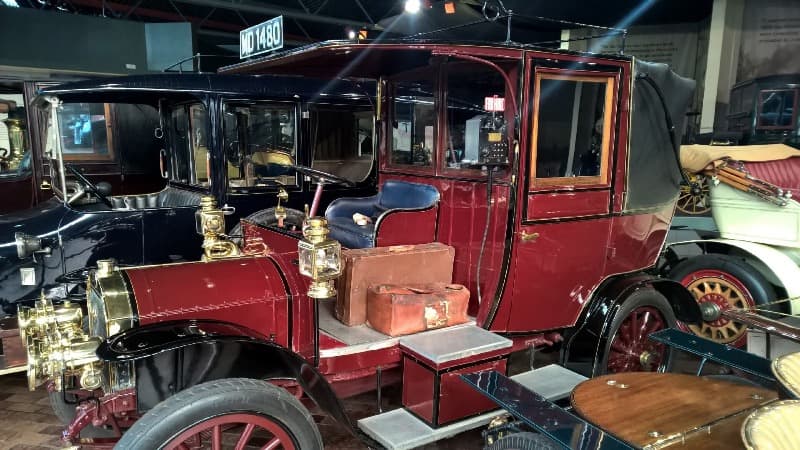
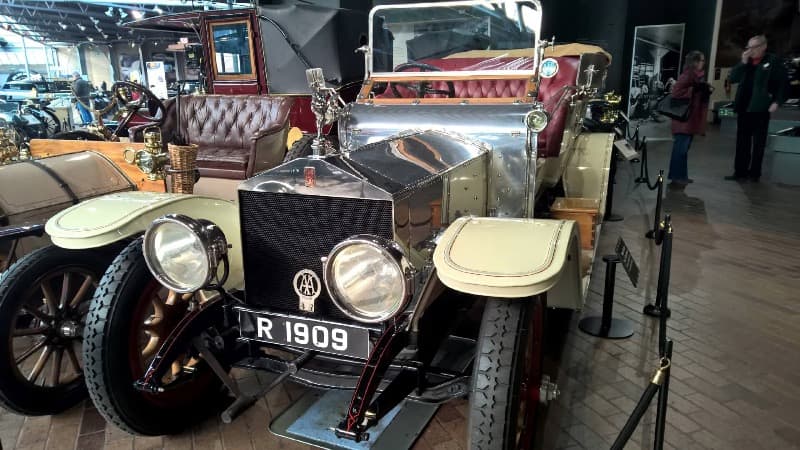
Rolls-Royce 40/50hp “Silver Ghost” (1909) – Originally built as a seven-seater tourer, this car was later modernised into a five-seater. The quality of the craftsmanship is simply incredible. Both the front and rear compartments had separate, folding roofs and individual windscreens. The rear screen could even be lowered down into the bodywork.
- Engine: 6-cylinder, 7046 cc
- Top Speed: 65 mph
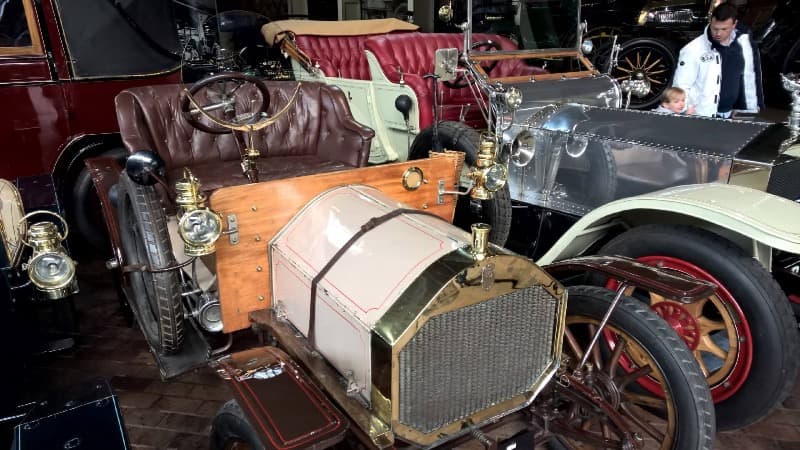
Humber 8hp (1909) – An affordable, two-seater car featuring a tiny windscreen for the driver’s benefit only. It was equipped with an anti-kickback mechanism on the starting handle to protect the driver’s arm.
- Engine: 2-cylinder, 1525 cc
- Top Speed: 40 mph
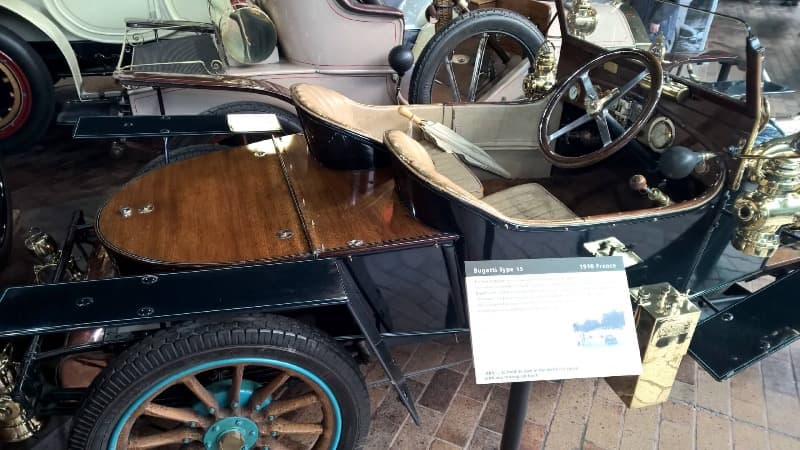
Bugatti Type 15 (1910) – An extended version of the Type 13, this model was instrumental in building Bugatti’s worldwide fame. Its engine allowed it to reach 58 mph and win many races. This particular car at Beaulieu is the second-oldest surviving example in the world and the only one in the UK.
- Engine: 4-cylinder, 1327 cc
- Top Speed: 58 mph
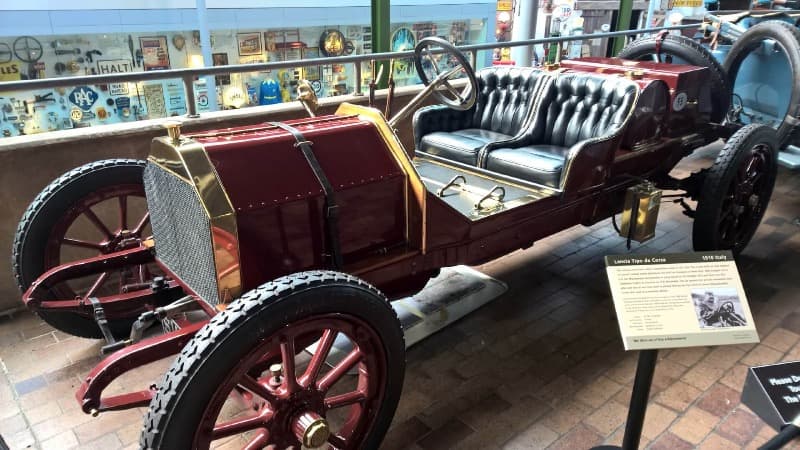
Lancia Tipo da Corsa (1910) – A thoroughbred racing car capable of reaching 75 mph. It was exported to the USA, where it won many awards. Vincenzo Lancia founded his company in late 1906, having previously worked as a test and racing driver for Fiat.
- Engine: 4-cylinder, 3119 cc
- Top Speed: 75 mph
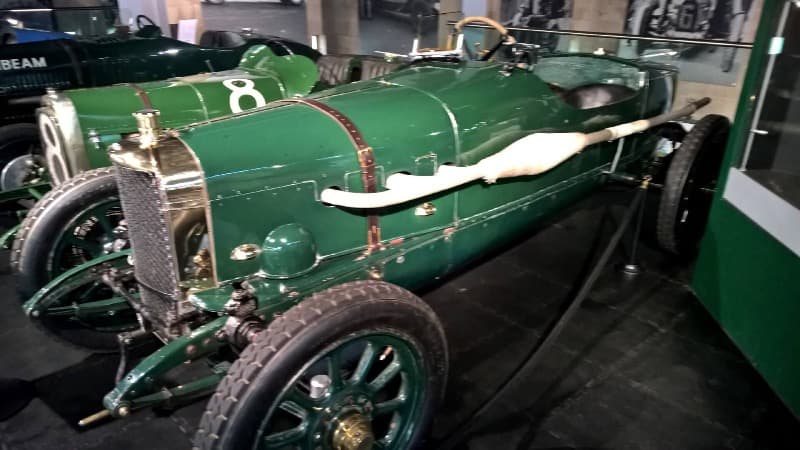
Sunbeam 3-Litre “Coupe de l’Auto” (1912) – This very racing car at the museum is one of five that competed in the French Grand Prix’s “Coupe de l’Auto” race in Dieppe. The Sunbeam team finished in 3rd, 4th, 5th, 6th, and 16th place.
- Engine: 4-cylinder, 2996 cc
- Top Speed: 85 mph
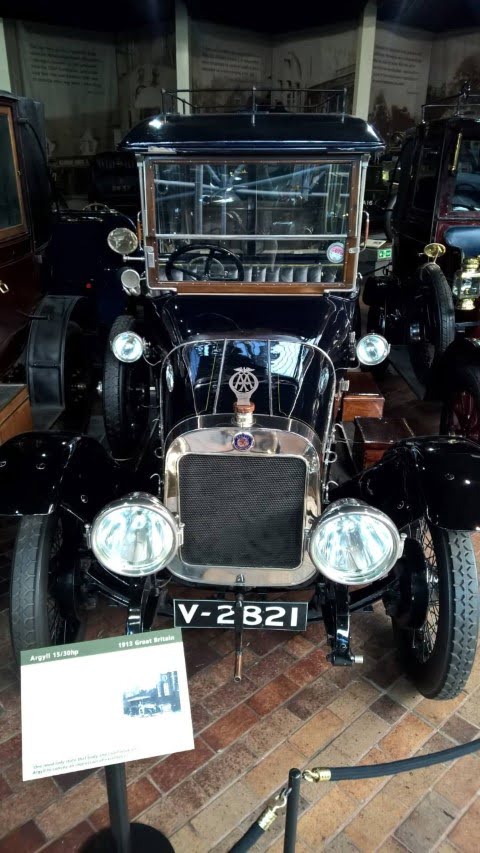
Argyll 15/30hp (1913) – This was one of the first British vehicles to be equipped with brakes on all four wheels – a real rarity in the early 20th century. This innovation only became widespread after the First World War. The engine used a Knight sleeve-valve system designed specifically for this model.
- Engine: 4-cylinder, 4084 cc
- Top Speed: 40 mph
Fiat Tipo Zero (1913) – Also known as the 12/15, this was the first Fiat to be mass-produced, with over 2,000 units made. The disparity in comfort between the front and rear seats is striking. The driver and front passenger had a folding roof and a comfortable bench, while the rear passengers had to make do with a narrow bench with a meagre backrest, completely exposed to the weather.
- Engine: 4-cylinder, 1847 cc
- Top Speed: 45 mph
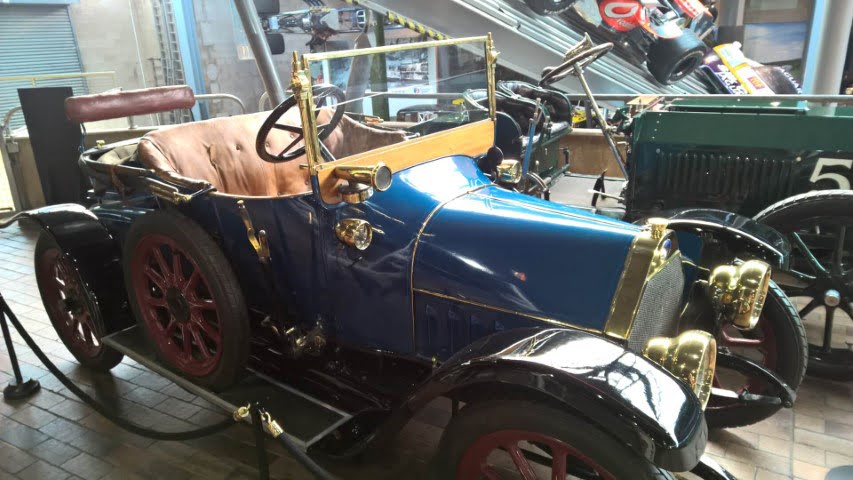
Ford Model T (1914) – This car needs no introduction. The first car to be built on a moving assembly line, it put the world on wheels. Famously, you could have it in any colour you liked, as long as it was black. It wasn’t until 1920 that grey, red, and green versions were introduced. Over 16 million were produced. A van version was also available.
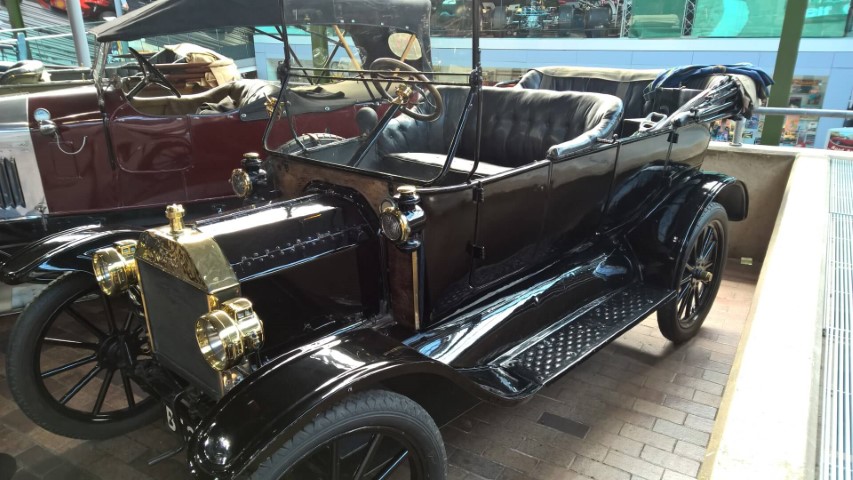
- Engine: 4-cylinder, 2898 cc
- Top Speed: 40 mph
Rolls-Royce 40/50 “Alpine Eagle” (1914) – One of the most desirable collector’s cars in the world, this is the sporting version of the legendary Silver Ghost. This particular example was modernised in 1950 with the installation of an electric starter.
- Engine: 6-cylinder, 7428 cc
- Top Speed: An incredible 82 mph
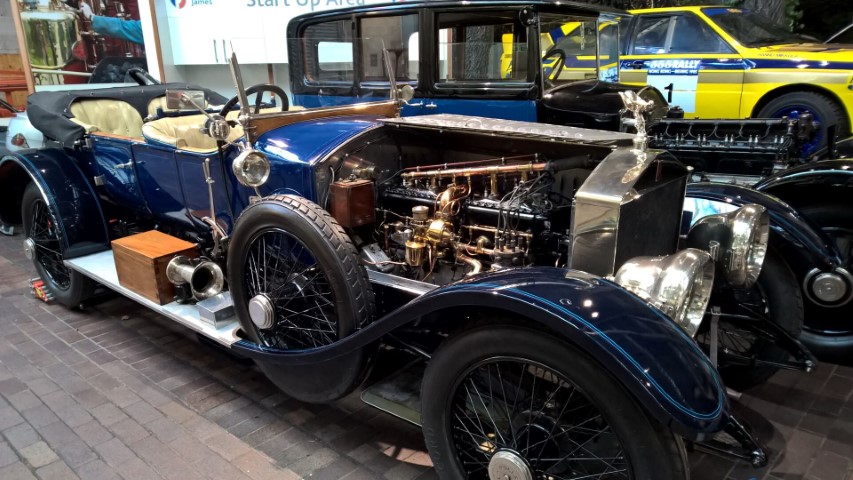
Sunbeam 12/16hp (1914) – This model helped to cement Sunbeam’s reputation for building high-quality motor cars.
- Engine: 4-cylinder, 3016 cc
- Top Speed: 50 mph
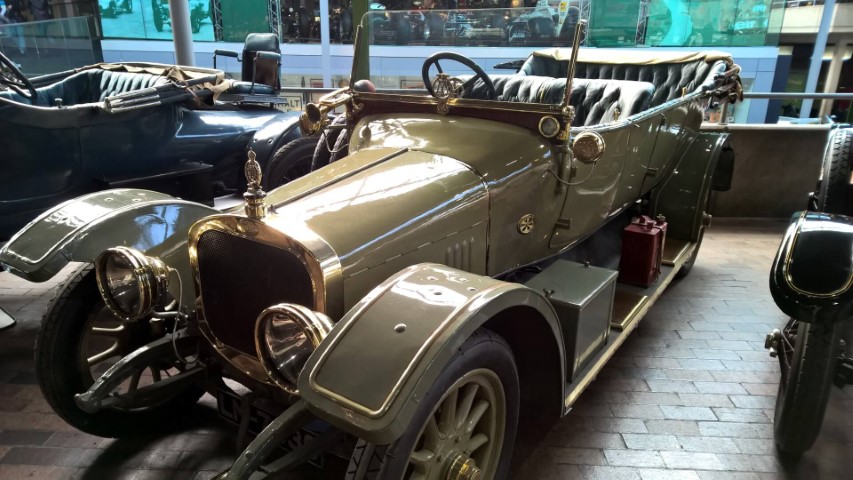
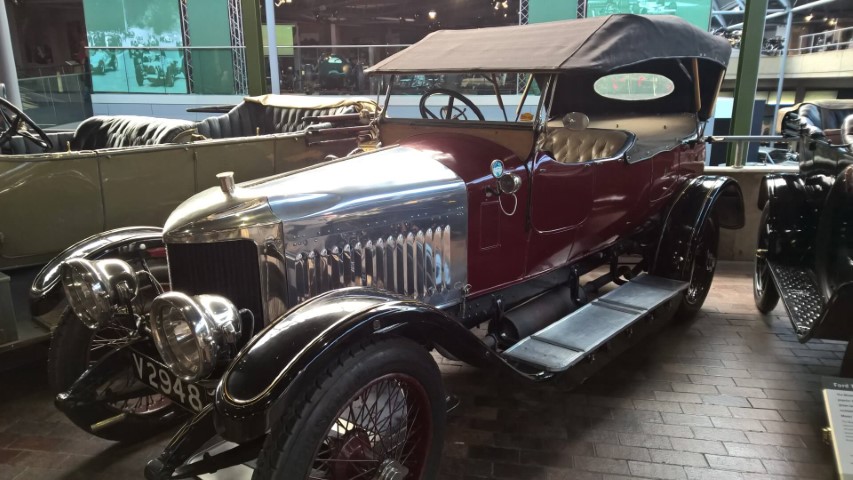
Vauxhall “Prince Henry” (1914 & 1915) – Beaulieu is lucky enough to have two examples of this model. When it was unveiled in 1911, it was one of the fastest production cars you could buy. The original models had a 3-litre engine, but both of these examples are fitted with the more powerful 4-litre engine introduced in 1913.
- Engine: 4-cylinder, 3969 cc
- Top Speed: 75 mph
A Journey Through Britain’s Motoring Past: The Interwar Years (1918-1939)
Stepping into a collection of cars from the 1920s and 30s is like walking through a history book. It was an era of incredible innovation, daring design, and the birth of legends. Join me as we take a closer look at some of the incredible machines from this golden age of motoring.
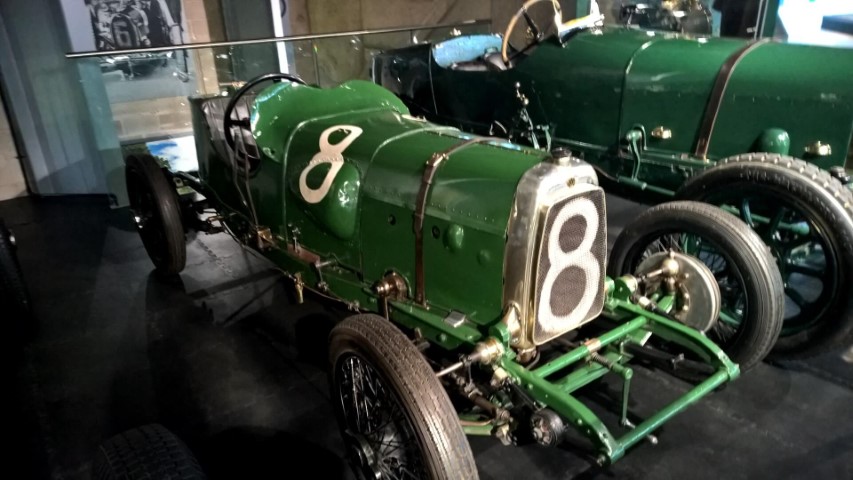
Aston Martin GP 1.5 Litre ‘Strasbourg’ (1922)
Our journey begins with a true racing hero. In 1922, Aston Martin built two of these incredible machines for the French Grand Prix in Strasbourg. Imagine the noise and excitement! Sadly, fate had other plans that day; magneto trouble forced both cars to retire. Out of 18 starters, only 5 crossed the finish line. But the story doesn’t end there. That November, at the Penya Rhin Grand Prix in Spain, the British driver of Polish descent, Count Louis Zborowski, piloted one to a brilliant second place, a feat he repeated at the same event in 1923.
- Engine: 4-cylinder, 1486 cc
- Top Speed: 95 mph
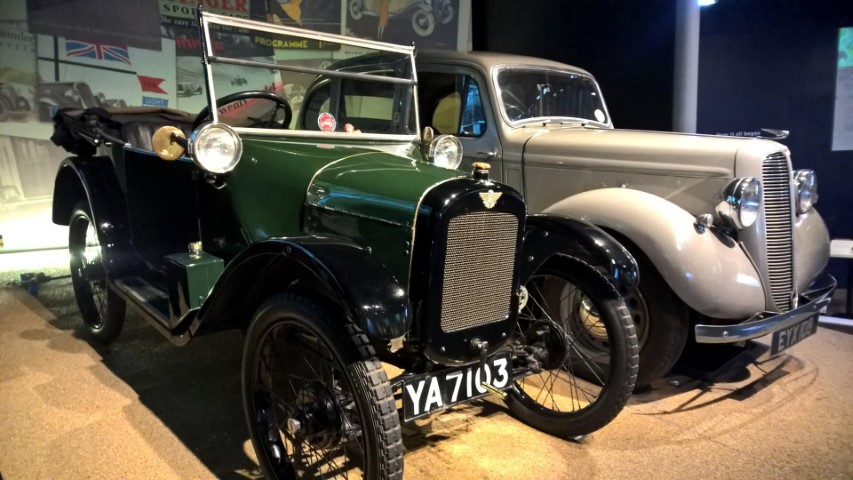
Austin Seven (1923 & 1928)
Next, we meet the car that truly put Britain on wheels. Affectionately known as the “Baby Austin,” this little motor played a massive role in British society. It was affordable, reliable, and within just a few years, it had completely transformed the look of Britain’s roads. It was also the car that saved its maker. The Austin Motor Company had been on the brink of collapse after the disastrous sales of its large, thirsty ‘Twenty’ model. Thankfully, the cheap and cheerful ‘Seven’, with its tiny 747 cc engine, was the perfect car for the times. It was an absolute smash hit, turning Austin into a giant that produced nearly 300,000 ‘Sevens’ between 1923 and 1939.
- Top Speed: 50 mph
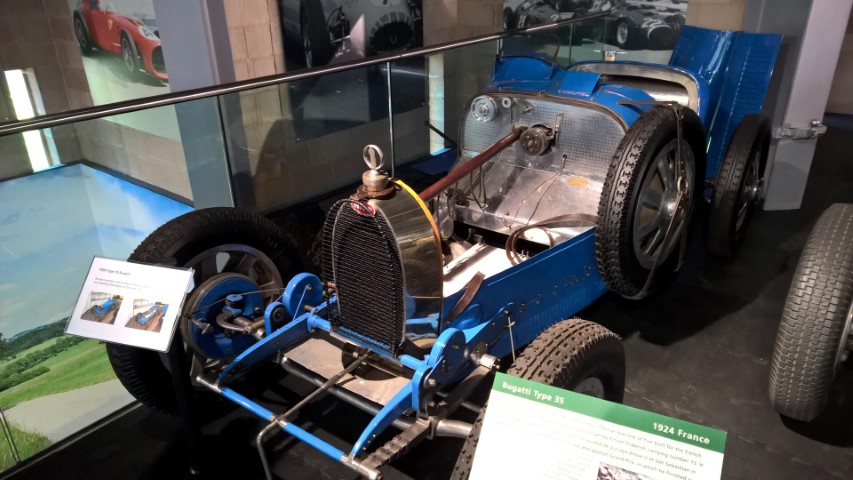
Bugatti Type 35 (1924)
Then you see it—the iconic shape and the vibrant French racing blue. It can only be a Bugatti. The Type 35 is perhaps the most recognisable racing car of all time. This very car was one of five built for the 1924 Grand Prix in Lyon, where it was driven to eighth place by Ernest Friderich, even after an accident mid-race. Here’s a fun fact for racing fans: the legendary Enzo Ferrari was meant to compete in that same race in an Alfa Romeo P2, but had to withdraw when his co-driver fell ill! Don’t be surprised if you peek under the bonnet and find it empty; this old hero’s engine was out for conservation during its visit.
- Engine: 8-cylinder, 1990 cc
- Top Speed: 110 mph
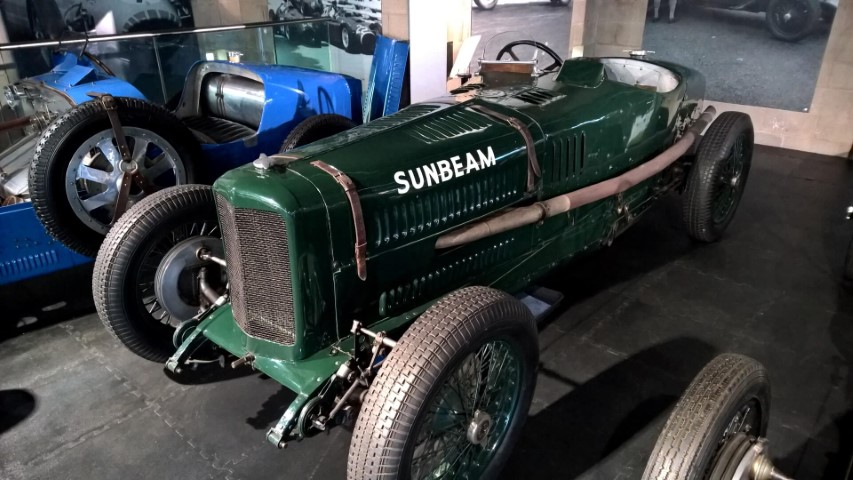
Sunbeam 2-Litre ‘The Cub’ (1924)
Here’s a machine with a tale of both triumph and tragedy. This was one of three British supercars built for the Lyon Grand Prix, driven by the famous Kenelm Lee Guinness. Sadly, the car never finished, retiring on the twentieth lap with brake failure. Guinness was no stranger to speed; two years earlier, he had set a new Land Speed Record of 133.75 mph (215.24 km/h) at Brooklands, the last record ever set on a closed circuit. His racing career, however, came to a tragic end in September 1924 when his mechanic, Tom Barrett, was killed in a crash at the San Sebastián Grand Prix—a stark reminder of the dangers of an era when mechanics always rode alongside the drivers.
- Engine: 6-cylinder, 1988 cc
- Top Speed: 130 mph
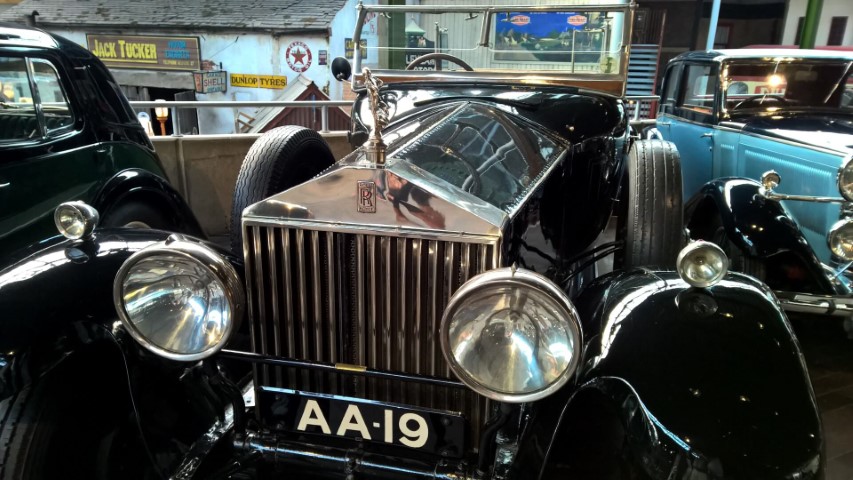
Rolls-Royce 40/50 ‘New Phantom’ (1925)
Speaking of motoring royalty, behold the Rolls-Royce ‘New Phantom’. While it shares its elegant lines with the famous ‘Silver Ghost’, this model, sometimes called the Phantom I, was a great leap forward in engineering. It featured a new overhead-valve engine with a larger capacity and an aluminium cylinder head, providing smooth, effortless power.
- Engine: 6-cylinder, 7668 cc
- Top Speed: 80 mph
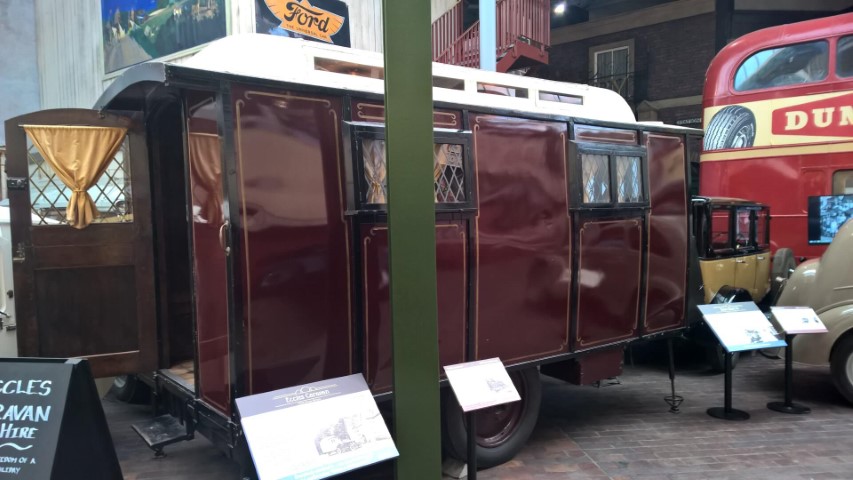
Eccles Caravan (1926)
Now for something a little different! Tucked away amongst these magnificent machines is a slice of holiday history. This isn’t just any old trailer; this was the height of luxury ‘glamping’ in the 1920s. The Eccles company was taken over in 1919 by W.A.J Riley and his son, who, having just returned from the First World War, was inspired by the use of trailers by the military. He decided to build a luxurious caravan for leisure. The Eccles brand still exists today as part of the Swift Group, producing everything from cosy two-berth tourers to giant six-berth holiday homes.
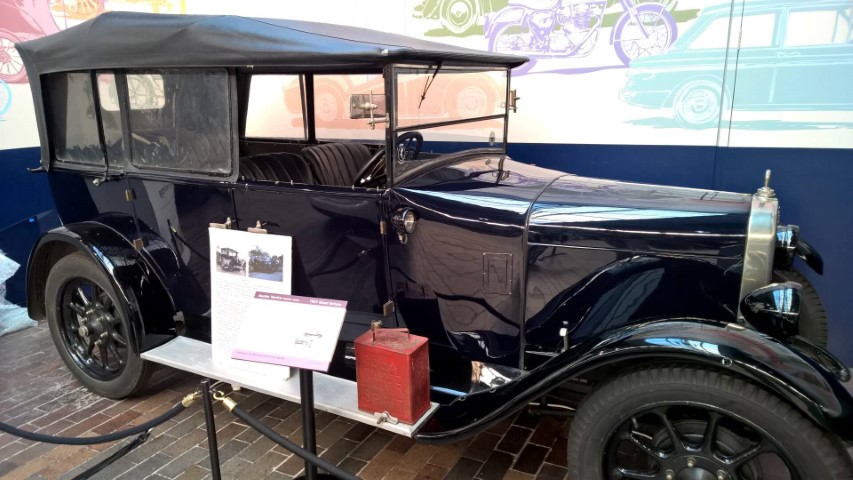
Austin Twelve Mulliner Tourer (1927)
This car is a perfect example of a popular practice from the era: bespoke coachbuilding. Like with the ‘Seven’, Austin would sell you a complete ‘rolling chassis’, allowing you to have a custom body built by a specialist firm. This handsome tourer body was crafted by ‘Mulliner’ of Birmingham. It’s a rare survivor and showcases the beautiful craftsmanship that was possible when two great firms collaborated.
- Engine: 4-cylinder, 1861 cc
- Top Speed: 55 mph
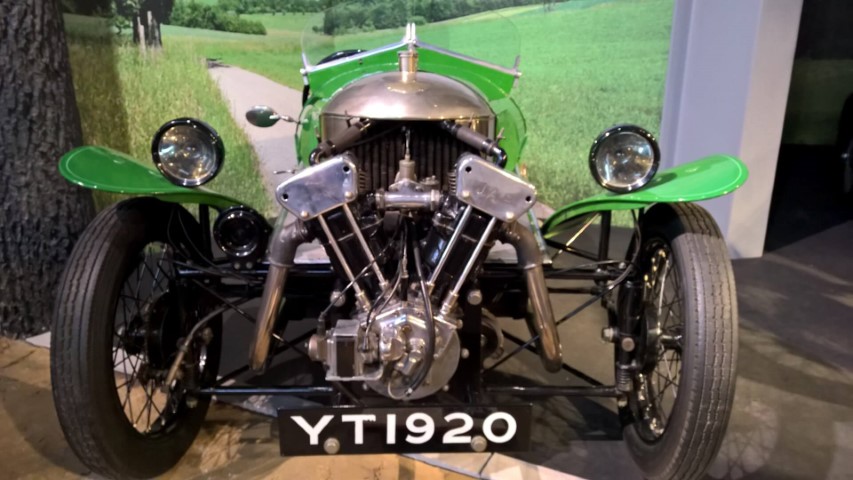
Morgan Aero (1927)
Who says you need four wheels to have fun? The Morgan Aero is a fantastic piece of British eccentricity and a reminder that motoring is all about the thrill. First shown in 1920, the Aero was initially built to special order only. In 1927, new engine choices were offered, including Anzani, Blackburne, and the wonderfully distinctive JAP V-twin engine you see proudly on display at the front of this model.
- Engine: 2-cylinder V-twin, 1096 cc
- Top Speed: 70 mph
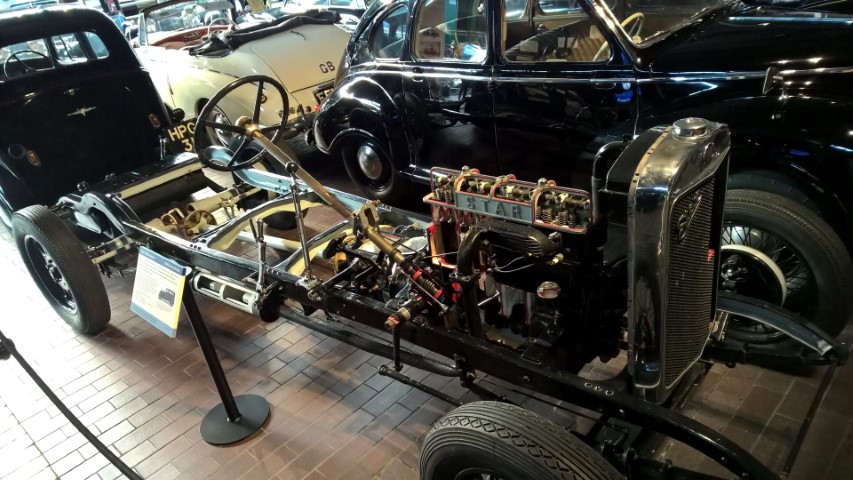
Star 18/50 (1928)
This magnificent car is a perfect snapshot of classic, high-quality motoring from the late 1920s. The Star company, with roots stretching back to the 19th century, prided itself on craftsmanship over quantity. Unveiled at the 1927 London Motor Show, the 18/50 cemented the firm’s reputation for hand-built quality. The company’s chairman, Edward Lisle, once famously said, “I would rather build one good car a day than go for mass production.” This noble policy, however, made it hard to compete, and Star was sold to Guy Motors Ltd in 1928, with the last cars being produced in 1932.
- Engine: 6-cylinder, 2470 cc
- Top Speed: 65 mph
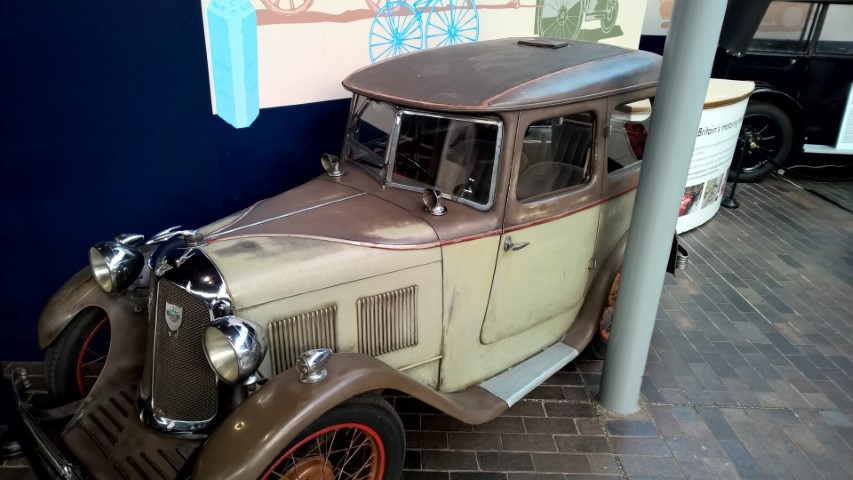
Austin-Swallow Saloon (1931)
Here we see the beloved Austin Seven chassis again, but this time wearing a much more rakish and stylish outfit. This dashing body was the work of the Swallow Sidecar Company of Coventry, a firm that would later evolve into a rather famous brand: Jaguar! You could buy a chassis from Austin and have Swallow create a far more distinctive and sporty-looking car. Note the doors, which are hinged at the rear, a feature that gave them a unique look.
- Engine: 4-cylinder, 747 cc
- Top Speed: 50 mph
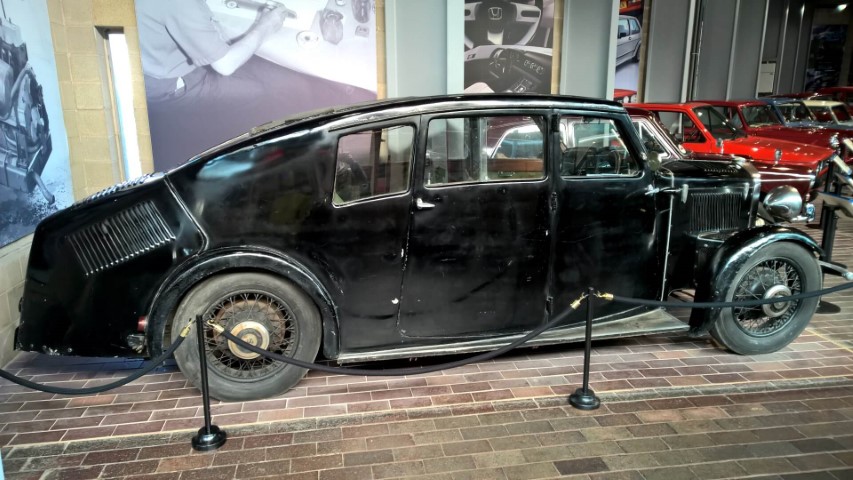
Crossley Burney Streamline (1934)
Prepare yourself for one of the most wonderfully bizarre cars you’ll ever see—a true ‘love it or hate it’ design. The Crossley Burney Streamline was so far ahead of its time it’s astonishing. The list of innovations is mind-boggling for 1934: a rear-mounted engine, a fully aerodynamic body, and independent suspension on all four wheels. It also featured a Wilson Pre-select gearbox, where you’d choose your next gear with a small lever and then simply press the clutch pedal when you were ready to change. The body was designed by Sir Denistoun Burney, the engineer behind the R100 airship, and you can really see the aeronautical influence. Only 25 were ever made, and just three are known to survive today.
- Engine: 6-cylinder, 1991 cc
- Top Speed: 80 mph
Riley 1 1/2 Litre Falcon (1934)
Moving on to something a little more conventional, but no less charming. The Riley Falcon was the epitome of a quality British saloon in the mid-30s. Introduced in late 1934, it offered a spacious and comfortable interior with a streamlined silhouette that was all the rage. This model also features the clever Pre-select gearbox, making it a very refined car to drive for its day.
- Engine: 4-cylinder, 1496 cc
- Top Speed: 70 mph
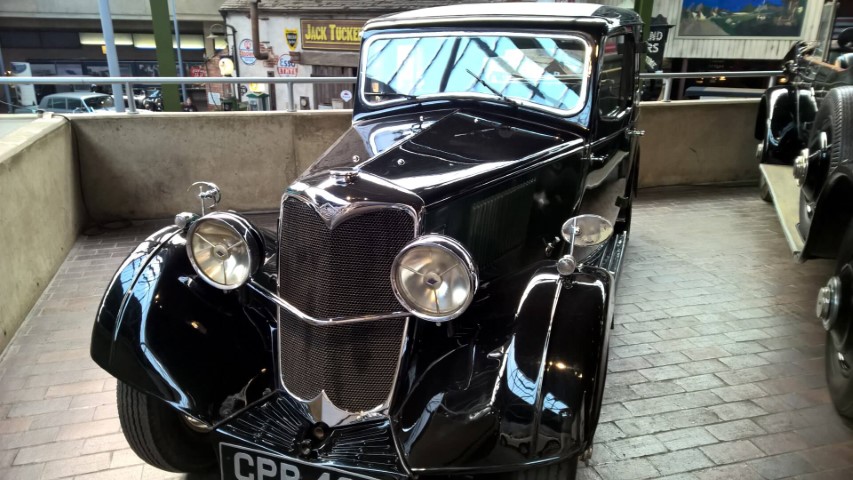
Talbot 105 (1934)
Many critics consider this, the Talbot 105, to be one of the finest all-round cars of the 1930s. Available in several different body styles, it was a potent blend of luxury and performance. It wasn’t just a pretty face; the 105 was a formidable competitor on the racetrack, with successes at Brooklands, Le Mans, and the Alpine Trial. This particular example wears a handsome four-door body by James Young Ltd of Bromley.
- Engine: 6-cylinder, 2969 cc
- Top Speed: 85 mph
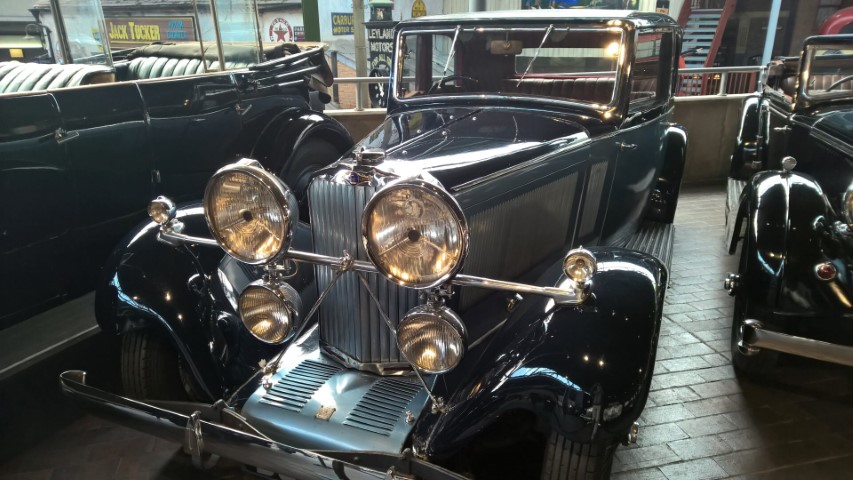
Alvis Speed 25 (1937)
In the 1930s, if you wanted a car that blended cutting-edge performance with sophistication, you would look no further than an Alvis. The Speed 25, and its predecessor the Speed 20, were technological marvels, packed with features that were incredibly advanced for the time: independent front suspension, a gearbox with synchromesh on all gears, and servo-assisted brakes. It was also the first Alvis to feature the accelerator pedal to the right of the brake—a layout that was becoming standard across the industry.
- Engine: 6-cylinder, 3571 cc
- Top Speed: 95 mph
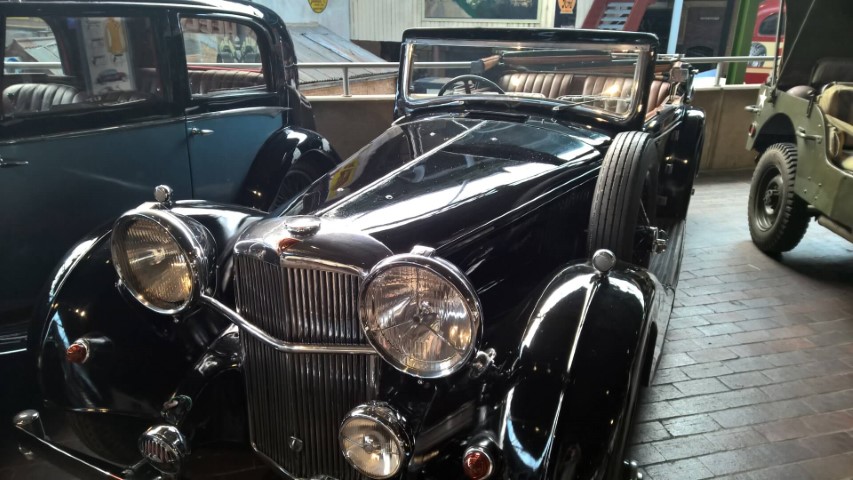
Hillman Minx ‘Magnificent’ (1938)
Here’s a car that was a familiar sight on British roads before the war: the dependable Hillman Minx. It was the brand’s most popular model throughout the 30s. The name of this particular version, the ‘Magnificent’, launched in August 1938, wasn’t just marketing fluff; it was a roaring success, with 10,000 sold by the end of the year!
- Engine: 4-cylinder, 1185 cc
- Top Speed: 59 mph
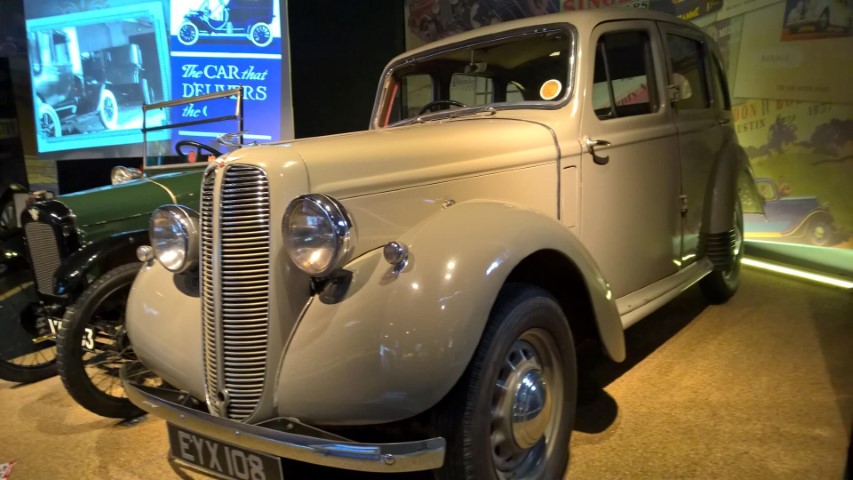
Morris Eight Series II (1938)
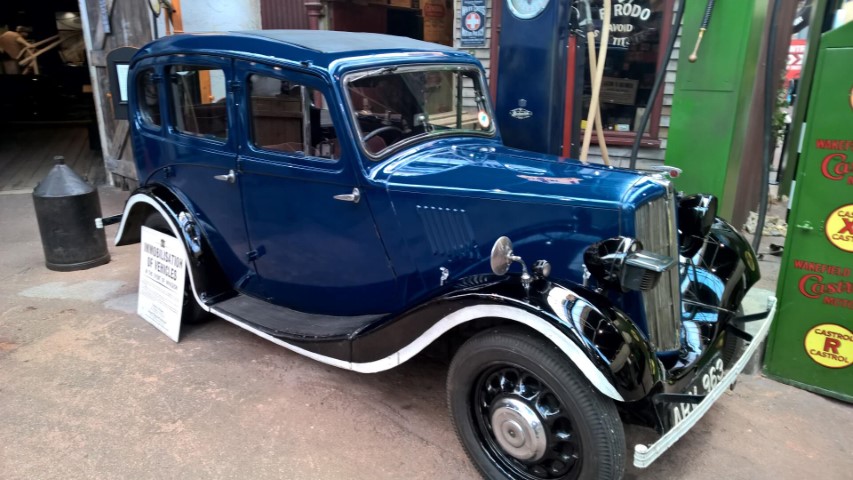
No tour of pre-war British motoring would be complete without the Morris Eight, the car that truly mobilised the nation’s middle classes. It was the company’s bestseller throughout the decade. This particular example, however, tells a darker story. Look closely at the headlamps and you’ll see the blackout masks, a stark reminder that this car saw service during the Second World War. The covers were designed to shield the light from enemy aircraft during air raids.
- Engine: 4-cylinder, 918 cc
- Top Speed: 60 mph
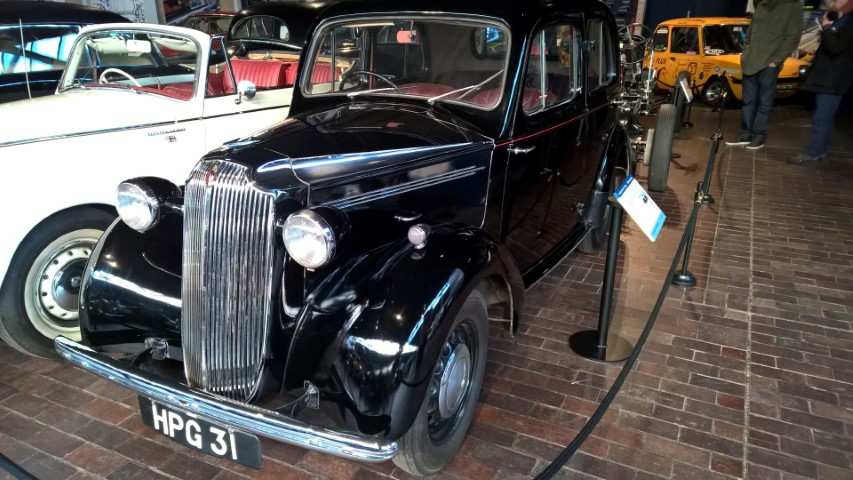
Vauxhall Ten-Four H-Type (1939)
Our journey ends on the cusp of a new era with the 1939 Vauxhall Ten-Four. This car was a game-changer for the British motor industry. Though Vauxhall had been owned by America’s General Motors since 1925, its designs were still distinctly British. The H-Type was the first British car to be built with a unitary or ‘monocoque’ construction, where the body and chassis are a single unit. This made the car much lighter, but it came at the cost of crash strength and meant more engine vibrations were felt in the cabin. Still, with its independent front suspension and hydraulic brakes, it pointed the way to the future of car design.
- Engine: 4-cylinder, 1203 cc
- Top Speed: 60 mph
A Journey Through Time: The 1940s – 1950s
As you wander into this section of the motor museum, you’re stepping back into a fascinating era, journeying from the 1940s right up to the modern day. The turbulent years of the Second World War saw nearly every factory switch to producing arms and ammunition. But once the conflict ended, European motoring blossomed once more, gifting us some truly unforgettable models. You’ll also discover the incredible story of British rally successes in the swinging sixties.
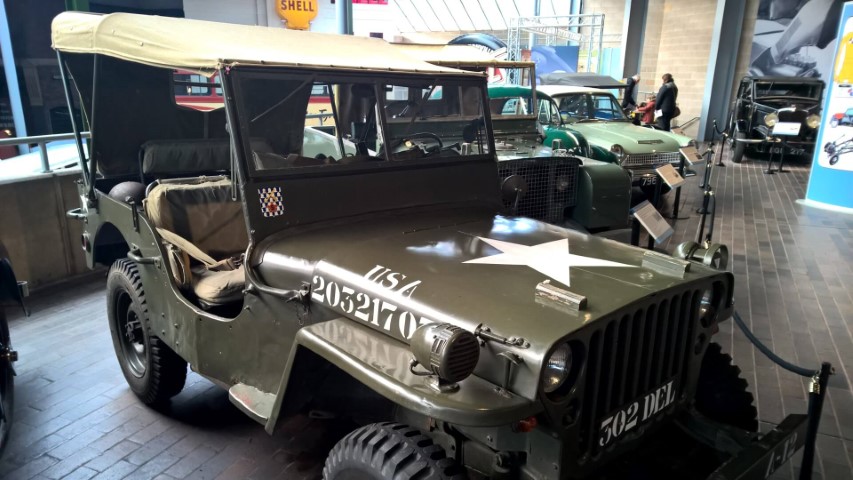
Willys MB Jeep (1943)
A vehicle that surely needs no introduction. It’s a star of practically every film about the Normandy landings or the war in Vietnam. This light and dependable four-wheel-drive off-roader was a smash hit in every respect, used by civilians and armies all over the globe. Interestingly, Willys wasn’t the original designer; that credit goes to American Bantam, who presented a prototype in 1940. However, the company couldn’t keep up with the army’s demand, so production soon kicked off at Willys-Overland and Ford as well. Both this model and its twin, the Ford GPW, were fitted with the Willys ‘Go-Devil’ engine.
- Engine: 4-cyl, 2199 cc
- Max speed: 60 mph
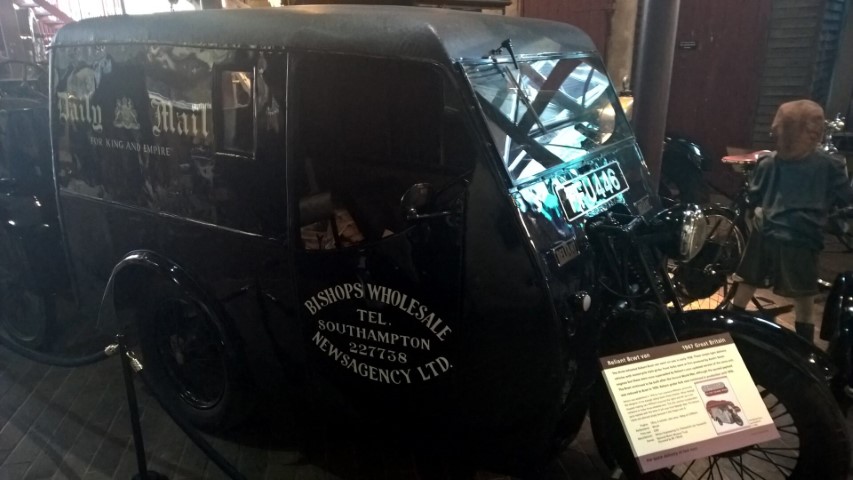
Reliant 8cwt van (1947)
Not quite a car, this is actually a three-wheeler, first unveiled before the war in 1938. With its front fork and headlamp, it looks more like a motorcycle that’s decided to wear a coat. The earliest versions were powered by a car engine from the Austin Seven. The particular example here at the motor museum has a charming history, having been used to deliver newspapers for the “Daily Mail”.
- Engine: 4-cyl, 747 cc
- Max speed: 40 mph
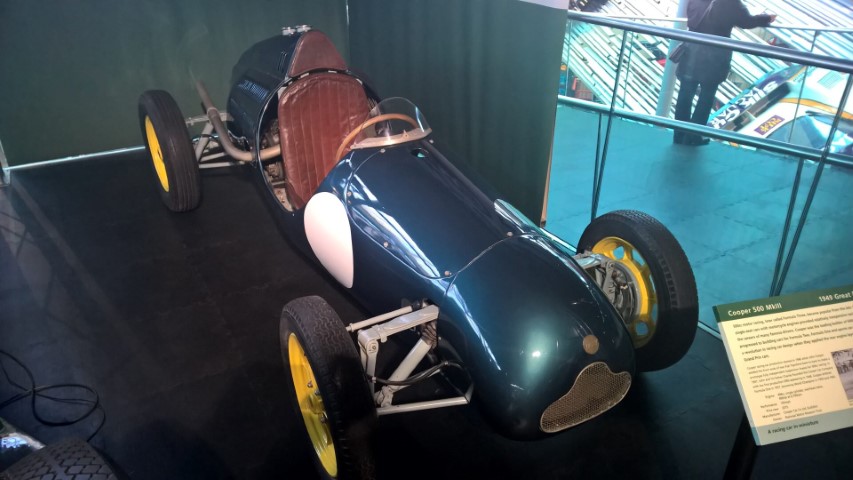
Cooper 500 MkIII (1949)
In the late 1940s, 500cc car racing – later known as Formula 3 – became all the rage. These small, single-seater vehicles with motorcycle engines were relatively cheap to run and often served as the launching pad for the careers of many future racing legends. Cooper became one of the most successful producers of F3 cars, eventually moving with great success into Formula 2 and, ultimately, Formula 1. It was Cooper that sparked a revolution in racing car design by placing the engine behind the driver. John Cooper began his adventure with sports cars in 1946, building his first prototype from two modified Fiat Topolinos. A year later, he and his father, Charles, founded “the Cooper Car Company.” By 1948, they were competing in Formula 1, which culminated in John winning the World Championship in 1959 and 1960.
- Engine: 1-cyl, 498 cc
- Max speed: 105 mph
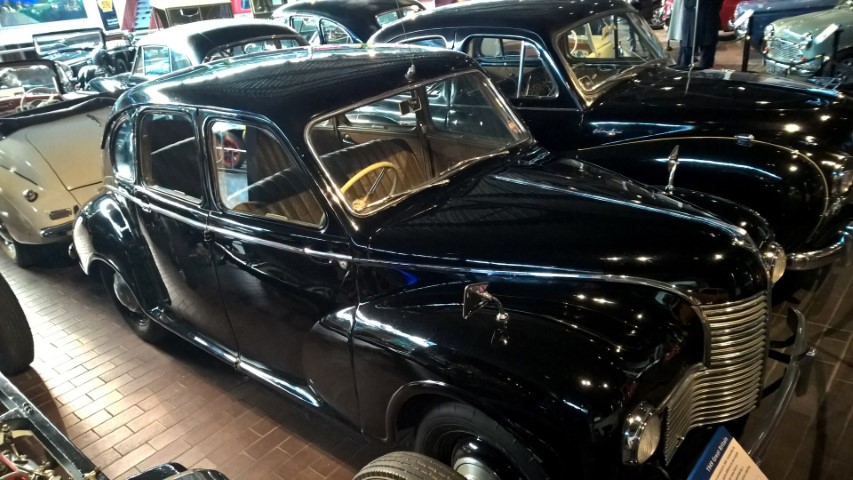
Jowett Javelin (1949)
This was a high-quality, comfortable car powered by a transversely mounted 4-cylinder engine. Its styling was a significant departure from the pre-war body lines. The innovative rack and pinion steering system also made driving this car an absolute pleasure. In 1950, Jowett tried its hand at motorsport, but numerous problems with engines and gearboxes on the track prevented them from securing top positions. To make matters worse, their car sales dropped, the company fell into financial trouble and was closed in 1954.
- Engine: 4-cyl, 1486 cc
- Max speed: 78 mph
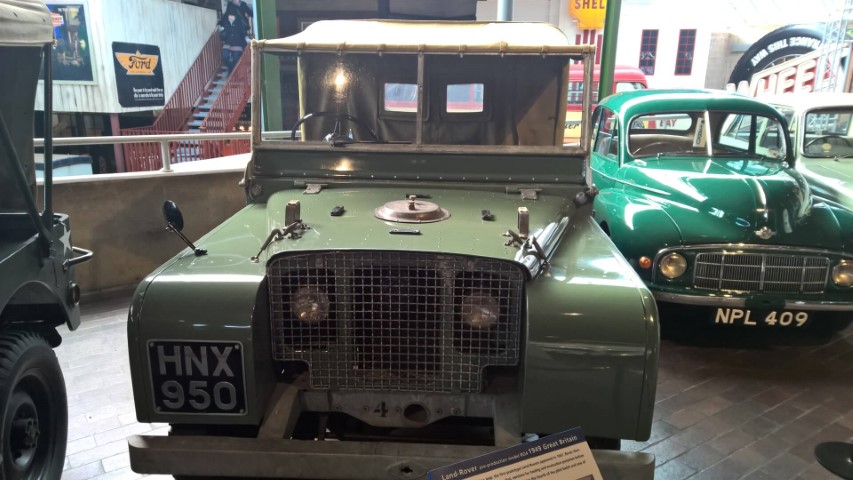
Land Rover RO4 (1949)
Arguably the world’s most recognisable, rugged, and perhaps not the prettiest, off-road vehicle. This particular example in the motor museum is the fourth pre-production version and one of the oldest surviving Land Rovers. This model was designed for agricultural use and was vastly different from all previous Rover cars. The engine and gearbox were borrowed from a standard road model – the Rover P3. The RO4 features an aluminium body because, at the time, aluminium was relatively cheap, whereas steel was rationed by the government. The model became a sales phenomenon not only in the United Kingdom but also a massive export hit.
- Engine: 4-cyl, 1595 cc
- Max speed: 58 mph
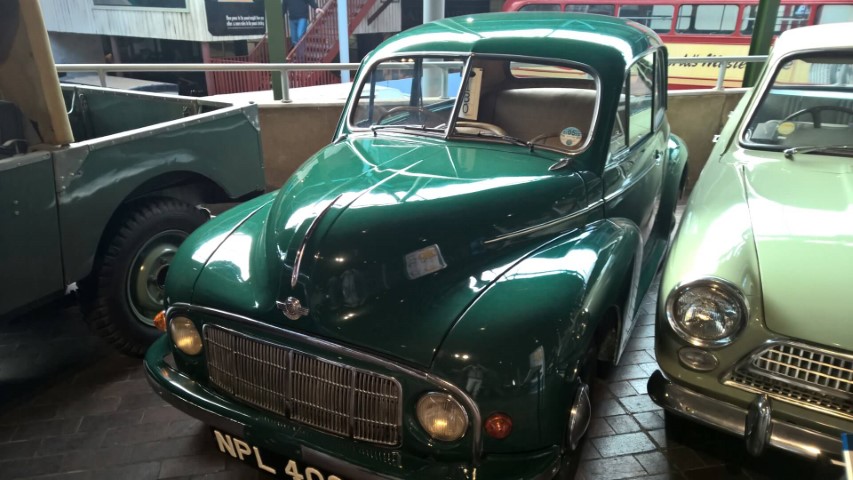
Morris Minor MM (1949)
This is a whole series of cars produced by the Morris Motor Company that stole the hearts of visitors at the first post-war motor show: the Earls Court Motor Show in 1948. The 1943 prototype for this model was originally named the Mosquito. The Minor – and its bigger brother, the MO Oxford – featured monocoque bodies, rack and pinion steering, and torsion bar independent front suspension. The first MM Minor versions were powered by a pre-war, eight-valve engine – its performance was less than thrilling. However, after the merger of Morris and Austin in 1952, the second version of the Minor began to be fitted with more modern A-Series engines with a capacity of 803 cc. The car also received a redesigned body with higher-mounted headlights. Later, 989 cc and 1000 cc engines were also fitted in 1956.
- Engine: 4-cyl, 919 cc
- Max speed: 62 mph
Allard J2 (1950)
This car took part in numerous races, often with the company’s founder, Sydney Allard, behind the wheel. It was originally fitted with a 5.4-litre Cadillac engine, which was later changed to a 4-litre Mercury engine with a valve head modified by Allard.
- Engine: V8, 3917 cc
- Max speed: 111 mph
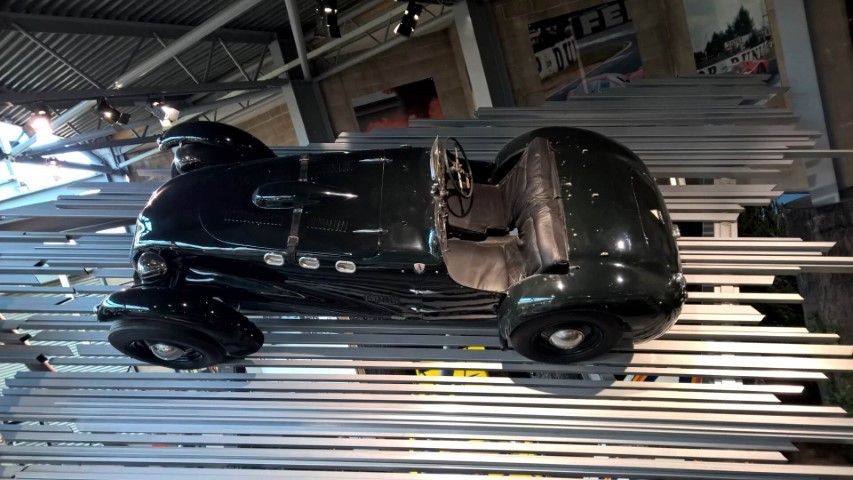
BRM Type 15 V16 (1950)
British Racing Motors was founded in 1940 to build cars for the British Grand Prix. The company created the unique Type 15 model, powered by a 1.5-litre, 16-cylinder, supercharged engine producing 600 bhp and featuring the first disc brakes in the racing world. The sound of this engine was absolutely phenomenal, which can sometimes be heard live during shows at the Beaulieu motor museum. Although the project proved somewhat unsuccessful, it contributed to British dominance in the racing world in the following years.
- Engine: V16, 1496 cc
- Max speed: 170 mph
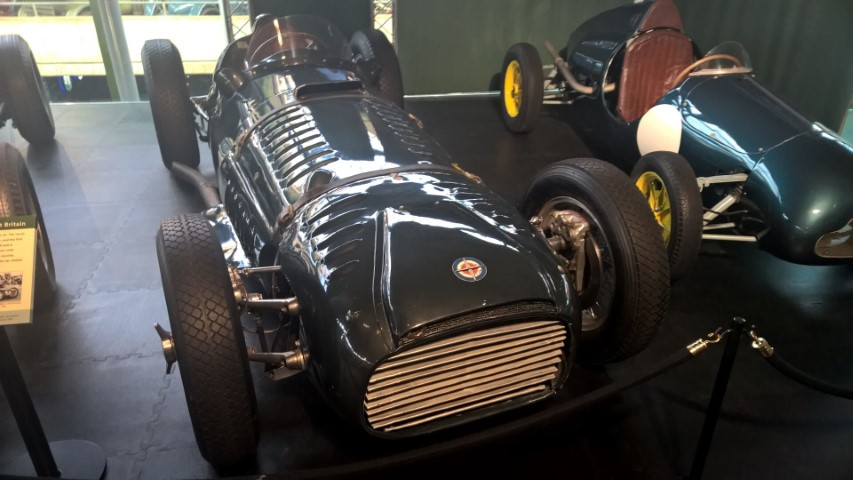
Standard Vanguard (1951)
This was a completely new, post-war design inspired by American styling. Its appearance is somewhat reminiscent of the Polish Warszawa M20. In true American style, it also featured a front bench seat instead of separate seats and a column-mounted gear shift. In 1953, the car underwent a facelift (dubbed Phase II), and from then on, a diesel engine was available as an option. It was Britain’s first diesel car.
- Engine: 4-cyl, 2088 cc
- Max speed: 80 mph
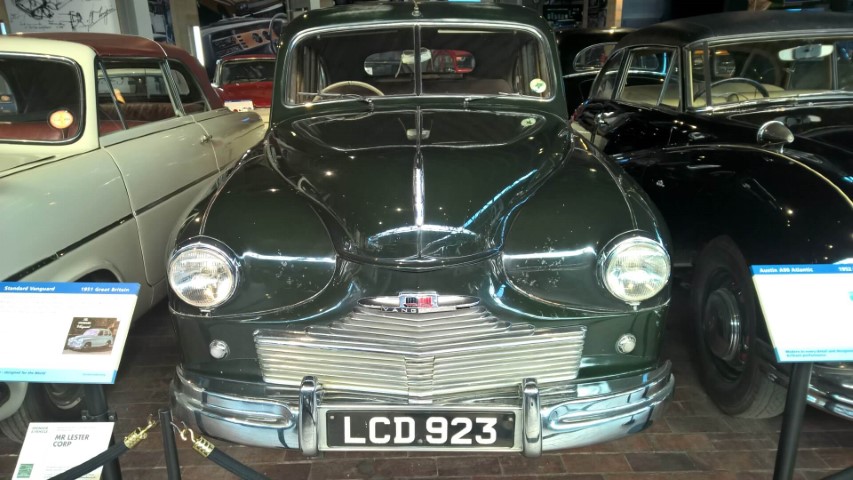
Sunbeam-Talbot 90 MkIIA (1952)
The 80 and 90 models were the first post-war offerings from “the Rootes group”. The larger 90 model, with its more powerful engine, successfully competed in rallies. From 1952, this model was fitted with independent front suspension, an updated engine, and improved brakes. This modified version was named the MkIIA. Isn’t she a beauty?
- Engine: 4-cyl, 2267 cc
- Max speed: 81 mph
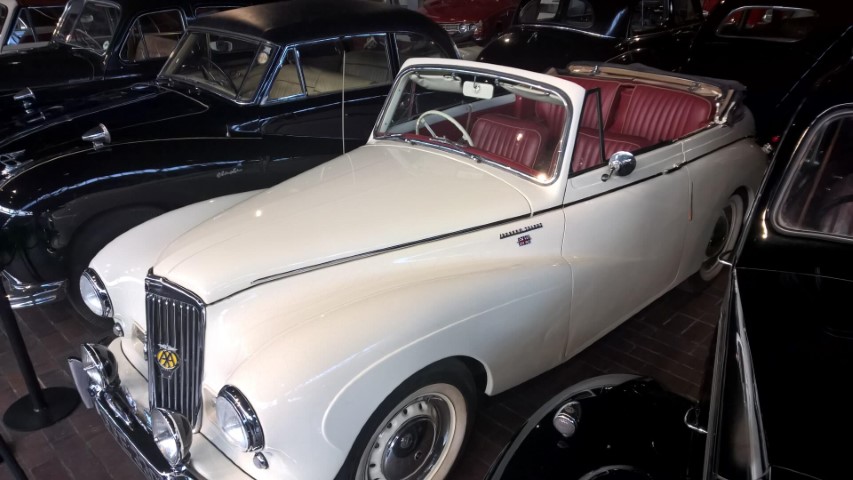
Austin A40 Somerset (1953)
Introduced in 1948, the A40 replaced the pre-war Eight, Ten, and Twelve models. It was sold as a four-door – the Devon – or a shorter two-door version, the Dorset. The Somerset version appeared in 1952 and received hydraulic brakes and a column-mounted gear change – which was becoming standard at the time – previously only available on the Devon.
- Engine: 4-cyl, 1200 cc
- Max speed: 68 mph
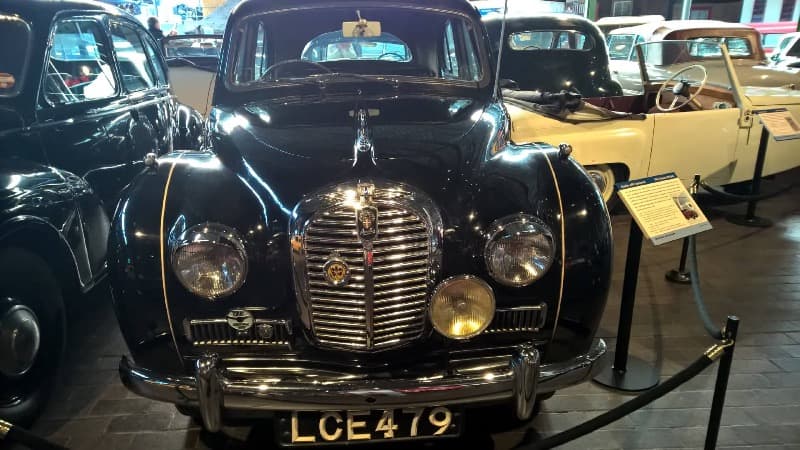
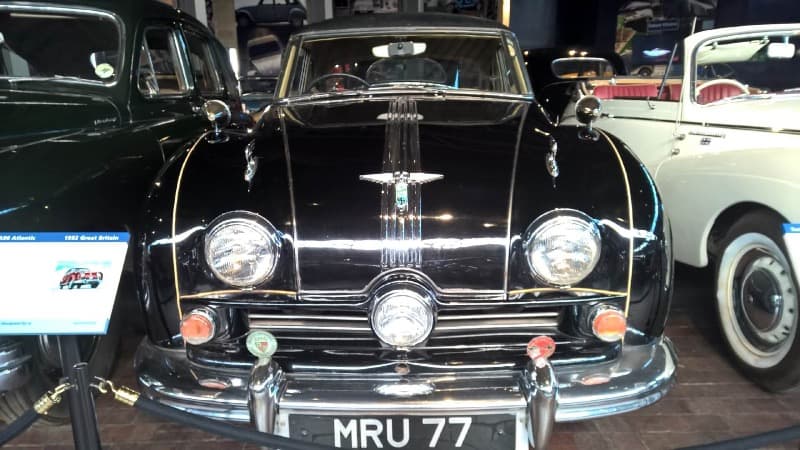
Austin A90 Atlantic (1952)
In the early 1950s, the British economy was under pressure to increase exports, so Austin designed the A90 with the American market in mind. Following the fashion, the gear stick was placed on the steering column, and the convertible version had an electrically folding roof. The car stood out in a crowd thanks to its three front headlamps; I have no idea what the designer was thinking! Like other manufacturers, Austin had focused on armament production during the war. In the late 40s, the British government placed a heavy emphasis on increasing sales abroad. Companies were given an ultimatum: “Export or Die.” Firms that didn’t comply had trouble accessing the then-scarce steel. The A40 Atlantic was small and relatively expensive, so sales ended in 1952 after only 8,000 units were produced. The engine from the A40 was later used in the sporty Austin-Healey.
- Engine: 4-cyl, 2660 cc
- Max speed: 85 mph
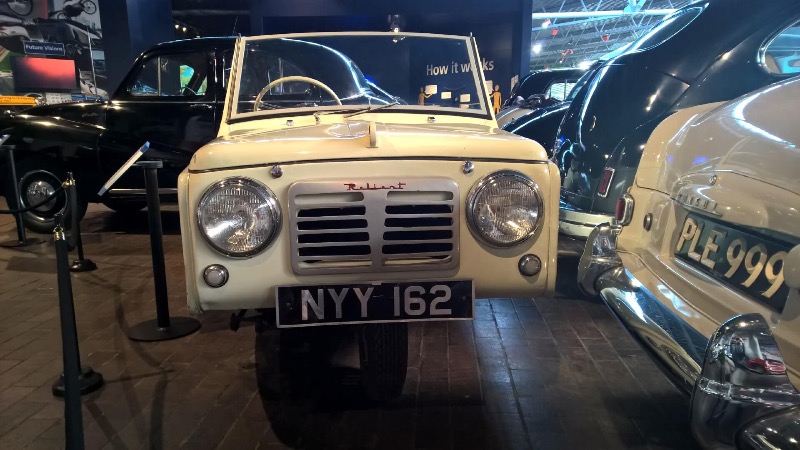
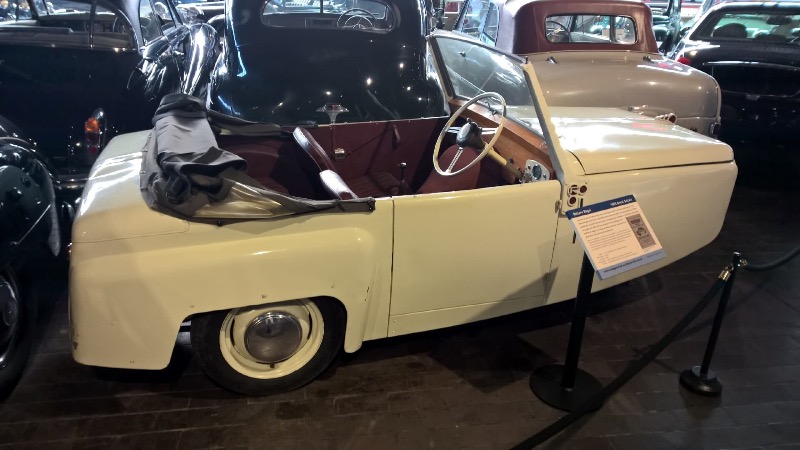
Reliant Regal (1953)
If you thought the last car with three headlights was odd, you probably haven’t seen the Reliant Regal – another three-wheeler from this manufacturer, though this one looks more like a car. It’s a four-seater convertible with an aluminium body, powered by the same Austin Seven engine as the previous three-wheeler. This time, however, the top speed was increased to 60 mph, while fuel consumption remained at an impressive 50 miles per gallon. With road tax at just £5, it was a cheap and economical alternative to a motorcycle.
- Engine: 4-cyl, 747 cc
- Max speed: 60 mph
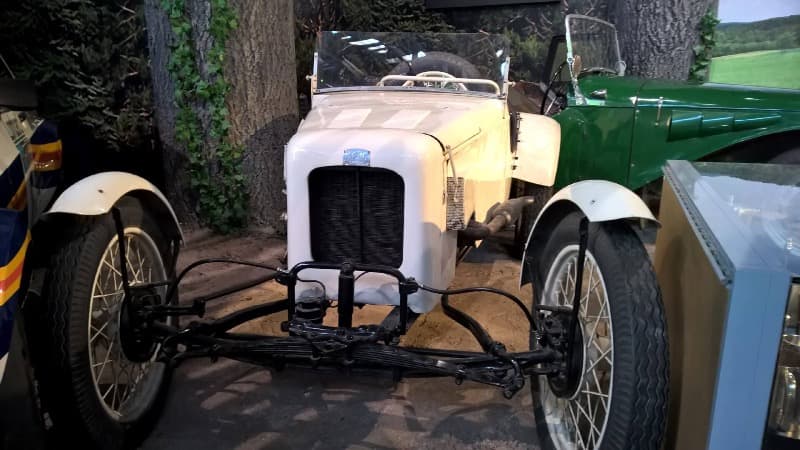
M&L Trials Special (1954)
Competing in over 70 rallies between 1954 and 1962, the M&L was built by Alfred Moss and Michael Lawson – the father and uncle of racing driver Stirling Moss. This ultra-light car – weighing only 400 kg – was built on an Austin Seven chassis with an aluminium body. It was powered by a heavily modified Ford side-valve engine. Driven by Mike Lawson, the M&L secured first or second place 24 times. This is the best record for a single driver and a single car in the history of off-road trials. Sporting trials gained popularity in the 1950s and 1960s, with many amateur builders favouring the Austin Seven chassis and Ford engines.
- Engine: 4-cyl, 1172 cc
- Max speed: 50 mph
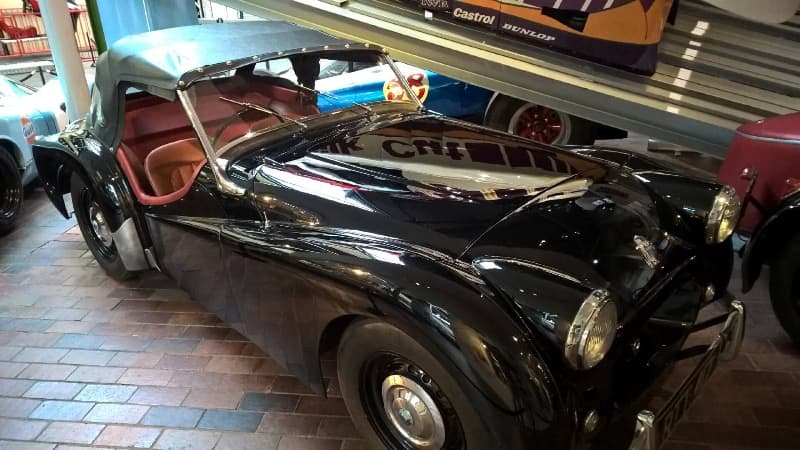
Triumph TR2 (1954)
Despite its name, this is the first model in the manufacturer’s excellent TR series. It was created specifically to compete in rallies against giants like MG and Jaguar. Triumph was acquired by “the Standard Motor Company” in 1944, and a decision was made to focus on producing sports cars. The first prototype was presented as the 20TS (colloquially known as TR1) at the London Motor Show in 1952, with the TR2 unveiled a year later. The TR series became a marketing success in the 50s and 60s, especially in North America.
- Engine: 4-cyl, 1991 cc
- Max speed: 107 mph
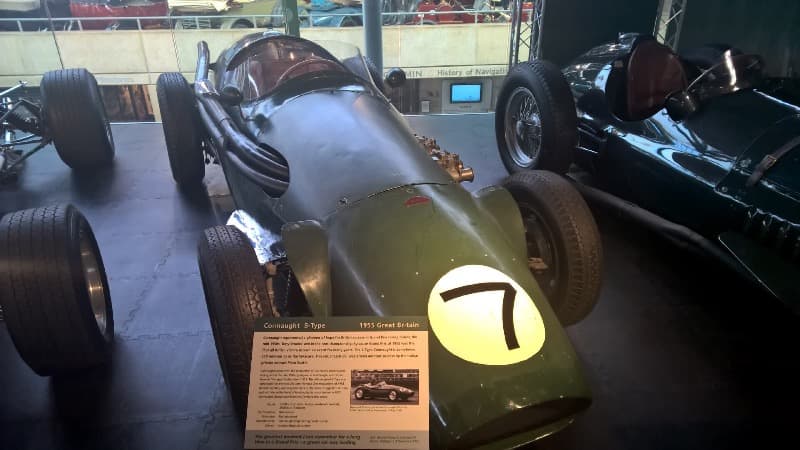
Connaught B-Type (1955)
This car represents a glimmer of hope for British victories in Grand Prix racing in the mid-1950s. Tony Brooks won the Syracuse Grand Prix in it in 1955 – it was the first British victory in many years. Connaught began producing sports cars in the late 1940s, then prepared single-seater vehicles for the Formula 2 category from 1951, and finally, Formula 1 cars from 1954. Despite building some truly successful vehicles, the company ran into financial difficulties and disappeared from the Formula 1 scene by 1957.
- Engine: 4-cyl, 2470 cc
- Max speed: N/A
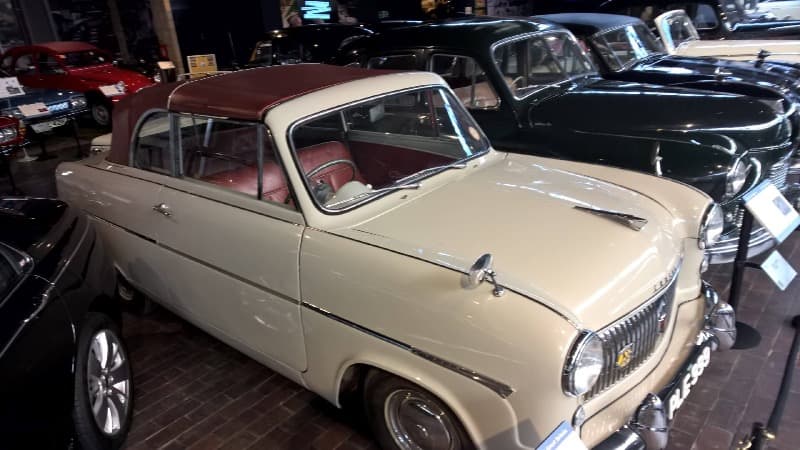
Ford Consul (1955)
This was an innovative car introduced in 1951. It featured an overhead valve engine, hydraulic brakes, a hydraulic clutch, a 12V electrical system, and independent front suspension. Initially, the Consul was only available as a four-door car, but in 1953, a two-door convertible version appeared, with the body built by Carbodies in Coventry. It was an incredibly successful and popular design. Over 200,000 units of the first version alone were produced before the enlarged MkII version was launched.
- Engine: 4-cyl, 1508 cc
- Max speed: 72 mph
British Motoring Classics from 1960-1979
Road trip through two of the most exciting decades in British motoring history. From quirky microcars to legendary racing champions, the 60s and 70s gave us some of the most iconic vehicles ever to grace the tarmac. Let’s fire up the engine and take a look back.
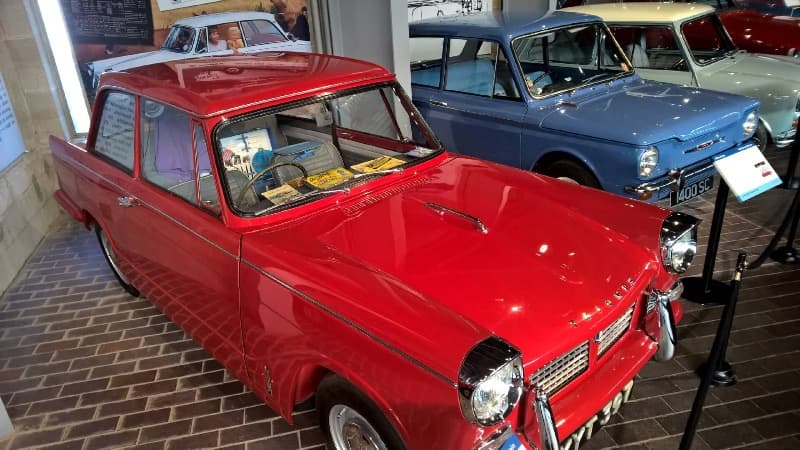
Triumph Herald (1960)
A world away from its predecessor, the Standard Ten, the Triumph Herald was a radical departure in automotive styling. Its sharp, clean lines were penned by the famed Italian design house, Michelotti. One of its most clever features was a bolt-on body construction, which allowed for a whole family of different body styles to be built on the same chassis – you could have a saloon, coupé, convertible, estate, or even a van. The Herald was also famous for its incredible turning circle of just nine metres, making it a dream to handle in tight city streets. Over half a million were produced, securing its place in Britain’s motoring heart.
- Engine: 4-cylinder, 948 cc
- Top Speed: 71 mph
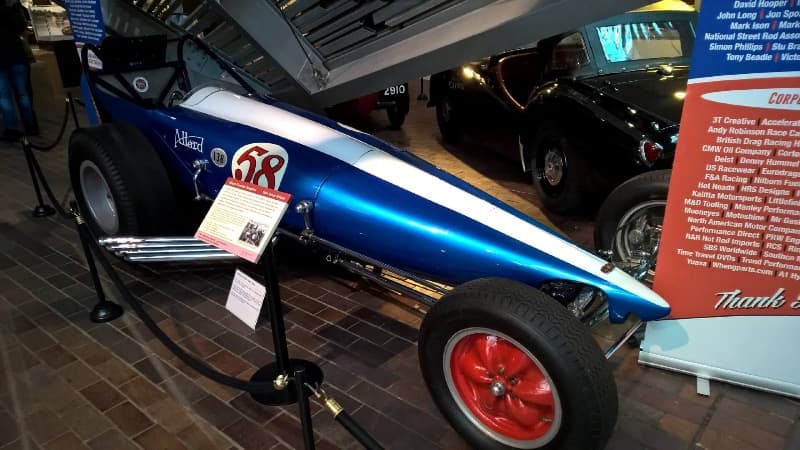
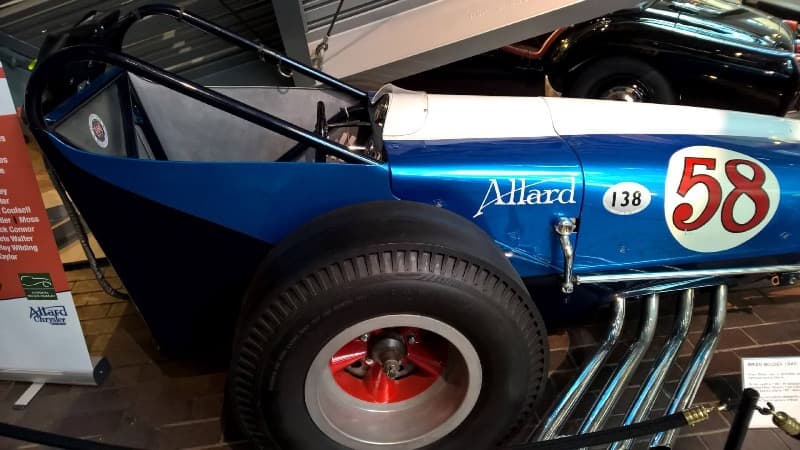
Allard Chrysler Dragster (1961)
This machine was built for one thing and one thing only: pure, unadulterated speed. The Allard Chrysler was the very first purpose-built dragster in Great Britain, a true pioneer of the sport. Designed for explosive acceleration over short distances, it features the classic dragster look: tiny front wheels and enormous rear slicks. The driver sits behind the rear axle, right in the heart of the action. Before a race, the front wheels are locked while the driver spins the rear wheels to melt the surface of the tyres, creating a sticky layer for maximum grip off the line.
- Engine: V8, 5700 cc
- Top Speed: 170 mph
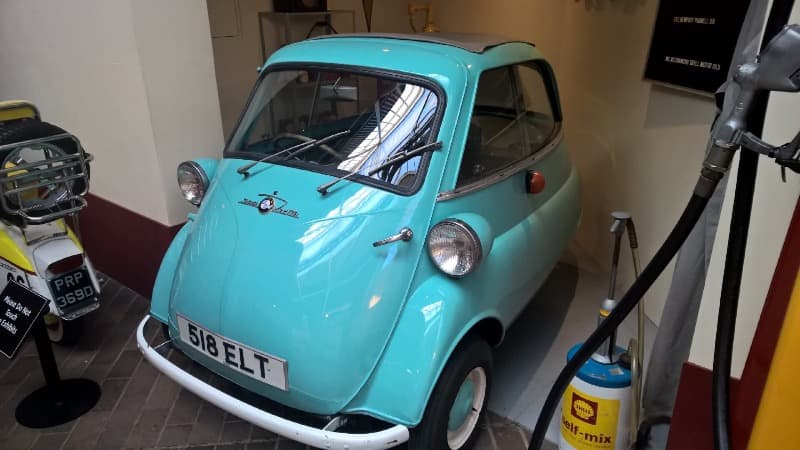
BMW Isetta 300 (1962)
While originally a German design, the BMW Isetta found a special home in Britain. To appeal to the local market, a unique three-wheeled version was created. This clever tweak meant it could be driven on a motorcycle licence, and it also qualified for much lower road tax and insurance – a brilliant piece of practical thinking! These British-market models were assembled under licence from BMW in nearby Brighton. The Isetta’s most unforgettable feature, however, was its door. Or rather, the lack of side doors. The entire front of the car, windscreen and all, swung open to let the driver and passenger in.
- Engine: 1-cylinder, 298 cc
- Top Speed: 50 mph
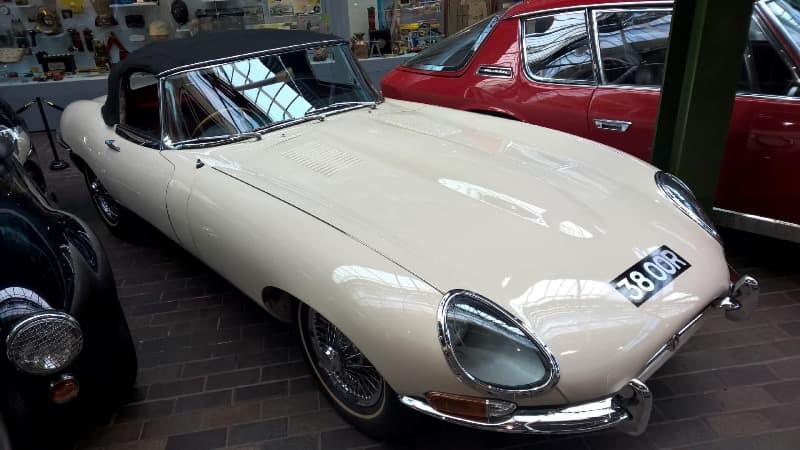
Jaguar E-Type (1962)
Often called “the most beautiful car ever made,” the Jaguar E-Type is a true automotive legend. It was the definitive and most desirable sports car of the 1960s. Available as a two-seater roadster or coupé, it offered blistering performance and a jaw-dropping design at a relatively affordable price. The E-Type replaced the XK150 sports car and drew its design inspiration from the extravagant D-Type racer, with its distinctive fin behind the driver’s seat. In 1965, the original 3.8-litre engine was upgraded to a 4.2-litre version, and a year later, a 2+2 coupé with an optional automatic gearbox was introduced. The series culminated in 1971 with the arrival of a new 5.3-litre, 12-cylinder engine.
- Engine: 6-cylinder, 3781 cc
- Top Speed: 150 mph
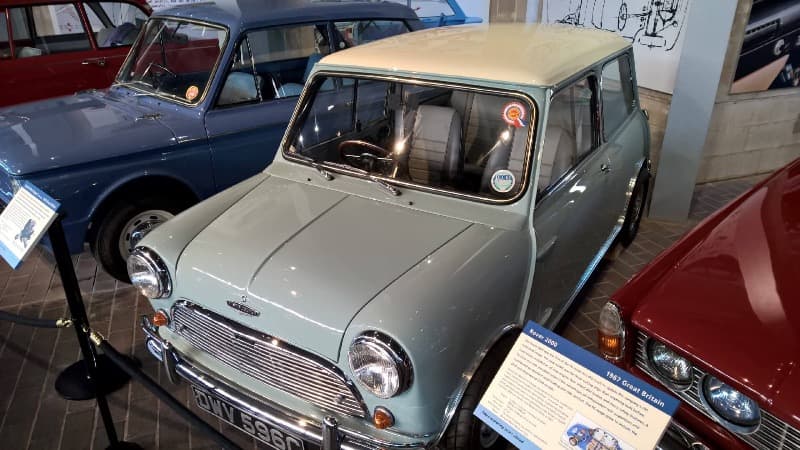
Austin Mini-Cooper S Downton (1963)
It may look small, but the Mini captured the heart of a nation. Its genius was providing the maximum amount of interior space within the smallest possible footprint. This was achieved through a revolutionary engine design where the gearbox was housed directly in the engine’s sump. It also boasted superb independent suspension on all four wheels. The Cooper was the sporty version of the Mini, developed with the help of Formula 1 team owner John Cooper. In 1963, the even more potent ‘S’ version appeared, with this particular model featuring an engine tuned by the specialists at Downton Engineering.
- Engine: 4-cylinder, 1071 cc
- Top Speed: 95 mph
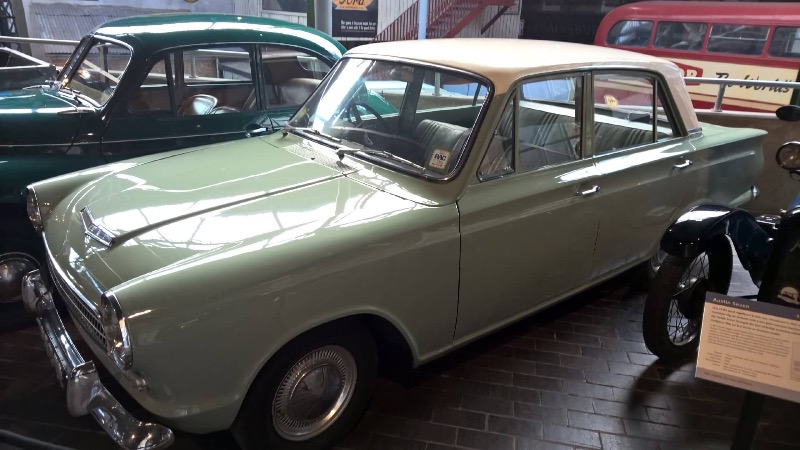
Ford Consul Cortina (1963)
The Cortina was a phenomenal sales success, with over a million units produced. It was a car for the people: relatively cheap to buy and available with a wide range of engines and body styles. In its class, it was often the cheapest, fastest, and most economical choice. It became so ubiquitous that a whole new category of vehicles, the “Cortina class,” was established. It was a favourite among private buyers and a staple of company car fleets across the country, finally being replaced by the Sierra in 1982.
- Engine: 4-cylinder, 1198 cc
- Top Speed: 76 mph
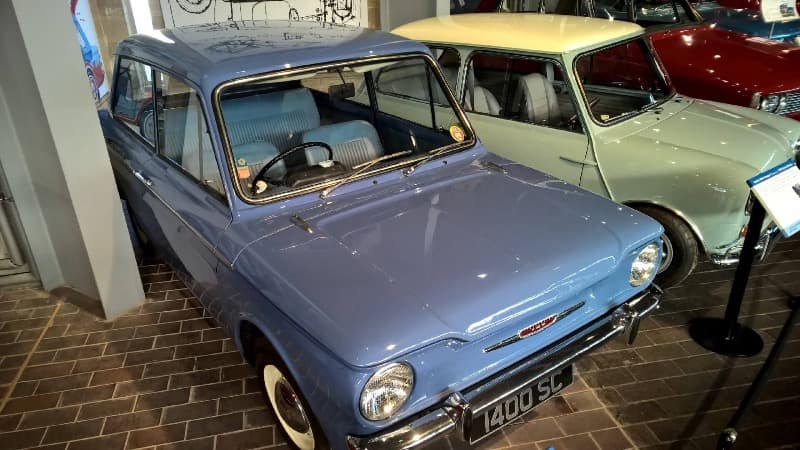
Hillman Imp (1963)
In the early 60s, the Rootes Group launched “Project Apex,” aiming to create a small car to compete with the dominant BMC Mini. The result was the Hillman Imp, a cleverly designed car with a rear-mounted engine. It featured an aluminium-head OHV engine driving the rear wheels through a four-speed gearbox. Early models were innovative but plagued by reliability issues, particularly the pneumatic throttle. The Imp was sold under many different brands, including the Hillman GT, Singer Chamois, and Sunbeam Stiletto. Sadly, reliability problems led to a sales slump, and the production target of 150,000 cars per year was never met, with around 440,000 built in total.
- Engine: 4-cylinder, 875 cc
- Top Speed: 78 mph
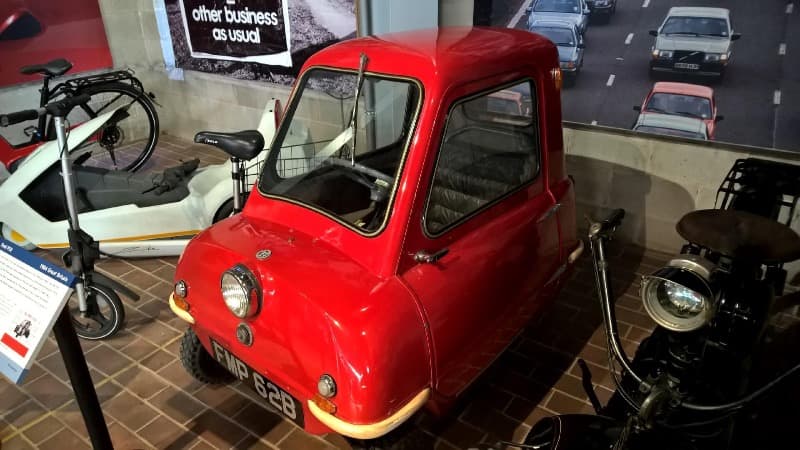
Peel P.50 (1964)
Welcome to the world’s smallest production car. The Peel P.50 is utterly unique in every respect and a product of the microcar boom of the 50s and 60s. It was strictly a single-seater, and even then, only if you were under 1.70m tall. It had three forward gears but famously no reverse. To go backwards, you had to get out and use a handle on the back to simply pick the car up and turn it around. It sounds mad, but weighing only 59 kg, it was surprisingly easy. The car was so light and compact you could pull it behind you like a shopping trolley. A tiny 49 cc motorcycle engine provided the power, but it was so noisy that having a conversation (even with yourself) was nearly impossible.
- Engine: 1-cylinder, 49 cc
- Top Speed: 40 mph
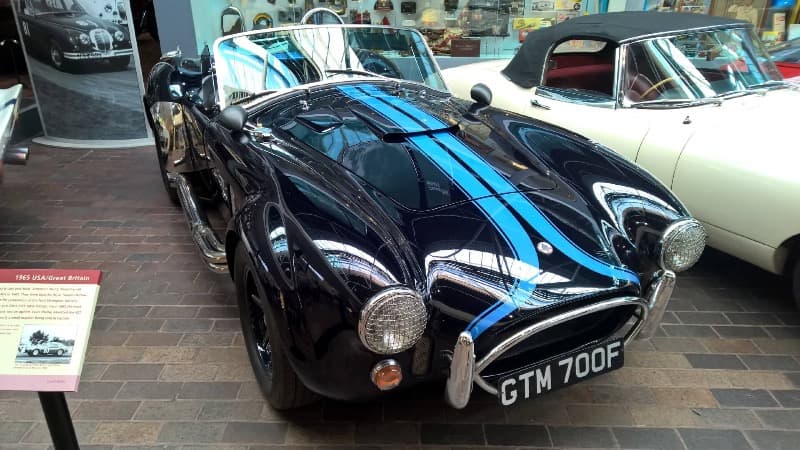
AC Cobra 427 (1965)
A masterpiece of Anglo-American collaboration, the AC Cobra was the brainchild of the legendary Carroll Shelby. The chassis and body were built by the British firm AC Cars before being shipped to Shelby’s workshop in California. There, they were fitted with a monstrous Ford V8 engine. The engine size grew over time, starting at 4260 cc, then 4736 cc, until finally, in 1965, the definitive 6997 cc unit was installed.
- Engine: V8, 6997 cc
- Top Speed: 165 mph
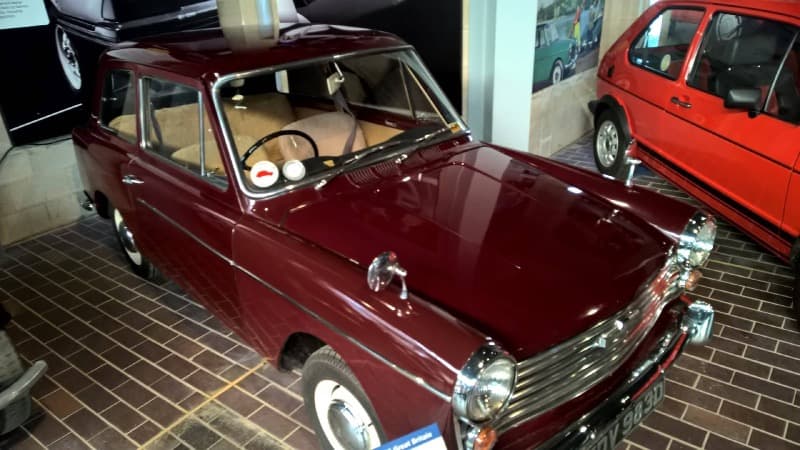
Austin A40 MkII Countryman Farina (1966)
Initially launched as a two-door saloon, the A40 was designed to replace the stylistically dated A35, offering a much more spacious interior. While built by the British Motor Corporation (BMC), its sharp, modern bodywork was styled by the Italian design house Pininfarina. The look was so successful that BMC continued its collaboration with the Italian studio for the next decade. This MkII Countryman version was an updated model that became one of the very first three-door hatchbacks.
- Engine: 4-cylinder, 1098 cc
- Top Speed: 79 mph
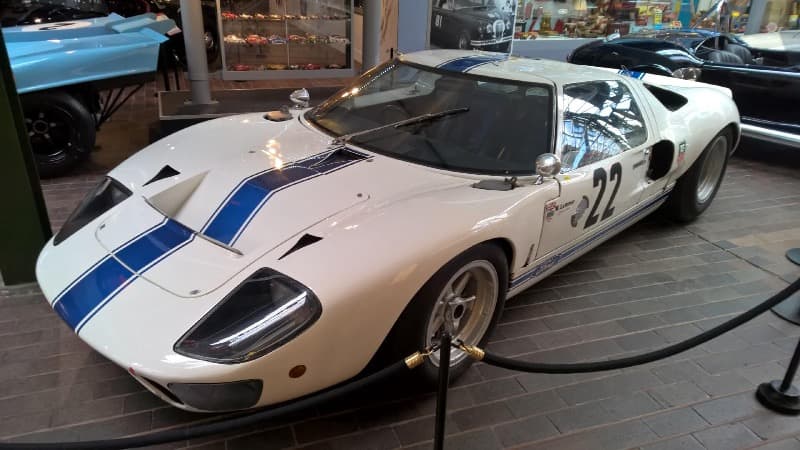
Ford GT40 (1966)
One of the most recognisable sports cars of all time, the GT40 was built with one goal: to dominate the world of endurance racing. And dominate it did, winning the legendary Le Mans 24 Hour race four times in a row from 1966 to 1969. These epic battles were immortalised in the 2019 film “Ford v Ferrari” (or “Le Mans ’66” in the UK). This particular car, chassis 1071, was a road-legal version. The model got its name because it measured just 40 inches high. Only 105 were ever built.
- Engine: V8, 4942 cc
- Top Speed: 160 mph
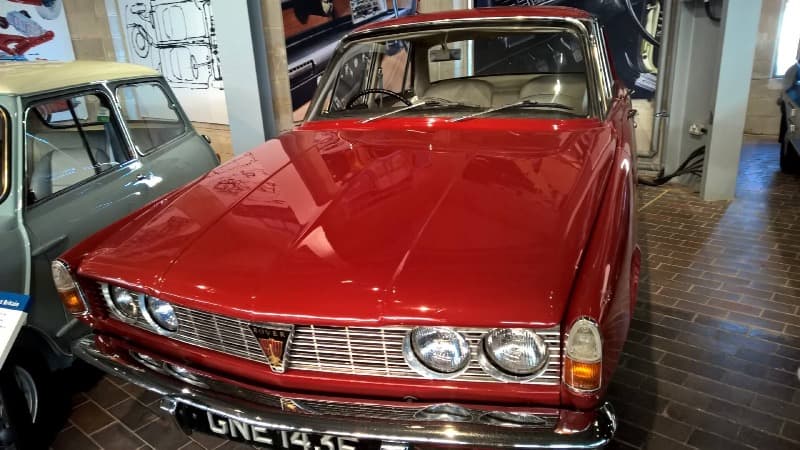
Rover 2000 (1967)
The Rover 2000 was the first model in the P6 series and represented a significant stylistic shift for the company. Its predecessor, the P4, was known for being solid and reliable but had a reputation as an “Auntie’s Rover” or a “poor man’s Rolls-Royce.” The P6 was designed to change that image. The old-fashioned curves were replaced with sharp, modern lines. It featured a brand-new engine, all-round disc brakes, and a host of safety innovations, including a De Dion rear axle – a design previously found only on high-end sports and luxury cars – which provided exceptional ride comfort and safety.
- Engine: 4-cylinder, 1978 cc
- Top Speed: 104 mph
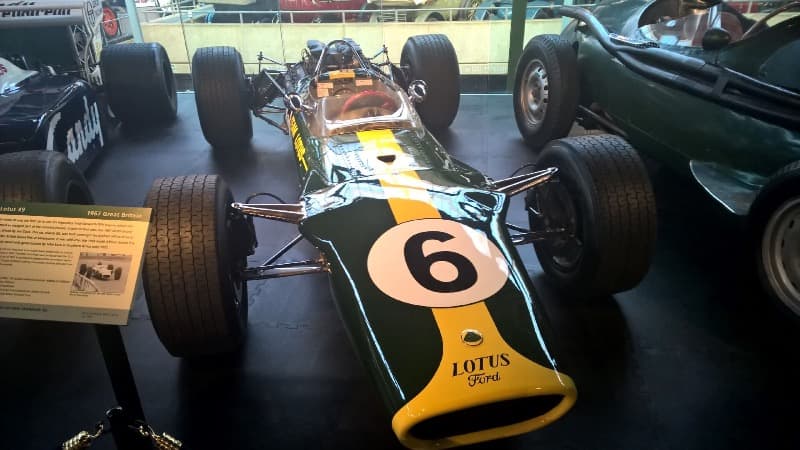
Lotus 49 (1967)
This was the car that introduced the legendary Ford-Cosworth DFV (Double Four Valve) engine to the world. Racing cars equipped with this engine went on to win an incredible 155 of the 262 Formula 1 races they entered. In a classic piece of Lotus innovation, the engine in the 49 was integrated as a stressed member of the chassis. Driven by the great Jim Clark, the car won on its very first outing at the 1967 Dutch Grand Prix. Lead designer Colin Chapman had pushed for a smaller, lighter V8 engine against expert advice favouring a V12, and history proved him spectacularly right.
- Engine: V8, 2993 cc
- Top Speed: Over 180 mph
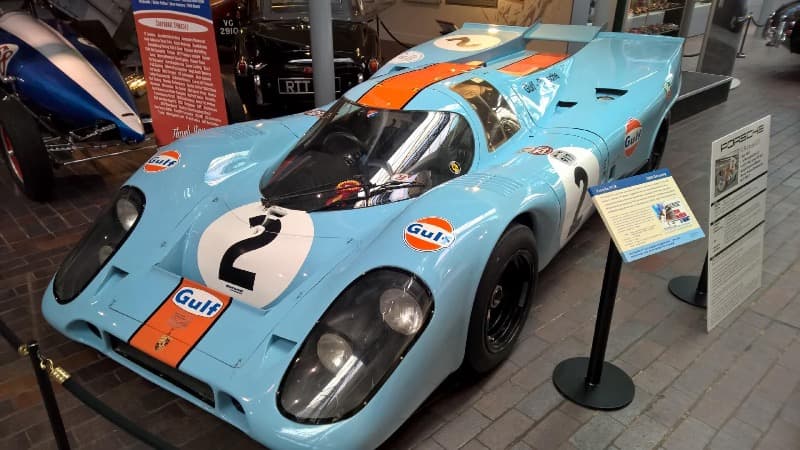
Porsche 917K (1969)
The Porsche 917K is widely regarded as one of the greatest racing cars of all time. This particular car, chassis 917-13, raced during the 1970 and 1971 seasons. In 1970, it was crashed while filming scenes for the Steve McQueen movie “Le Mans.” It was repaired and, in 1971, raced for the “JW Automotive/Gulf” team, winning at Daytona, the Österreichring, Monza, and Monthlery. Incredibly, Porsche designed and built the first 25 examples of the 917 in just seven months to meet homologation rules. It became an instant sensation, winning nearly every race it entered for the next two seasons.
- Engine: 12-cylinder, 4998 cc
- Top Speed: 220 mph
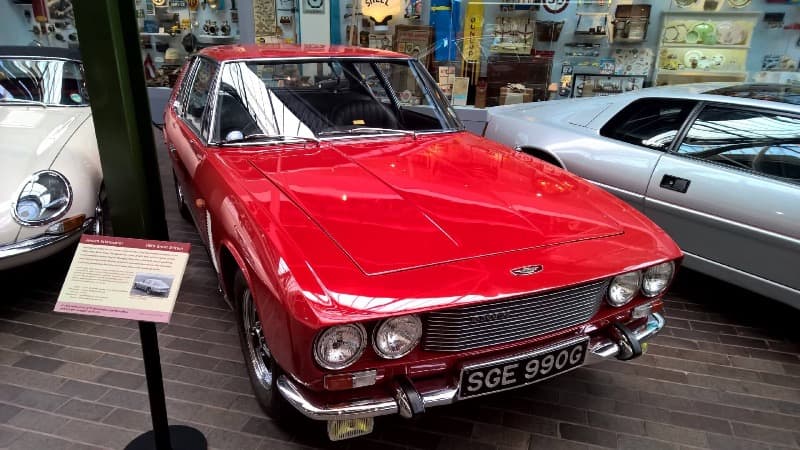
Jensen Interceptor (1969)
Built by brothers Alan and Richard Jensen, the Interceptor caused a stir at the 1966 London Motor Show. Its aggressive, muscular bodywork was designed by the Italian coachbuilder Vignale of Turin. Power came from a potent Chrysler V8 engine. While a manual gearbox was available, most examples were fitted with Chrysler’s smooth TorqueFlite automatic transmission. The Interceptor was rear-wheel drive, but an identical-looking version called the Jensen FF was also produced, which pioneered the use of four-wheel drive in a performance road car. Sadly, financial troubles and the 1973 oil crisis led to the company’s bankruptcy in 1976.
- Engine: V8, 6276 cc
- Top Speed: 140 mph
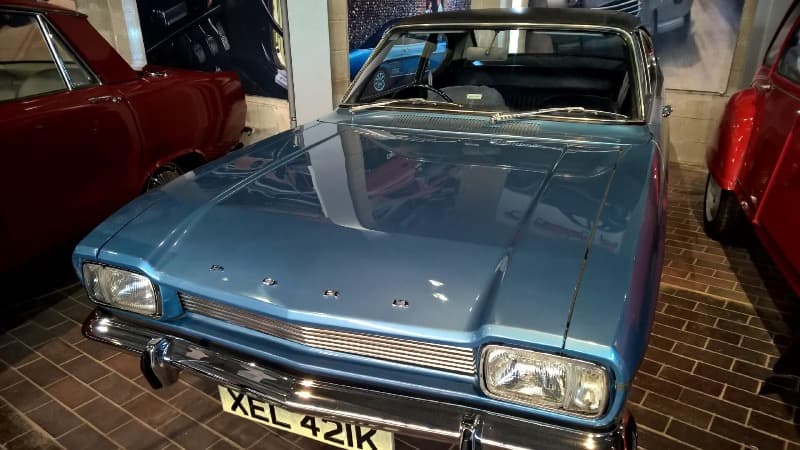
Ford Capri 1600L (1971)
Marketed with the famous tagline, “The car you always promised yourself,” the Ford Capri was Europe’s answer to the Mustang. It was based on the MkII Cortina platform and shared many of its components. This stylish coupé was built in both Great Britain (almost 400,000 units) and Germany, offering a touch of glamour and performance to the masses.
- Engine: 4-cylinder, 1599 cc
- Top Speed: 93 mph
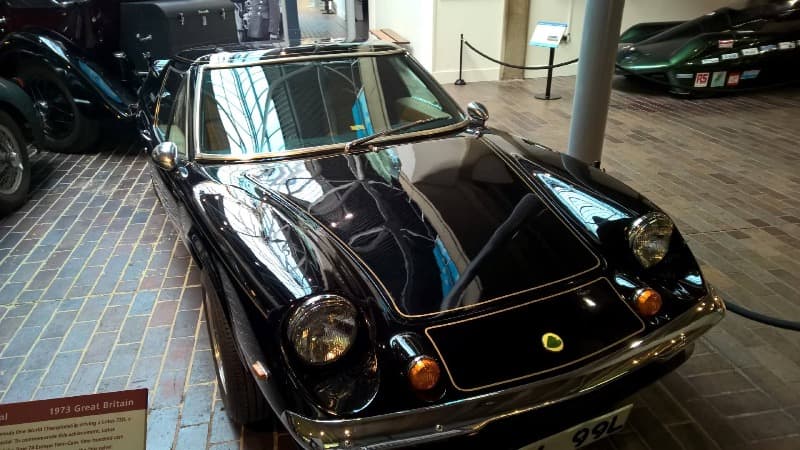
Lotus Europa Special (1973)
Also known as the Type 46, the Europa was Lotus’s first mid-engined road car. This layout, previously reserved for exotic supercars, brought a new level of handling to the sports car market. In true Lotus fashion, the body was made of lightweight fibreglass, initially bonded to a steel backbone chassis. A race-prepared version, the Lotus 47, went on to achieve great success in Formula 2 racing during the 1970s.
- Engine: 4-cylinder, 1558 cc DOHC
- Top Speed: 120 mph
The Era of Icons: 1980 – 1999
Venturing further into the museum, we stepped into a hall that felt like a time capsule from the 80s and 90s. This was the era of hot hatches, rally legends, and cars that defined a generation.
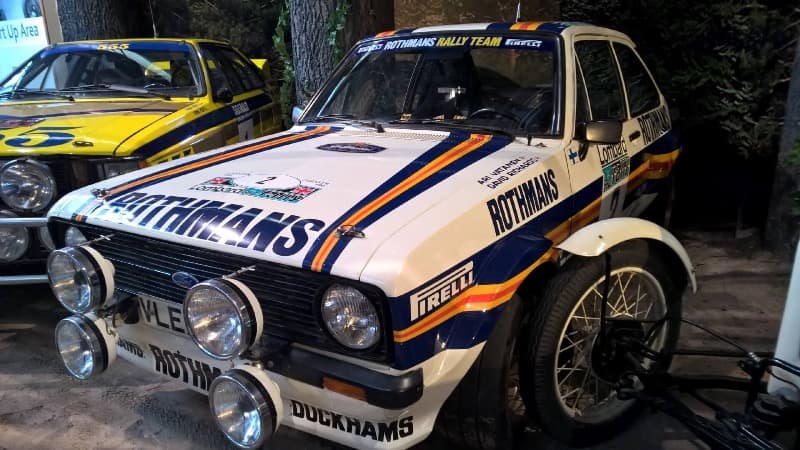
Ford Escort RS (1981)
First up, we spotted another gifted competitor from the world of rallying. This is the very model driven by legends like Ari Vatanen and Hannu Mikkola before he made the switch to the Audi Quattro. Even when the rally scene was shaken up by the arrival of four-wheel-drive monsters, this rear-wheel-drive car, powered by a Lotus engine with twin camshafts, repeatedly clinched victories.
- Engine: 4-cyl DOHC
- Capacity: 1993 cc
- Max Speed: 120 mph
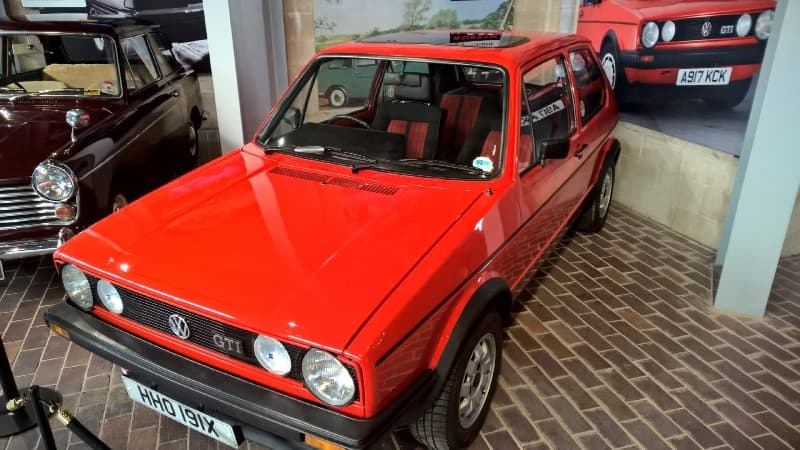
Volkswagen Golf GTI (1981)
This car is a true icon. For many years, even long after its production ended in 1983, it was a symbol of prestige and performance. The sporty GTI version, in particular, was the object of many a driver’s desire. The Golf truly popularised the hatchback body style – practical, spacious, and with easy access to the boot. Its design, penned by Giorgetto Giugiaro, proved so timeless that the Golf Mk1 was produced in South Africa as the Citi Golf right up until 2009.
- Engine: 4-cyl
- Capacity: 1588 cc
- Max Speed: 111 mph
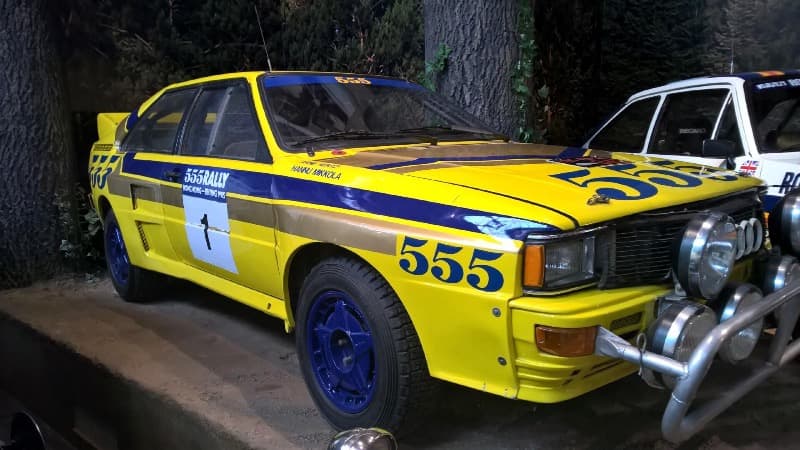
Audi Quattro A2 (1983)
Based on the Audi 80, this was the car that brought four-wheel drive to the masses and dominated the rally stages of the 1980s. The Quattro was powered by a 5-cylinder, in-line 2.1-litre engine. After his first test drive in a prototype, Finnish rally driver Hannu Mikkola famously said, “I have just experienced a glimpse of the future. This car will revolutionise rallying forever.” Seeing it in person, you can feel that revolutionary spirit.
- Engine: 5-cyl
- Capacity: 2121 cc
- Max Speed: 150 mph
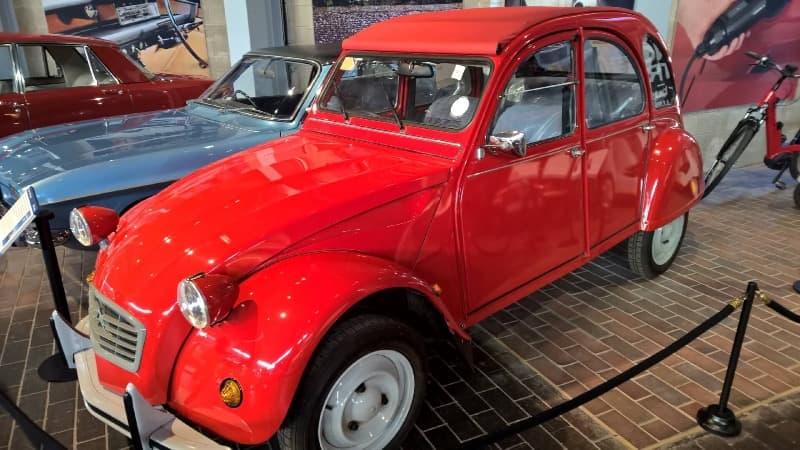
Citroën 2CV6 Special (1986)
Anyone who has enjoyed the classic films of Louis de Funès will instantly recognise this car. Unveiled at the Paris Salon in 1948, it was in production from 1949 all the way to 1990, with 3.8 million of these cheerful vehicles leaving the factories. Development began back in 1936, when the managing director, Pierre Boulanger, commissioned a simple, affordable car “for everyone,” capable of carrying four people and 50 kilograms of luggage. The first prototype was dubbed the “four wheels under an umbrella.” By 1939, 250 prototypes existed, but the outbreak of war halted progress. Before the Germans entered Paris, the French destroyed all but one prototype, hiding the technical documents. The pre-war version had only one headlamp and a crank starter, but the post-war models were equipped with two lamps, an electric starter, and indicators. The 2CV was cheap, easy to maintain, and economical, quickly becoming a fixture on French roads.
- Engine: 2-cyl Boxer type
- Capacity: 602 cc
- Max Speed: 70 mph
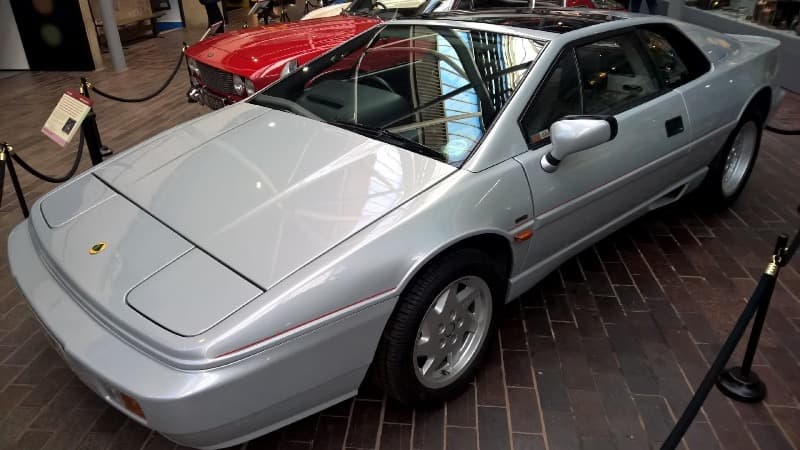
Lotus Esprit (1989)
An absolutely iconic car! The Esprit has starred in dozens of films, music videos, and computer games, from the days of the ZX Spectrum and Commodore 64 to the Amiga and countless arcade machines. Its stunning bodywork was designed by Giugiaro, and the car caused a sensation at the 1975 Paris Auto Show, having first been unveiled as a concept car in Turin in 1972.
- Engine: 4-cyl DOHC
- Capacity: 2174 cc
- Max Speed: 138 mph
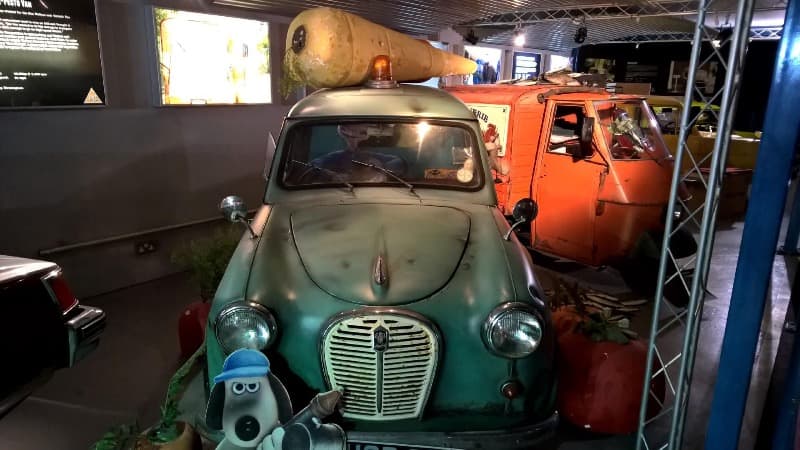
Cars of the Stars
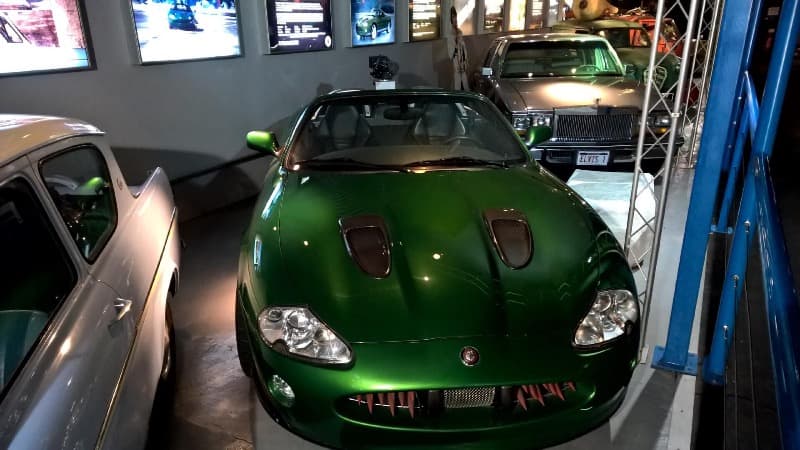
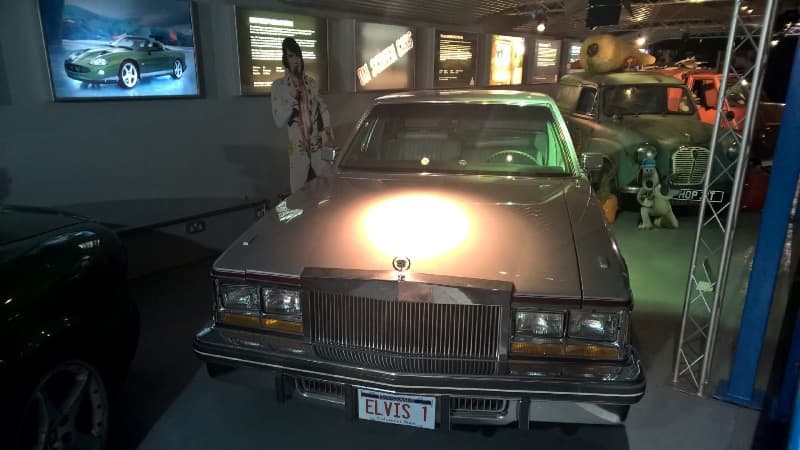
In a separate, smaller pavilion, we found a collection of cars famous from the silver screen. It was a fantastic walk down memory lane, featuring globally recognised vehicles like James Bond’s Aston Martin from “Die Another Day,” alongside some brilliant gems known mostly to a British audience, like the unmistakable yellow three-wheeler from “Only Fools and Horses.” We also saw the flying Ford Anglia 105E Deluxe from the Harry Potter films, Mr Bean’s yellow and green Leyland Mini 1000, and even a Cadillac once owned by Elvis Presley.
Top Gear Enormodrome
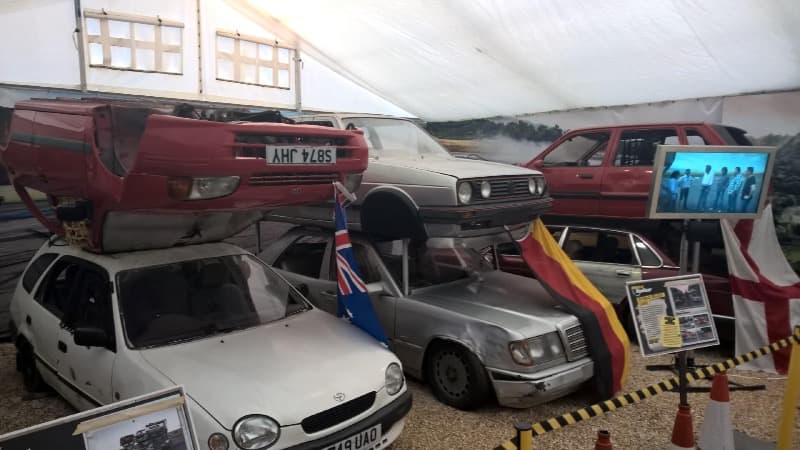
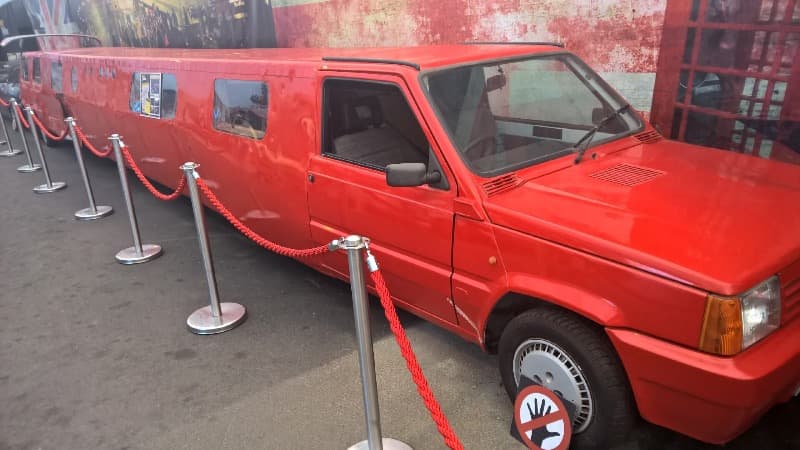
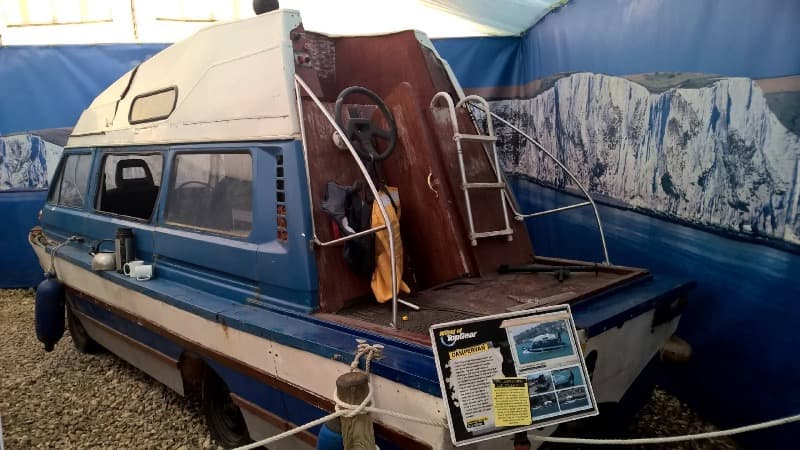
In another hall, a real treat awaited fans of Richard Hammond, James May, and Jeremy Clarkson – a collection of the wonderfully mad creations from Top Gear episodes. You simply have to see it to believe it!
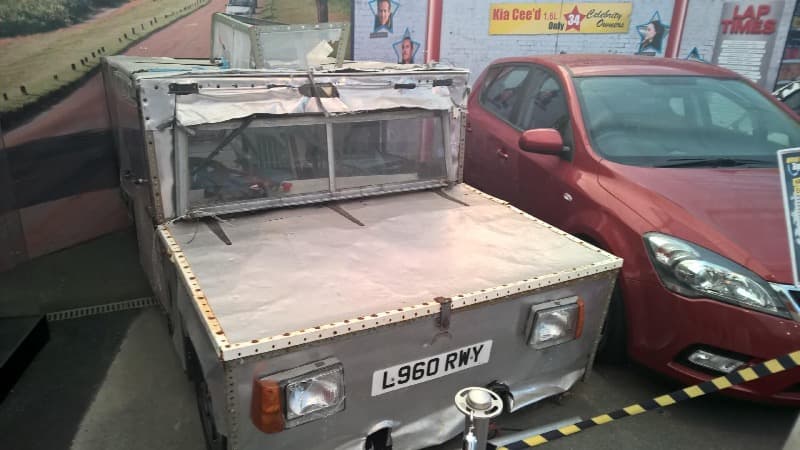
- A Fiat Panda limousine, stretched to over 14 metres long – so long that a passenger in the back needs a megaphone to speak to the driver.
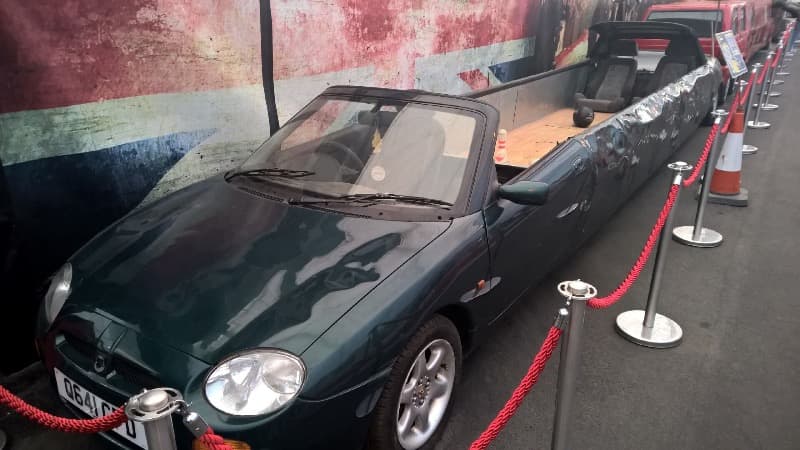
- An MG F that’s slightly shorter but boasts a spoiler several metres high. For this car, communication was handled by a landline telephone taped to Richard’s head, and they even built a mini bowling alley inside.
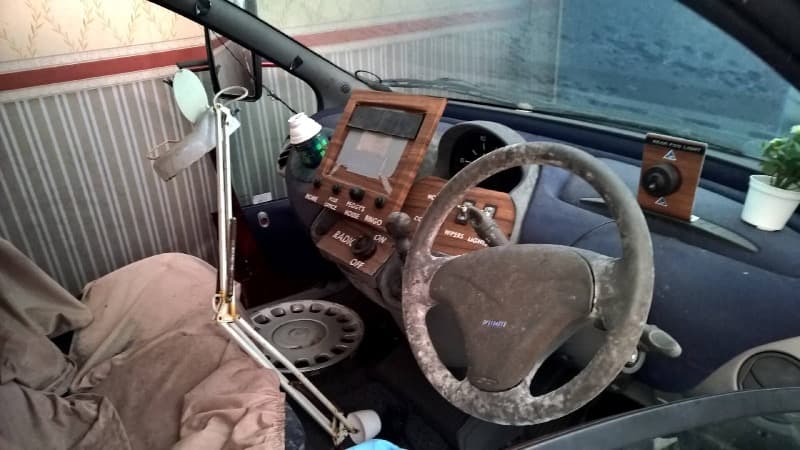
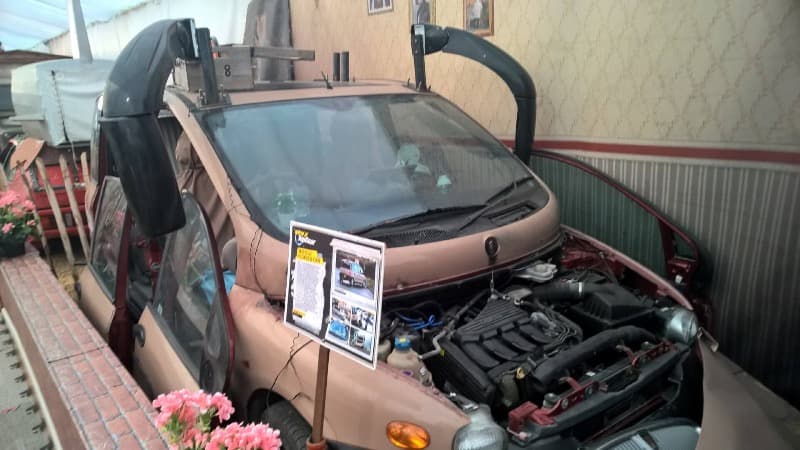
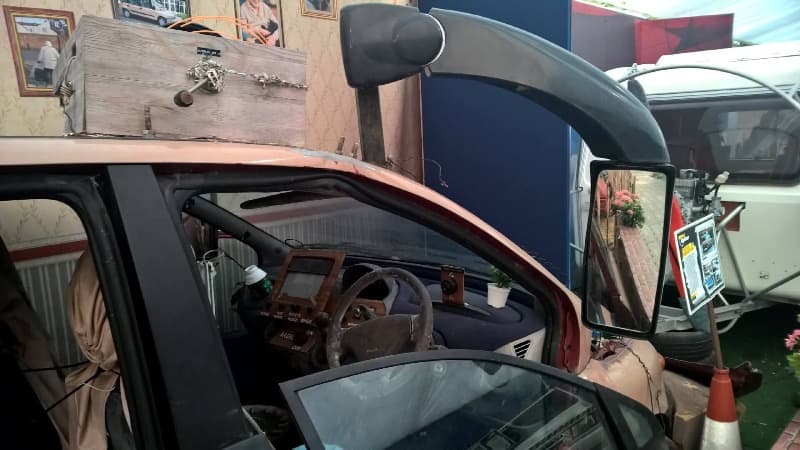
- The infamous Fiat Multipla for senior citizens (rebranded as a “Rover James”), complete with coach mirrors, chintz armchairs inside, and a sat-nav with only four saved locations: Home, Post Office, Peggy’s Bar, and the Bingo hall. It also features a rear fog light switch where both positions are “off.” The whole thing is topped off with a rooftop cross and a bumper the size of a small sofa.
The Pursuit of Speed
This section of the museum is dedicated to the brave individuals and incredible machines that pushed the boundaries of what’s possible on land.
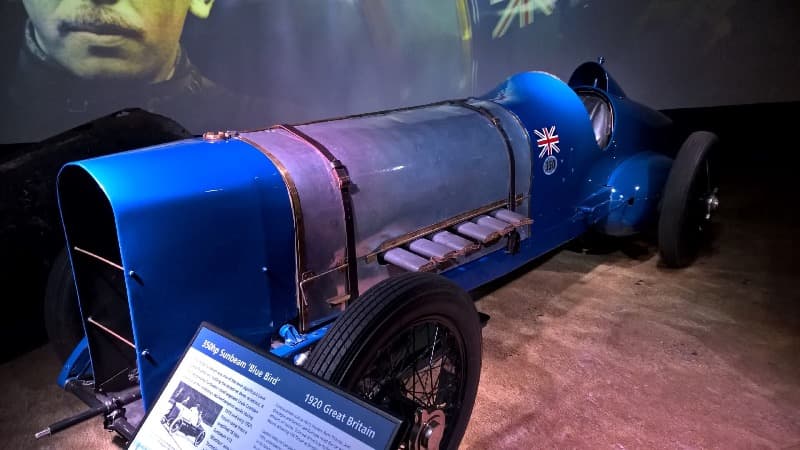
Sunbeam 350HP ‘Blue Bird’ (1922)
This racing car broke the land speed record multiple times. Its first record was set at Brooklands in England on 17 May 1922, with Kenelm Lee Guinness at the wheel, reaching 133.75 mph. This was the last land speed record ever set on a racetrack. Malcolm Campbell then broke the record on 24 September 1924 at Pendine Sands in Wales, hitting 146 mph. He had intended to sell his ‘Blue Bird’ after this, but upon learning a rival was planning an attempt, he spent the winter improving the car’s aerodynamics and performance. His efforts paid off with a new record of 150.766 mph.
- Engine: V12 aircraft engine
- Capacity: 18 litres
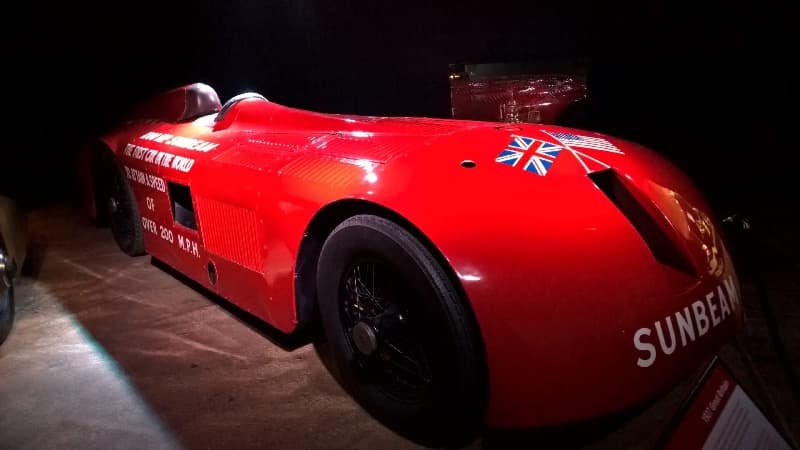
Sunbeam 1000HP (1927)
Affectionately nicknamed ‘The Slug’, this beast of a machine has two V12 aircraft engines, each with a capacity of 22.5 litres. One was placed in front of the driver and one behind. The rear engine was started first using compressed air, and the front engine was then engaged via a clutch. Once the revs were synchronised, they were locked together. This was the first car to break the 200 mph barrier. On 29 March 1927, at Daytona Beach, Florida, Henry Segrave achieved 203.79 mph.
- Engine: 2 x V12 aircraft engines
- Capacity: 2 x 22.5 litres
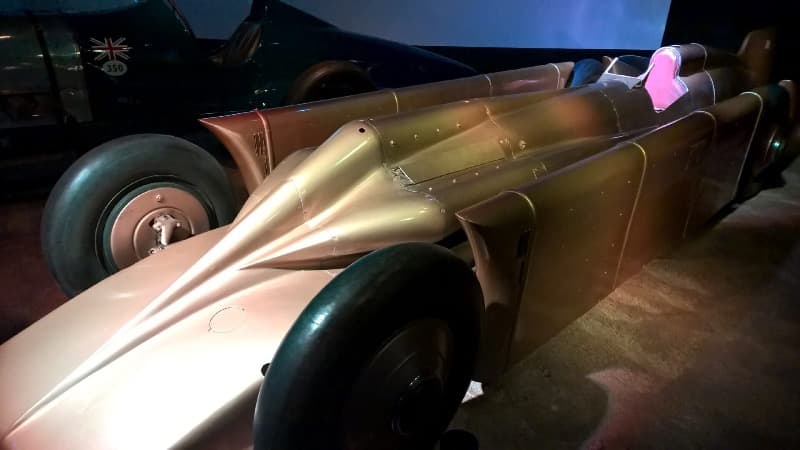
Irving-Napier ‘Golden Arrow’ (1929)
The late 1920s saw a fierce battle for the title of the world’s fastest car and driver. The Golden Arrow was Major Henry Segrave’s answer to American Ray Keech, who had beaten his 1927 record. Segrave was determined to reclaim the title for the British Crown. On 11 March 1929, in front of over 100,000 spectators at Daytona, Segrave piloted the ‘Golden Arrow’ to a stunning victory, reaching 231.446 mph. He was awarded a knighthood for his achievement. From 1929 until 1963, every land speed record was held by the British.
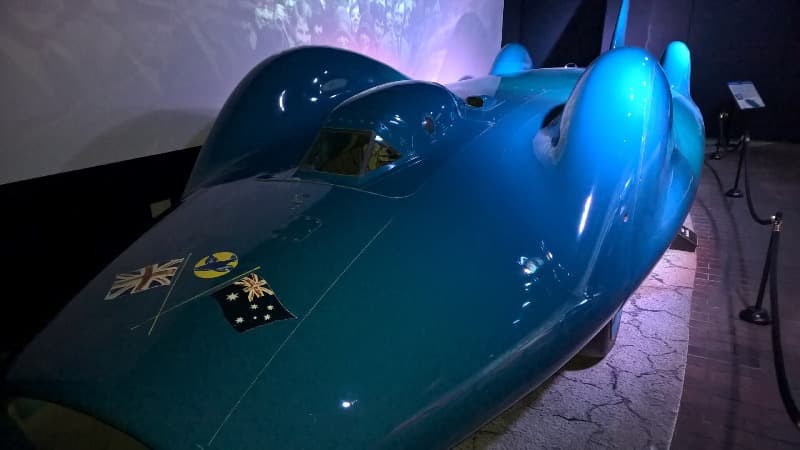
Proteus Bluebird CN7 (1960)
This incredible car was the first to officially exceed 400 mph and the last record-breaker to be wheel-driven; all subsequent cars used jet engines. Weighing four tonnes and measuring over 9 metres long, its Bristol-Siddeley Proteus engine produced nearly 4,500 HP. In 1960, Donald Campbell took the car to the Bonneville Salt Flats in Utah, but a catastrophic crash at over 360 mph left him with serious injuries. Undeterred, he rebuilt the CN7 and, after several weather-related setbacks in Australia, he finally set the record on 17 July 1964, at Lake Eyre. Despite reaching speeds of 440 mph, his official two-way average was 403.10 mph. Campbell was disappointed, as the car was designed for speeds closer to 500 mph, but he had broken the barrier and secured his place in history.
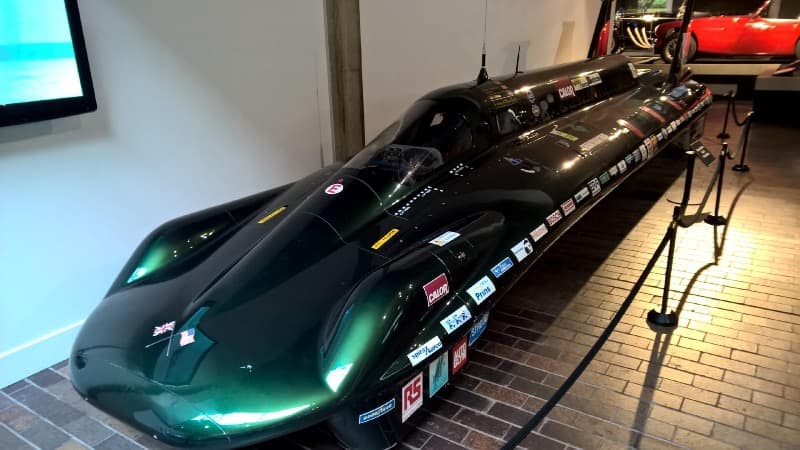
British Steam Car ‘Inspiration’ (2009)
This unique car was built for one purpose: to break the steam car record set way back in—wait for it—1906! That year, Fred Marriott, in a Stanley Rocket Steamer, became the first person to exceed 120 mph, reaching 127 mph at Daytona Beach. It took 103 years for another steam car to beat him. The ‘Inspiration’ finally achieved this on the Mojave Desert in California. The three-tonne vehicle carries a tank of water, which is heated to 400°C. The resulting steam hits turbines that power the wheels.
- New Record Speed: 148.308 mph
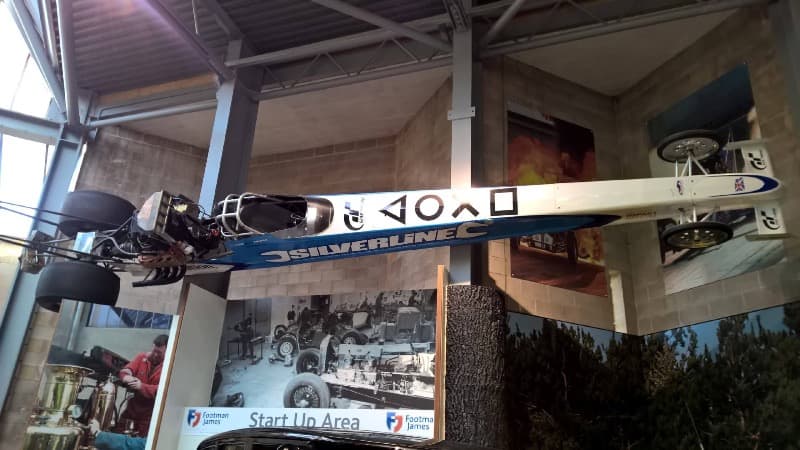
Silverline Top Methanol Dragster (2009)
This strange and wonderful machine is a Dragster, built purely for quarter-mile racing. Piloted by Dave Wilson, one of Britain’s best dragster drivers since the 1970s, this car became the fastest in its class, completing the quarter-mile in just 5.507 seconds and reaching a speed of 259 mph at the finish line.
- Engine: 7390cc V8
More Weird and Wonderful Wheels at the Motor Museum
Tucked away in the museum are some real oddities, vehicles that defy easy categorisation. From marketing marvels to magnificent failures, these are some of the quirkiest and most memorable machines on display. Let’s take a closer look.
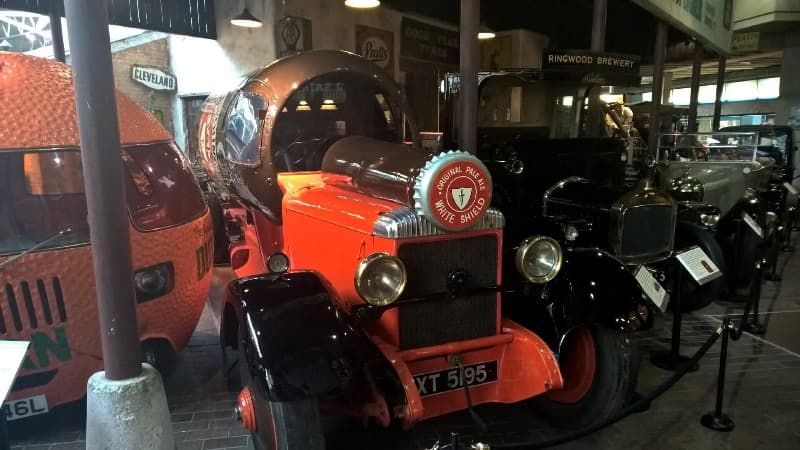
Daimler TL30 Bottle Car (1924)
Fancy a pint? This brilliant machine is one of five promotional ‘driving bottles’ commissioned by the Worthington brewery to promote their beer. Built on a sturdy Daimler 30hp chassis, it certainly turned heads wherever it went. It served the brewery for decades, only being taken out of service in 1958.
- Chassis: Daimler 30hp
- Original Engine: 4962cc
- Post-WWII Engine: 3520cc, 6-cylinder
- In service: Until 1958
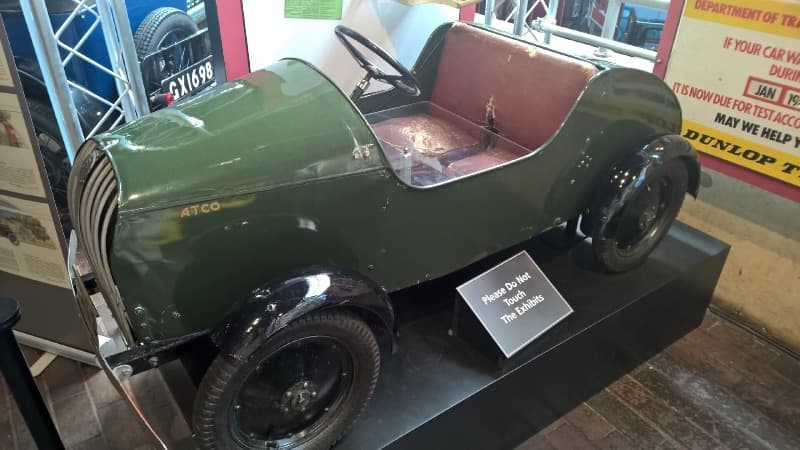
Atco Junior Safetyfirst Trainer (1939)
Now here’s something you don’t see every day! Atco, a company usually known for lawnmowers, created this delightful ‘Safetyfirst Trainer’ for the young drivers in the family. Believe it or not, children from 7 to 17 could get behind the wheel of this proper little car.
- Engine: 98cc, single-cylinder, two-stroke
- Power: 1 horsepower
- Gearbox: 2-speed (1 forward, 1 reverse)
- Fuel Economy: 80 miles per gallon
- Top Speed: 10 mph
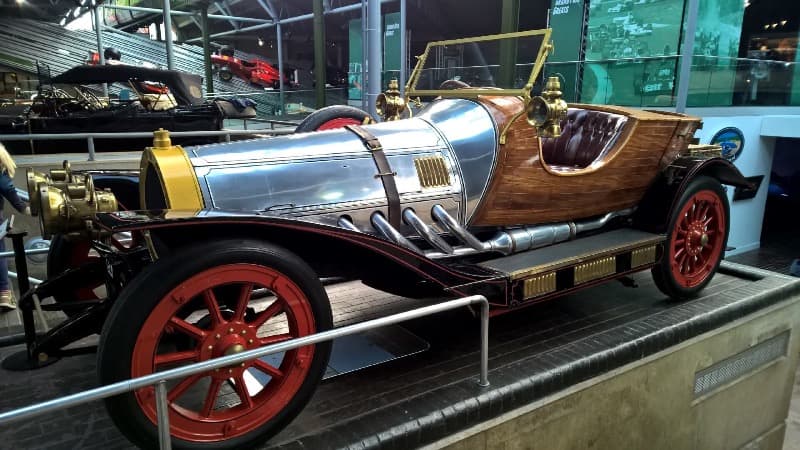
Chitty Chitty Bang Bang (1964)
Oh, you pretty Chitty Bang Bang! This fantasmagorical machine is, of course, one of the stars of the film based on the children’s book by none other than Ian Fleming, the creator of James Bond. A fun bit of trivia: Fleming didn’t invent the name. He borrowed it from Count Louis Zborowski, a British racing driver of Polish heritage, who nicknamed his own powerful racing cars ‘Chitty Bang Bang’ after the sound they made.
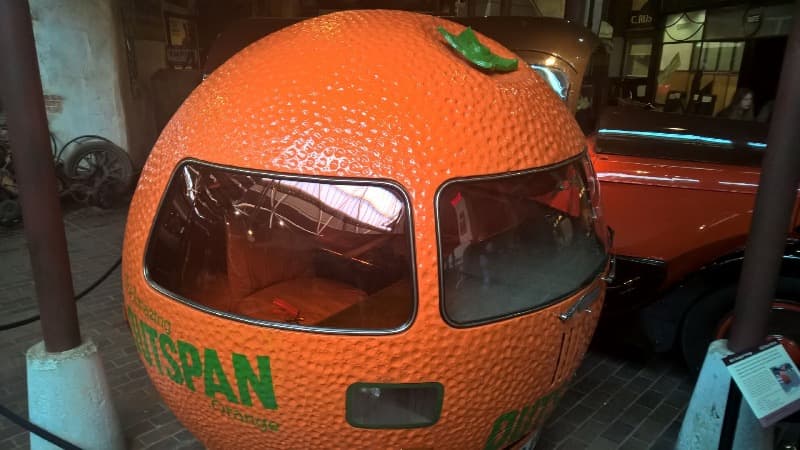
Mini Outspan Orange (1972)
You can’t miss this one! This zesty creation, built on a classic Mini chassis, is one of six promotional vehicles made for Outspan Citrus. Five of these juicy rides toured the UK, France, and Germany, while one was shipped off to South Africa. They had a bit of a reputation for being unstable; apparently, tipping over at speeds of 30 mph wasn’t uncommon. The good news? It was quite easy to push them back upright!
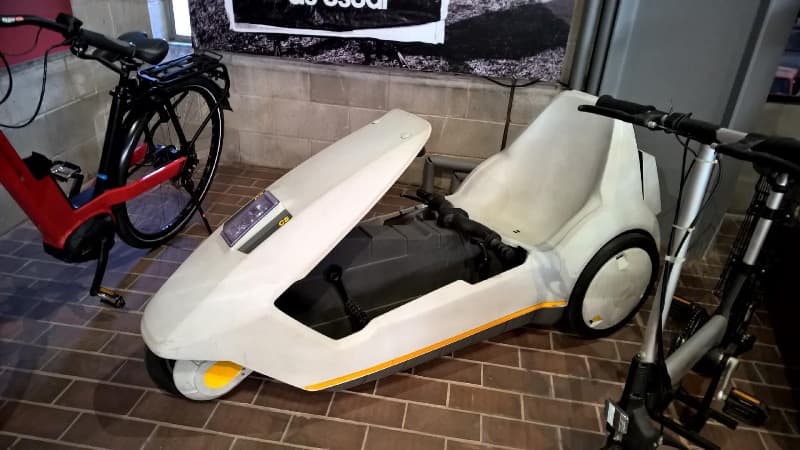
Sinclair C5 (1985)
Ah, the Sinclair C5. A glorious failure and an icon of the 80s! Many will remember Sir Clive Sinclair for his calculators and the legendary ZX Spectrum computer, but his foray into personal transport was… less successful. Hailed as the future of commuting, this electric-pedal trike was a commercial disaster, losing the company a cool £7 million. A bold idea, but perhaps a little ahead of its time.
- Type: Electric-pedal tricycle
- Range (single battery): 24 miles (or 40 with an optional second battery)
- Backup power: Human (pedals)
- Units sold: Around 17,000
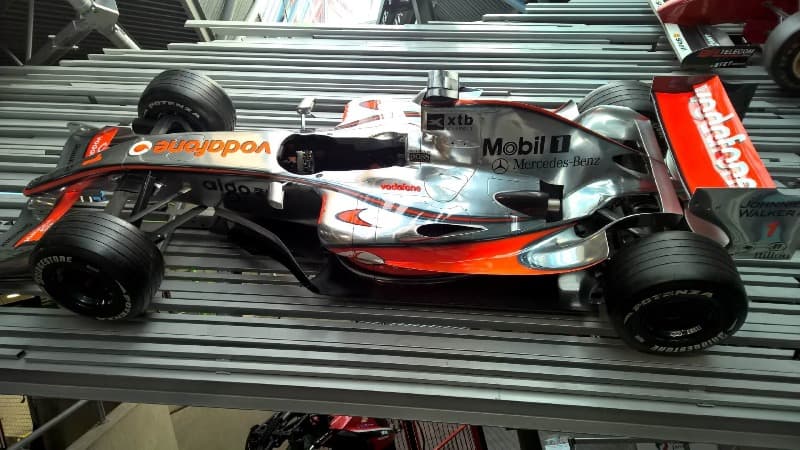
McLaren Mercedes MP4/21 (2006)
Of course, no British motor museum would be complete without a McLaren. While its brilliant founder, Bruce McLaren, was a proud New Zealander, the team has become synonymous with British motorsport. This particular beast, the MP4/21, hails from the team’s successful partnership with Mercedes and represents the pinnacle of Formula 1 engineering from its era.
- Engine: 2400cc V8
- Top Speed: Over 200 mph
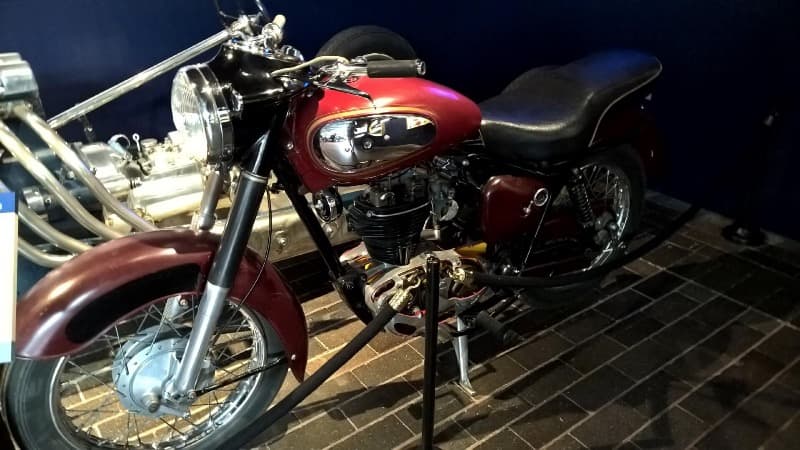
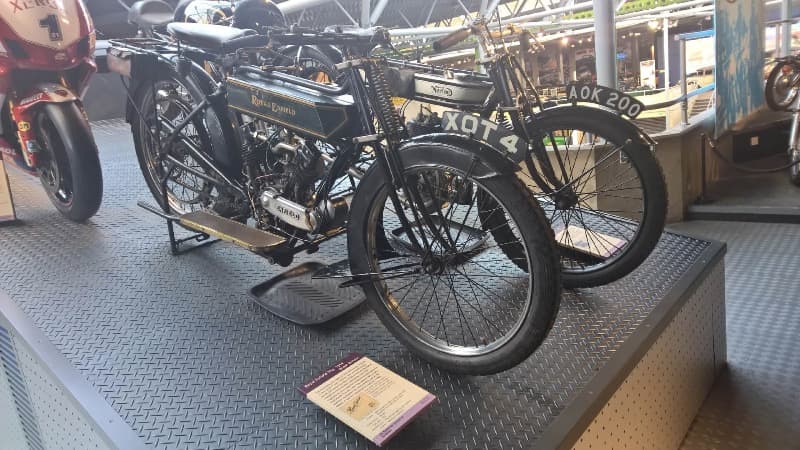
Motorcycles
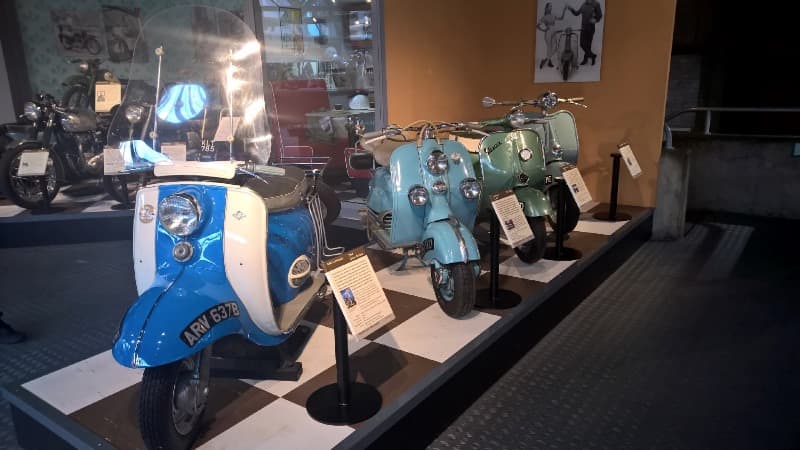
The museum also houses a fantastic collection of motorcycles, charting the history of two-wheeled transport. I have to admit, after a full day of automotive wonders, I simply ran out of steam to give them the attention they deserved. That’s a perfect excuse to plan a return visit, I suppose!
A Fitting Finale…
What a journey! From promotional giants shaped like bottles and oranges to pioneering, if ultimately doomed, visions of the future like the Sinclair C5, the museum is a treasure trove of stories on wheels. It’s a testament to the inventors, dreamers, and marketers who dared to think differently. This collection proves that the history of motoring is about so much more than just getting from A to B – it’s about imagination, ambition, and sometimes, glorious eccentricity. A truly fantastic day out for the whole family.
Leave a Reply
You must be logged in to post a comment.