
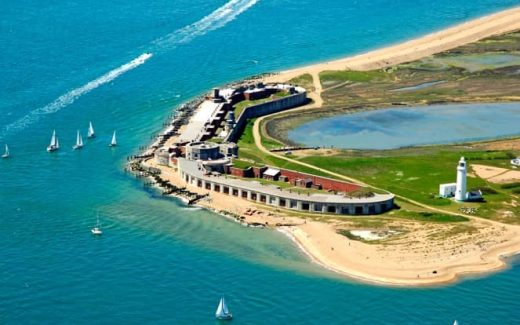
Have you ever dreamt of a place that feels like it’s at the very edge of the land, guarding the secrets of the past? Where the might of military engineering meets the raw beauty of nature? If so, you must visit Hurst Castle – one of England’s most impressive coastal fortresses, with a history as turbulent as the Solent waters it guards.
A Journey That’s Part of the Adventure
Getting to Hurst Castle is an unforgettable experience in itself. Situated at the end of a shingle spit that stretches for over a mile, the castle is isolated from the hustle and bustle of daily life. There are two ways to reach it, each offering something special:

- A Walk Along the Spit: For nature lovers and keen walkers, the stroll from Milford-on-Sea is the perfect choice. The path winds through a nature reserve, with the calm waters of Keyhaven harbour on one side and the open sea on the other. The wind, the sound of birds, and the silhouette of the castle growing ever larger create an incredible atmosphere. Just remember to wear some comfy shoes!
- The Ferry from Keyhaven: If you prefer a more relaxed approach, a charming little ferry from the lovely harbour of Keyhaven will take you right to the castle walls. It’s a short but delightful trip, allowing you to admire the fortress from the water – just as any potential invaders would have seen it centuries ago.
The Fortress Built by a King, That Imprisoned Another
The story of Hurst Castle is intrinsically linked with some of the greatest figures and events in English history.

Built between 1541 and 1544 by order of King Henry VIII, the castle was a key part of his ambitious device fort programme to defend the south coast from invasion by France and Spain. The central, formidable keep from that period remains the heart of the fortress and is one of the best-preserved examples of Tudor military architecture.

However, the castle’s most famous “guest” was undoubtedly King Charles I. It was here, within the cold stone walls, that he was imprisoned in 1648 just before his trial and execution in London. Standing in the rooms where he was held, you can almost feel the weight of history and the drama of those days.

From Napoleon to the Second World War
Hurst Castle never rested on its laurels. Faced with the threat from Napoleon in the mid-19th century, the fortress was massively expanded with two imposing brick wings, housing the most advanced artillery of the day. These colossal 38-tonne guns are still incredibly impressive and are a testament to the engineering genius of the Victorian era.

The castle also played its part during the Second World War, when it was once again armed with modern quick-firing guns to protect the strategically vital Solent.
What to Discover at Hurst Castle Today?
Exploring the castle is a journey through the ages. You can:

- Climb the ramparts and take in the breathtaking views across to the Isle of Wight and the famous Needles rocks.
- Lose yourself in the labyrinth of corridors in the Victorian wings, discovering magazines, soldiers’ quarters, and huge gun emplacements.
- Ascend to the top of the Tudor keep to get a real sense of Henry VIII’s time.
- Visit the 1867 lighthouse, which is still a working lighthouse, guiding ships through the treacherous waters.
- Relax in the café with a cup of tea and a slice of homemade cake, soaking up the unique atmosphere of the place.

Practical Tips
- Check the weather: It can get very windy on the spit, so it’s a good idea to dress in layers and bring a waterproof jacket.
- Opening times: Always check the official English Heritage website for the latest opening times, especially if you’re visiting out of season.
- Time: Allow at least 2-3 hours to explore the castle at a leisurely pace.
Hurst Castle is so much more than just a ruin. It’s a living history lesson, a monument to human determination, and a place of unique, rugged beauty. A trip to the end of the land that will stay with you for a long time. Highly recommended!
