
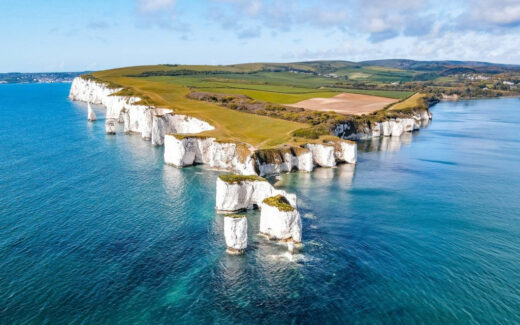
There are some views in England that just stick with you, becoming etched into your memory. They’re the kind you see on postcards, calendars, and television programmes, and a quiet voice in your head whispers, “I’ve got to go there one day.” For me, Old Harry Rocks in Dorset has always been one of those almost mythical places. These brilliant white chalk stacks, standing defiantly against the crashing waves of the English Channel, are more than just a pretty picture; they’re a slice of raw, dramatic history carved by nature itself, a final, triumphant flourish at the end of the Jurassic Coast. So, last weekend, with the sun promising a perfect day, I finally laced up my walking boots to see them for myself.
The Journey to the Jurassic Coast
My adventure began in the charming, quintessentially English village of Studland, which is beautifully managed by the National Trust. It’s the perfect starting point for the walk, feeling like a step back in time. I’d recommend parking at the South Beach car park – and I can’t stress this enough, get there early, especially on a sunny day, as it fills up incredibly fast! From there, it’s a gentle, mile-long stroll along the world-famous South West Coast Path. The path is well-maintained and mostly flat, making it an easy and rewarding walk for just about everyone, from families with children to seasoned hikers.
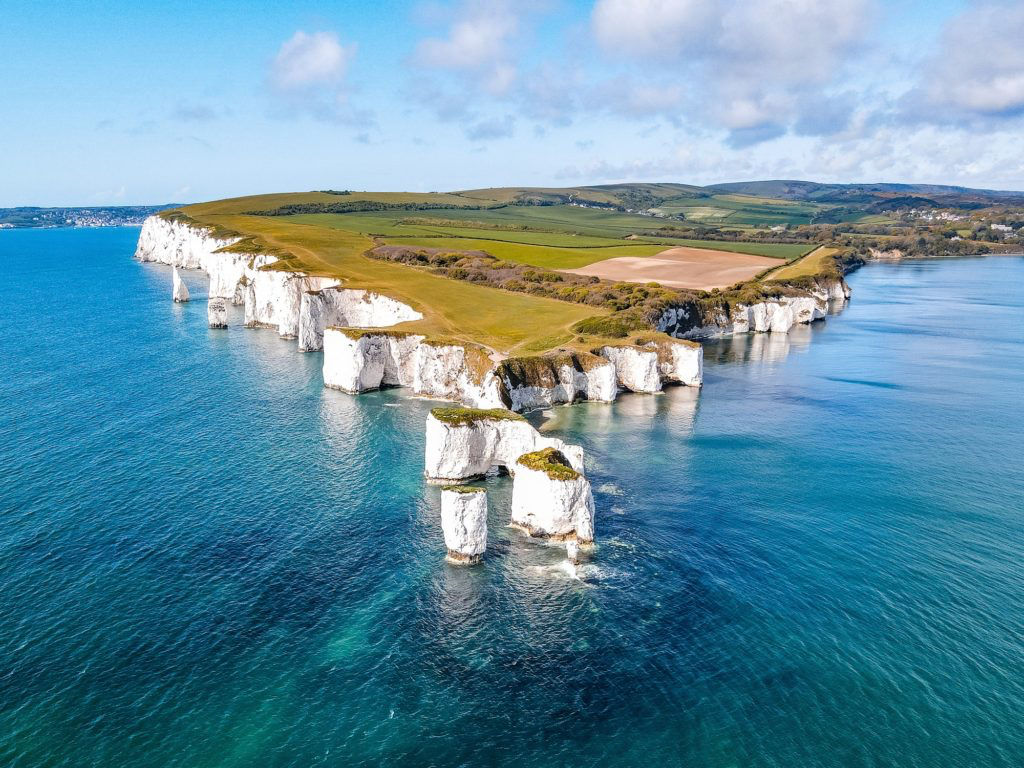
As you meander along the clifftop, the scenery unfolds like a painting. It’s an assault on the senses in the best possible way. To your left, you have rolling green fields dotted with lazily grazing cattle, the picture of pastoral peace. To your right, the vast, shimmering expanse of the sea stretches out to meet the sky. The air is fresh, thick with the salty tang of the sea and the earthy scent of coastal vegetation, all carried on a gentle breeze filled with the cries of seagulls. On a clear day, like the one I was blessed with, the view is truly spectacular. You can see across Poole Bay to Bournemouth and, shimmering on the horizon, the distinct silhouette of the Isle of Wight with its own famous chalk stacks, The Needles. It’s a powerful and tangible reminder that these two landmarks were once connected by a long ridge of chalk before the relentless sea washed it away thousands of years ago, creating the channel that separates them today.
Meeting “Old Harry” Face to Face
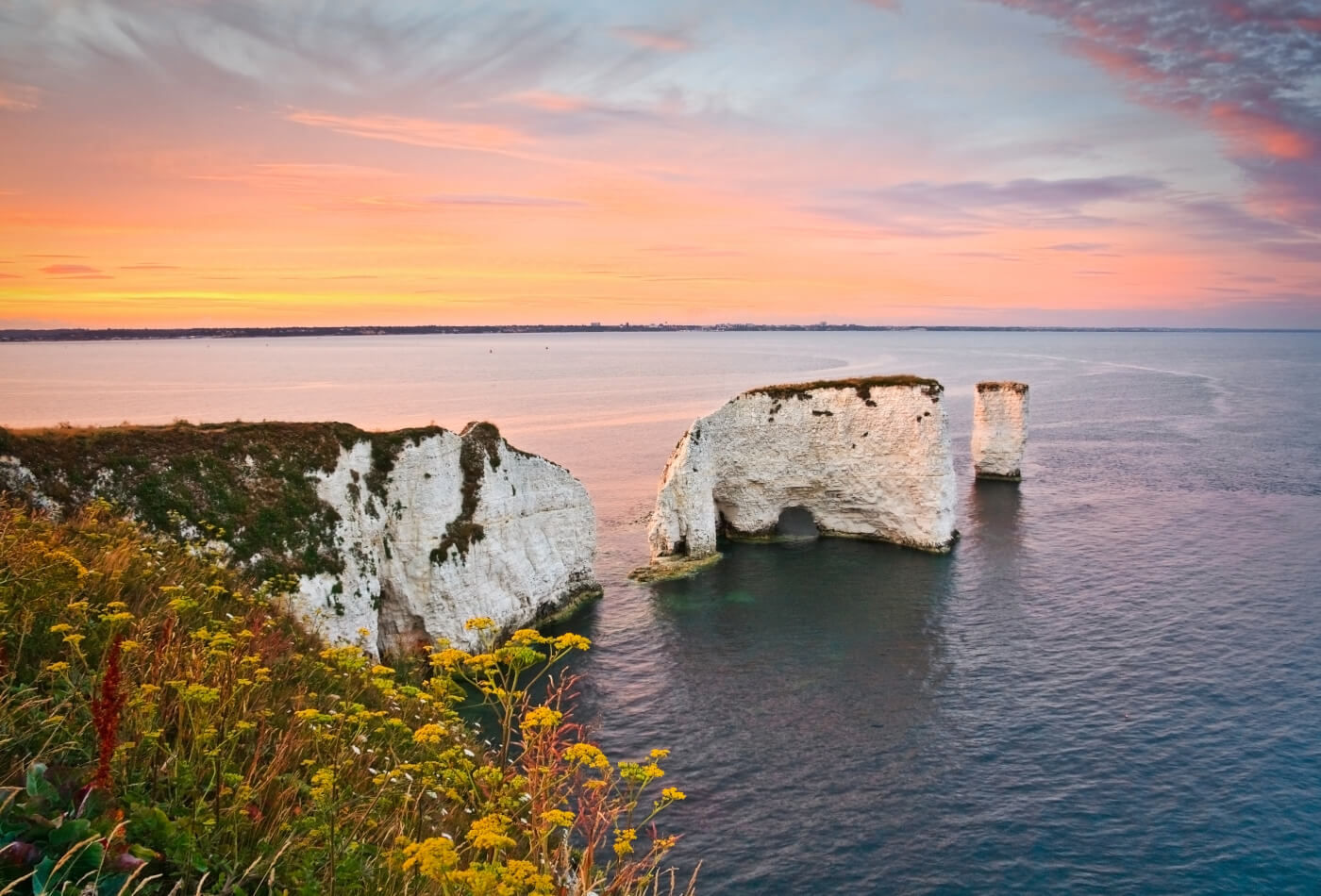
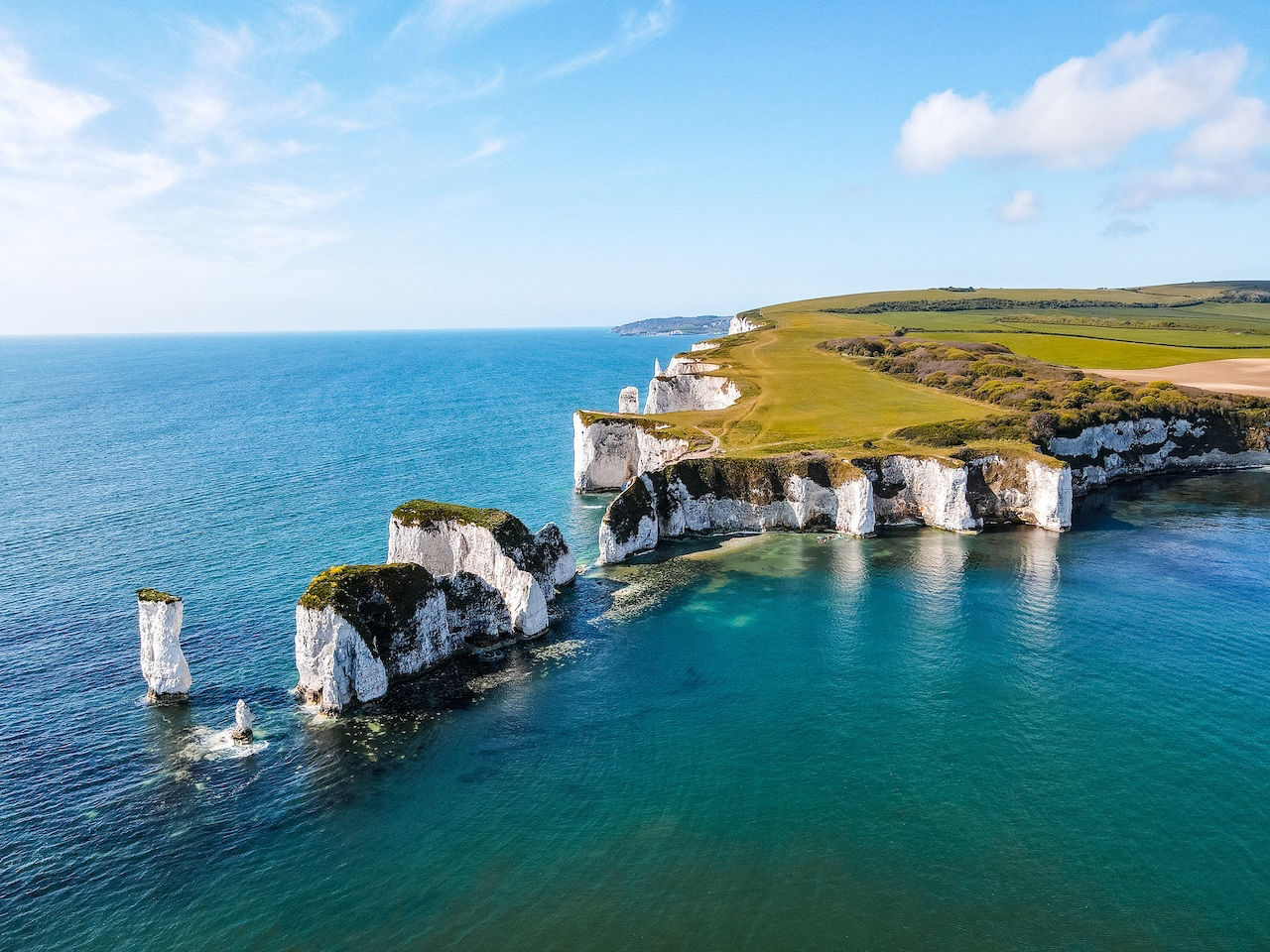
And then, you see them. After a bend in the path, they suddenly appear. The first glimpse of the pure white stacks is genuinely breathtaking, no matter how many photos you’ve seen. They seem to glow with an inner light against the deep blue of the sea and sky. Old Harry himself is the single, proud stack standing furthest out, with his ‘wife’ – a much smaller stump of chalk – slowly eroding beside him. It’s a poignant sight, especially when you learn that the original, more substantial ‘wife’ collapsed dramatically into the sea in 1896. The current stump is all that remains, a testament to the constant, unstoppable power of erosion.
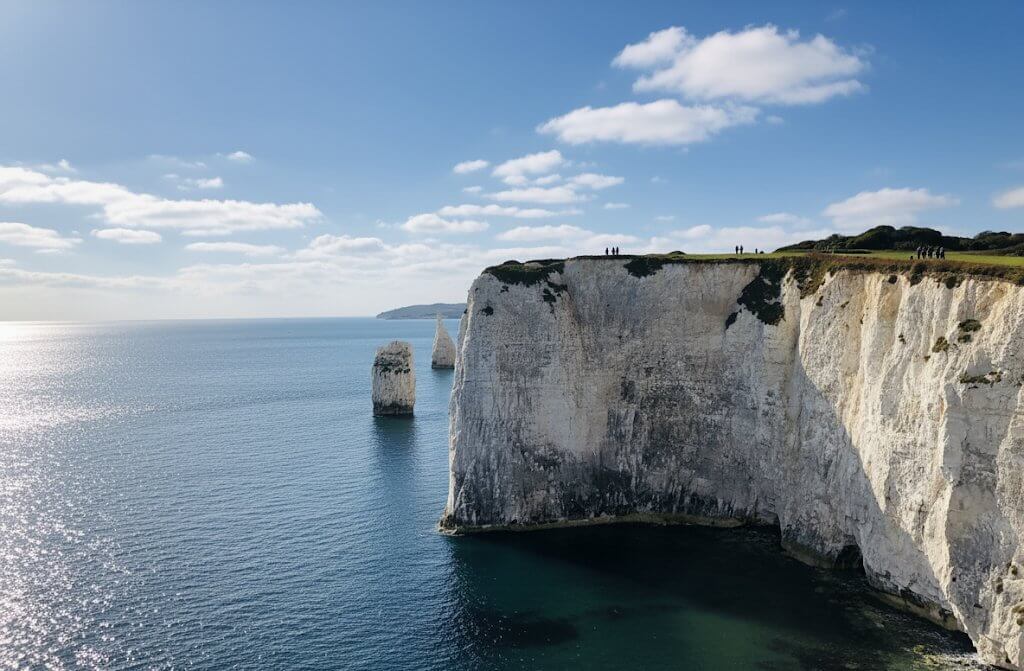
Standing there on the edge of the cliff (not too close, mind you – the edges are fragile and undercut!), you can’t help but feel a profound sense of awe. You’re standing at the very eastern end of the Jurassic Coast, a 95-mile stretch of coastline designated as a UNESCO World Heritage Site. These formations have been shaped by millennia of wind, rain, and waves, a slow and patient artist at work. You’re not just looking at rocks; you’re looking at millions of years of history, at the skeletons of microscopic sea creatures compressed into chalk over eons. It’s a humbling perspective.
Devils, Pirates, and Smugglers
Of course, a place this dramatic, this steeped in history and atmosphere, is bound to have a few stories attached to it. The intriguing name itself is a source of local debate and folklore. So, who was Old Harry?
One popular and rather spooky legend says the rocks are named after the Devil himself. In old English folklore, the Devil was playfully nicknamed “Old Harry,” and local tales claimed he would take a nap on the rocks after a busy day causing mischief. A more historical, and perhaps more likely, tale links the name to Harry Paye, a notorious and much-feared pirate from nearby Poole who terrorised the English Channel in the late 14th and early 15th centuries. The story goes that he would hide his ship, the Mary, behind the stacks, using them as a perfect ambush point for unsuspecting merchant vessels laden with wine and goods from France. It’s easy to imagine his ship appearing from the coastal mist on a gloomy day, the skull and crossbones flag being hoisted for another raid. The whole area was also a hotbed for smugglers in the 18th and 19th centuries, who would have used the caves and coves at the base of the cliffs to hide their illicit bounty of brandy and tobacco.

Tips for Your Trip
- Be Prepared: It’s essential to wear sturdy, comfortable shoes. Even though it’s an easy walk, the ground can be uneven in places. And, of course, this is England – the weather can change in an instant, so a waterproof jacket is always a good idea, even if the sun is shining when you set off. Don’t forget a bottle of water and maybe a few snacks to enjoy at the viewpoint.
- Stay Safe: This is crucial. The cliffs are sheer, unfenced, and prone to erosion. Keep a safe distance from the edge at all times, especially if you have children or dogs with you. The views are just as good from a few metres back, and it’s not worth the risk.
- Make a Day of It: Studland Bay is home to some of the most beautiful beaches in the country. After your walk, why not relax on one of them? Knoll Beach, with its gentle dunes, is fantastic, while Middle and South Beach offer stunning views back towards the rocks. For history buffs, the dramatic ruins of Corfe Castle are just a short drive away and well worth a visit.
- Refuel: The Bankes Arms pub in Studland is a local institution and the perfect place to grab a well-earned pint of local ale and some classic pub grub. It has a huge beer garden with fantastic, uninterrupted views over the bay – arguably one of the best pub views in the UK. Alternatively, the National Trust café at Knoll Beach offers great cakes and coffee.
- See it from the Sea: For a completely different and arguably more dramatic perspective, consider taking a boat trip from Poole Quay or Swanage Pier. Seeing the scale of the cliffs and the rocks from the water is an unforgettable experience. You’ll also get a chance to see the nesting seabirds, such as guillemots and razorbills, that call the cliff faces home.
Old Harry Rocks is more than just a landmark; it’s a rich and rewarding experience. It’s a place where you can feel the immense power of nature, touch millions of years of history with your eyes, and let your imagination run wild with tales of pirates, smugglers, and devils. It’s an absolute must-do for anyone visiting Dorset, a walk that will stay with you long after you’ve brushed the chalk dust from your boots.
Leave a Reply
You must be logged in to post a comment.