
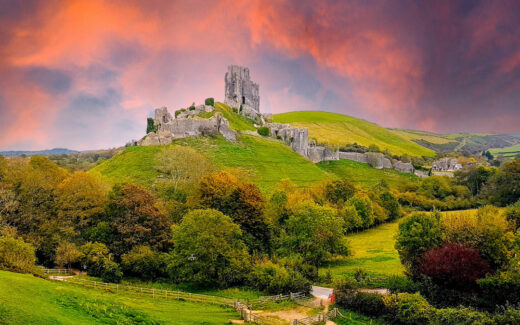
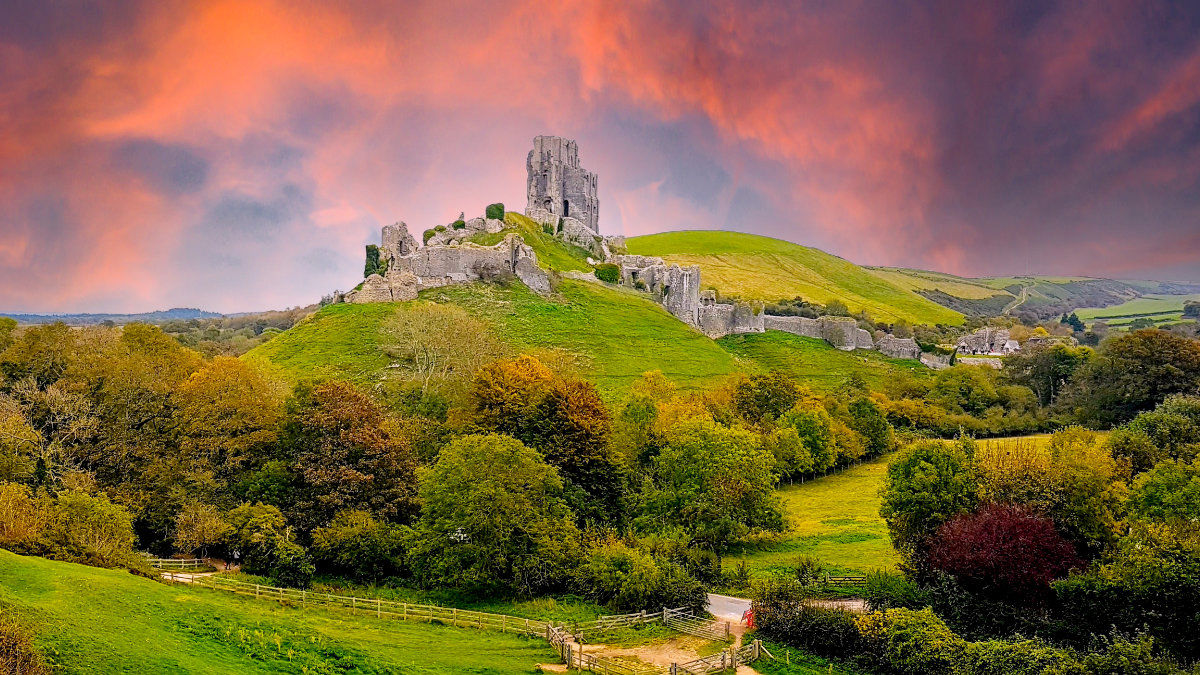
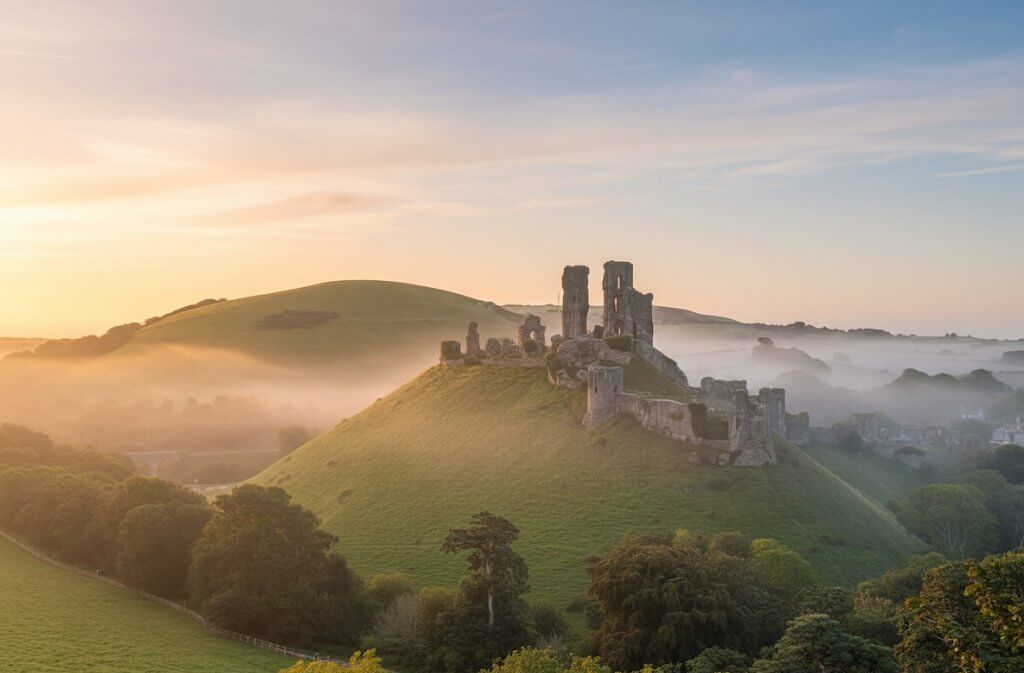
There are some views in England that stop you dead in your tracks. The first glimpse of Corfe Castle, perched dramatically on a hill in the heart of the Isle of Purbeck, is definitely one of them. Its jagged ruins slice the Dorset skyline, a constant, breathtaking reminder of a history filled with royal drama, brutal conflict, and incredible courage. This isn’t just a pile of old stones; it’s a storybook brought to life.

A Dark and Royal Beginning
Long before the Normans even arrived, this hill was a place of power and treachery. The story of Corfe Castle truly begins not with a construction, but with a murder. Picture it: the year is 978 AD. The young Saxon king, Edward (later known as ‘Edward the Martyr’), comes to visit his half-brother Æthelred at a lodge on this very hill. His stepmother, Queen Ælfthryth, eager for her own son to take the throne, offers him a welcoming drink. As he raises the cup to his lips, he is stabbed in the back. A truly shocking start for a place that would see centuries of turmoil.
Forged in Stone by a Conqueror
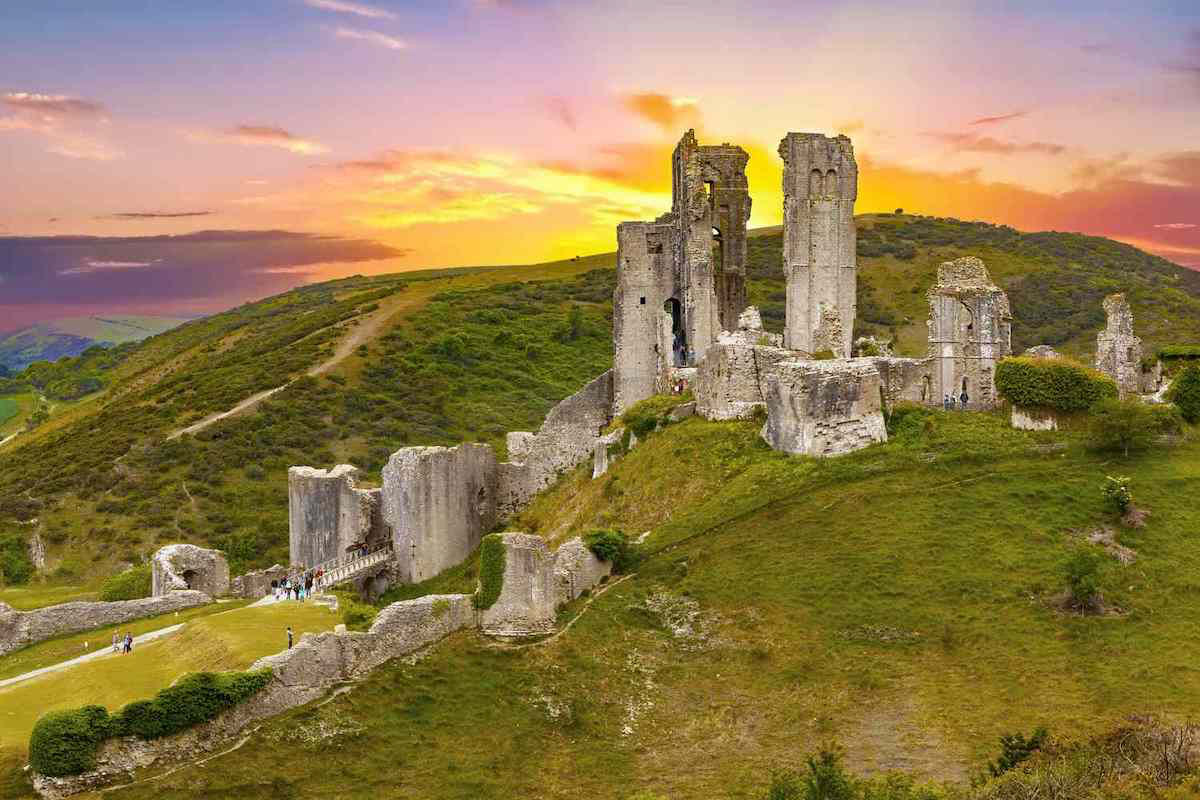
It was William the Conqueror who, in the 11th century, recognised the strategic genius of this location. To secure his grip on the south of England, he ordered the construction of a mighty stone fortress here. Corfe became one of the first castles in England built not from wood, but from imposing local Purbeck stone, designed to intimidate and dominate the landscape. For centuries, it served as a royal fortress, a treasure store, and a grim prison for the enemies of kings like King John, who infamously left 22 French knights to starve to death within its dungeons.

The Castle’s Finest Hour: The English Civil War
The most famous chapter in Corfe’s history belongs to one incredibly resilient woman: Mary Bankes, known forever as “Brave Dame Mary.” In 1635, the castle was bought by her husband, Sir John Bankes, Lord Chief Justice to King Charles I. When the English Civil War erupted, Sir John was away with the King, leaving Lady Mary to defend their home.
In 1643, she faced her first test. With only a handful of soldiers, she withstood a six-week siege by a Parliamentary force of over 500 men. She and her maids were said to have poured hot stones and embers over the battlements to repel the attackers. They succeeded, and for a time, Corfe remained a defiant Royalist stronghold.

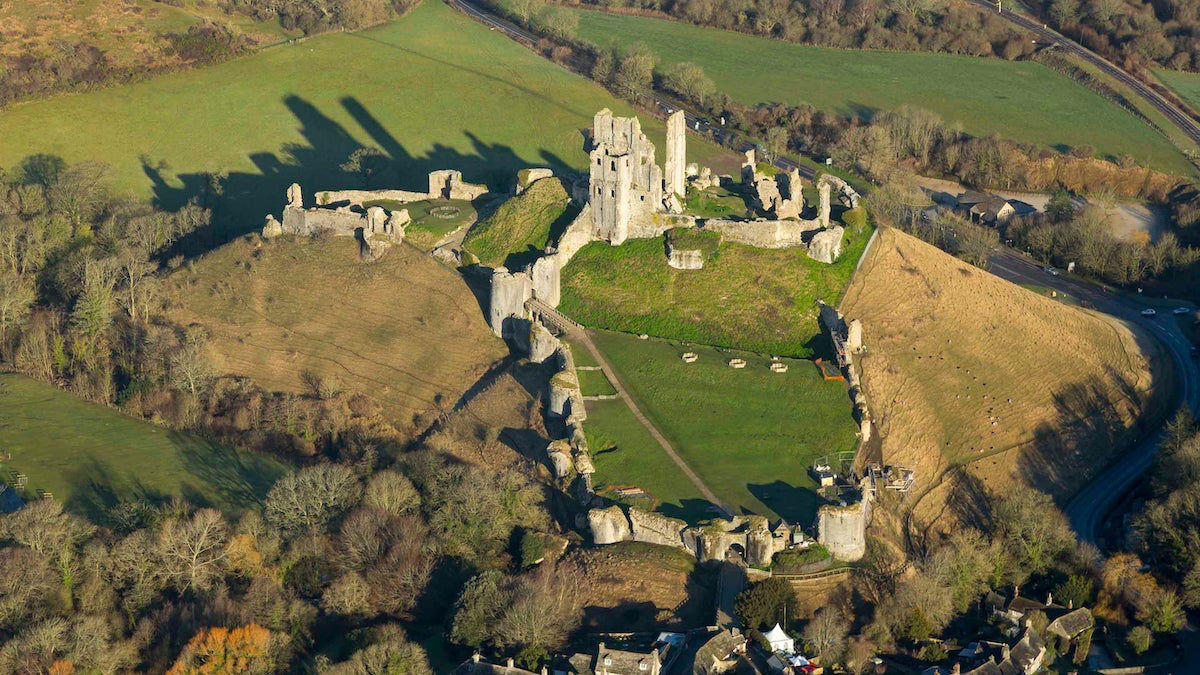
However, the castle’s luck ran out in 1645. It wasn’t brute force that defeated Lady Mary, but betrayal. An officer from her own garrison, Colonel Pitman, colluded with the enemy and smuggled Parliamentarian soldiers inside. The fight was over. As a testament to her courage, the opposing commander allowed her to leave with her honour intact. But Parliament was taking no chances; they voted to ‘slight’ the castle, ensuring it could never be used as a fortress again. Engineers spent weeks drilling holes and packing them with gunpowder, systematically blowing the keep and gatehouses apart from the inside out. This act of deliberate destruction is what gives the ruins their uniquely dramatic, shattered appearance today.
Whispers Among the Ruins
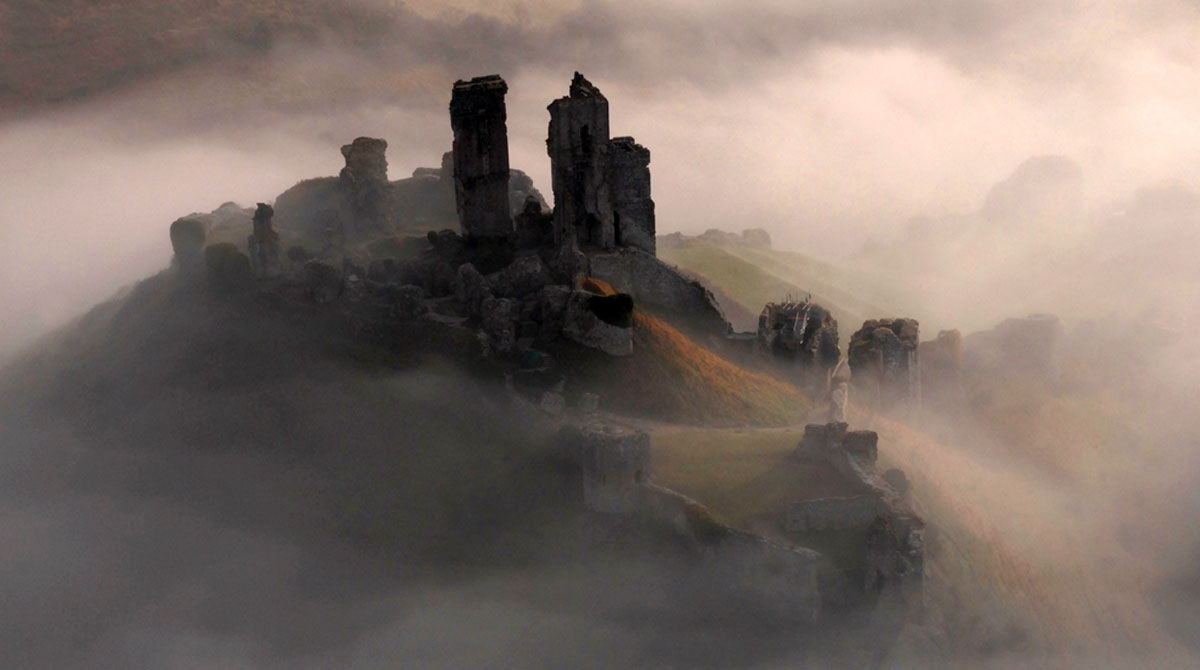
A place with such a violent history is bound to have its ghosts. The most persistent legend is that of a headless woman in white, said to be the spirit of the lady who betrayed the castle in the final siege. She is seen wandering the grounds, eternally lamenting her treachery. Whether you believe in ghosts or not, as the mist rolls in from the Purbeck Hills, it’s easy to feel the weight of the past here.
More Than Just a Castle
The magic of Corfe extends down the hill into the village itself. Built almost entirely from the same grey Purbeck stone, Corfe Castle Village is impossibly charming. You can wander through its tiny lanes, pop into the 16th-century Greyhound Inn for a pint right at the foot of the castle, or visit England’s smallest Town Hall.
Top Tip: For the most romantic and cinematic approach, arrive on the Swanage Railway. Taking a vintage steam train from the nearby seaside town of Swanage, you’ll chug through the countryside before the magnificent ruins of the castle slowly emerge into view. It’s a truly unforgettable experience.

For literature lovers, there’s another layer of magic. It’s widely believed that Corfe Castle was the inspiration for Kirrin Castle in Enid Blyton’s beloved “Famous Five” stories. As you explore the fallen walls and secret corners, you can almost imagine Julian, Dick, Anne, George, and Timmy the dog off on one of their adventures.
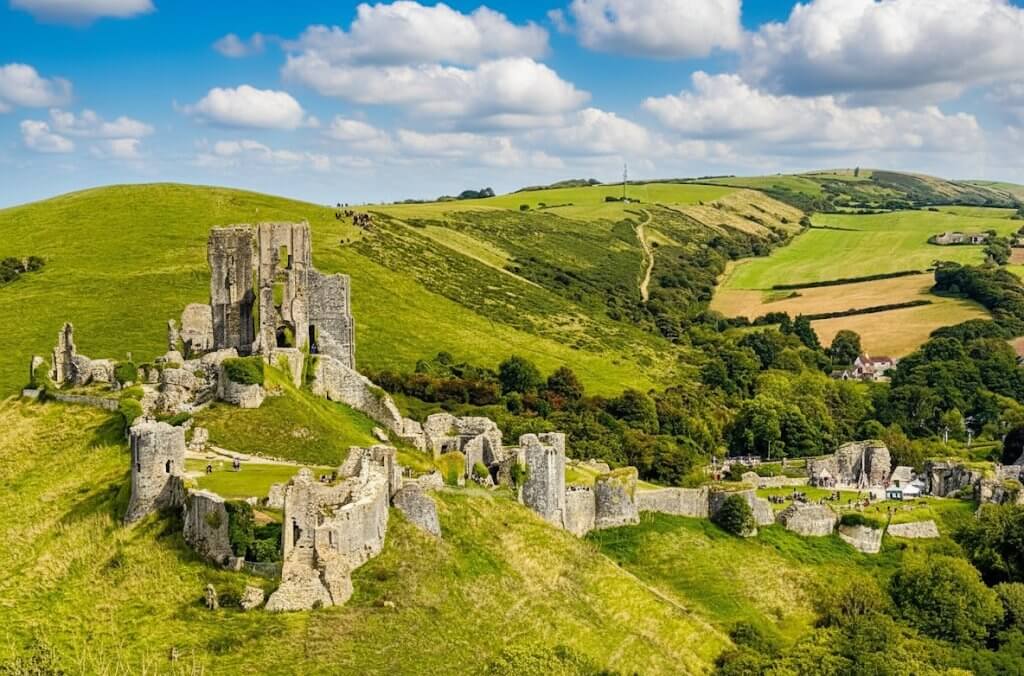
Corfe Castle is more than a day trip; it’s a journey through a thousand years of England’s most turbulent history. It’s a place of breathtaking beauty and heartbreaking stories, and it deserves a spot on every traveller’s list.
Leave a Reply
You must be logged in to post a comment.