
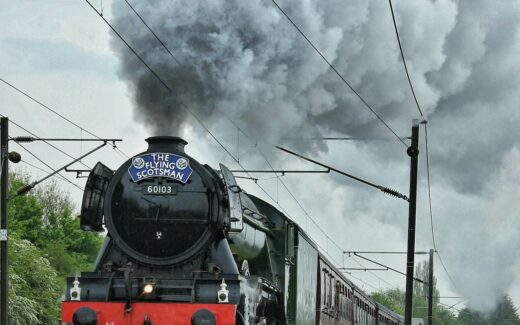
The Call of the Steam Whistle
There is a sound that belongs wholly to a different time. It is not the sterile chime of a modern train, but a deep, resonant chord of steam, steel, and smoke. It begins with a gentle hiss, a metallic sigh as pressure builds in a great iron lung. Then comes the rhythmic clank of coupling carriages, a sound of immense weight settling into purpose. Finally, a sharp, piercing whistle cuts through the air, a clarion call that echoes not just across the landscape, but through the decades. This is the sound of the Swanage Railway, and to hear it is to feel the pull of the past.
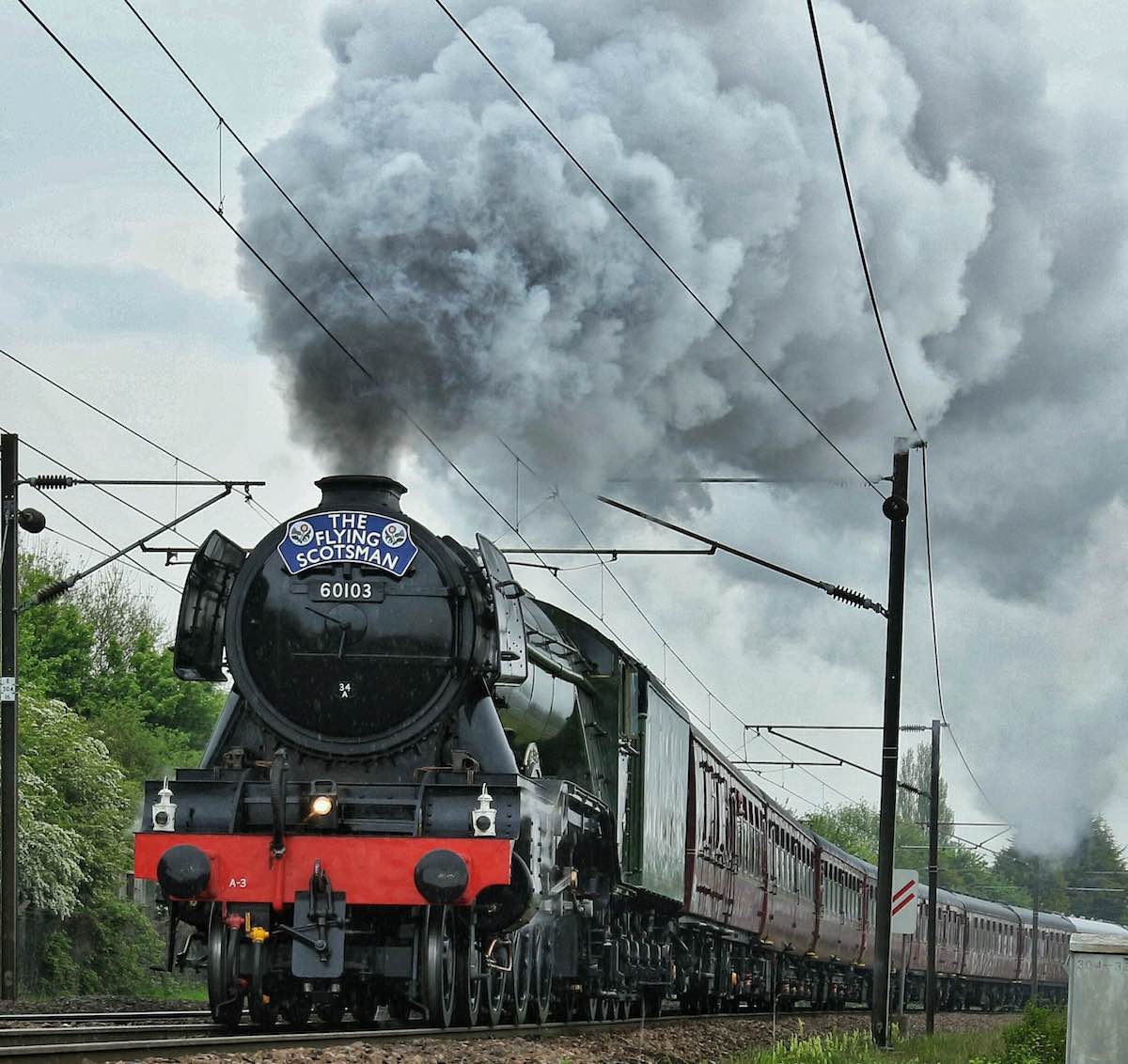
Here, in the heart of Dorset, lies the Isle of Purbeck, a peninsula that feels like a land apart, a cherished corner of England defined by its rolling chalk hills, ancient burial mounds, and a coastline so geologically profound it has been designated a UNESCO World Heritage Site. To explore this region is to walk through a living history book, and there is no finer way to turn its pages than from the window of a vintage railway carriage. The Swanage Railway is far more than a simple tourist attraction; it is the narrative thread that binds the region’s greatest treasures. It steams past the dramatic, battle-scarred ruins of Corfe Castle, a sentinel of a thousand years, before delivering you to the quintessential Victorian seaside charm of Swanage town.
This is not merely a journey from one station to another. It is an invitation to step aboard a time machine, lovingly resurrected from the brink of oblivion by a force of sheer will. It is an experience designed to enchant everyone, from families creating new memories to history enthusiasts retracing old paths, and walkers seeking a gateway to the wild beauty of the Jurassic Coast. This guide will take you on that unforgettable journey, revealing how a trip on this remarkable heritage line is the definitive way to experience the soul of Dorset.
All Aboard the Time Machine – The Swanage Railway Experience
The journey on the Swanage Railway is a masterclass in experiential tourism, a carefully curated immersion that begins the moment you step onto the platform. The operators have understood a fundamental truth: modern travellers seek not just sights, but stories and authentic atmosphere. Every detail, from the period architecture of the stations to the uniforms of the staff, is designed to transport you from the 21st century into a gentler, more romantic age of travel.
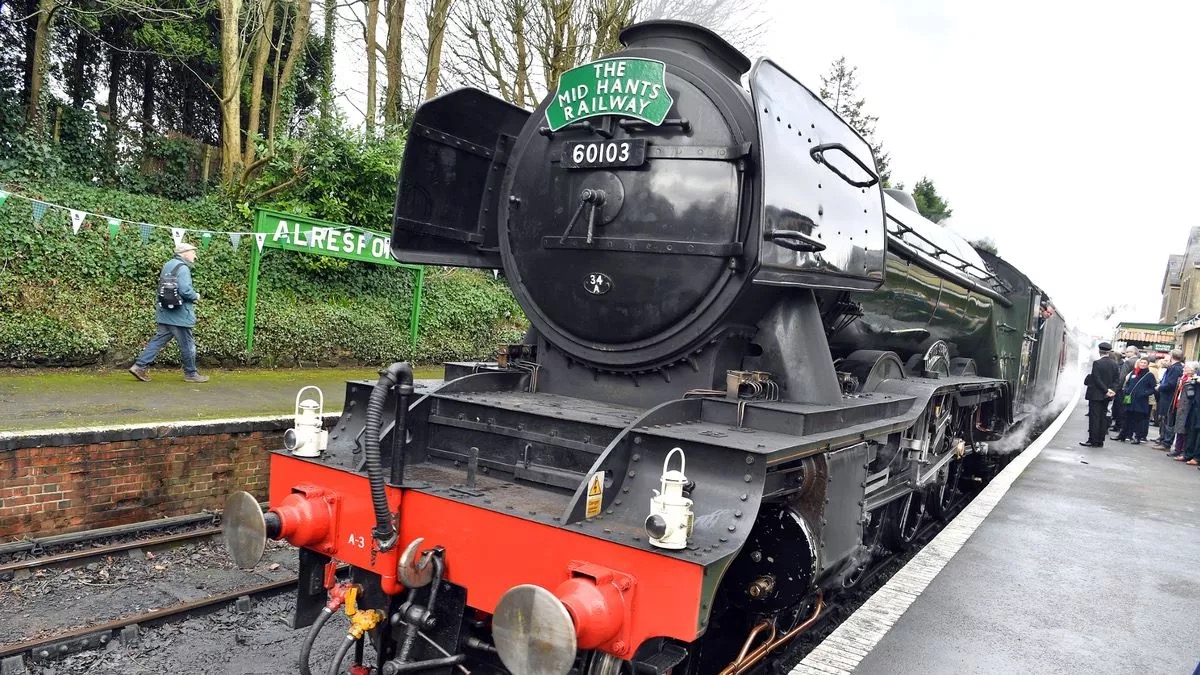
Portals to the Past: The Stations
Each station along the line possesses its own unique character, serving as a distinct chapter in the railway’s story. They are not just functional stops but destinations in their own right, each contributing to the overarching narrative of a journey back in time.
Swanage Terminus
The grand seaside terminus at Swanage is the line’s magnificent anchor, a beautifully restored Victorian station that perfectly evokes the golden age of the British seaside holiday. As your train pulls in, you are greeted by the sight of a long, elegant canopy, vintage luggage trolleys laden with antique trunks, and the general bustle of a station that feels alive with the ghosts of holidays past. The atmosphere is one of cheerful nostalgia, a place where the journey’s end feels as special as its beginning. The station also houses a well-stocked gift shop, offering everything from model trains to local produce, ensuring you can take a piece of the magic home with you.
Corfe Castle Station
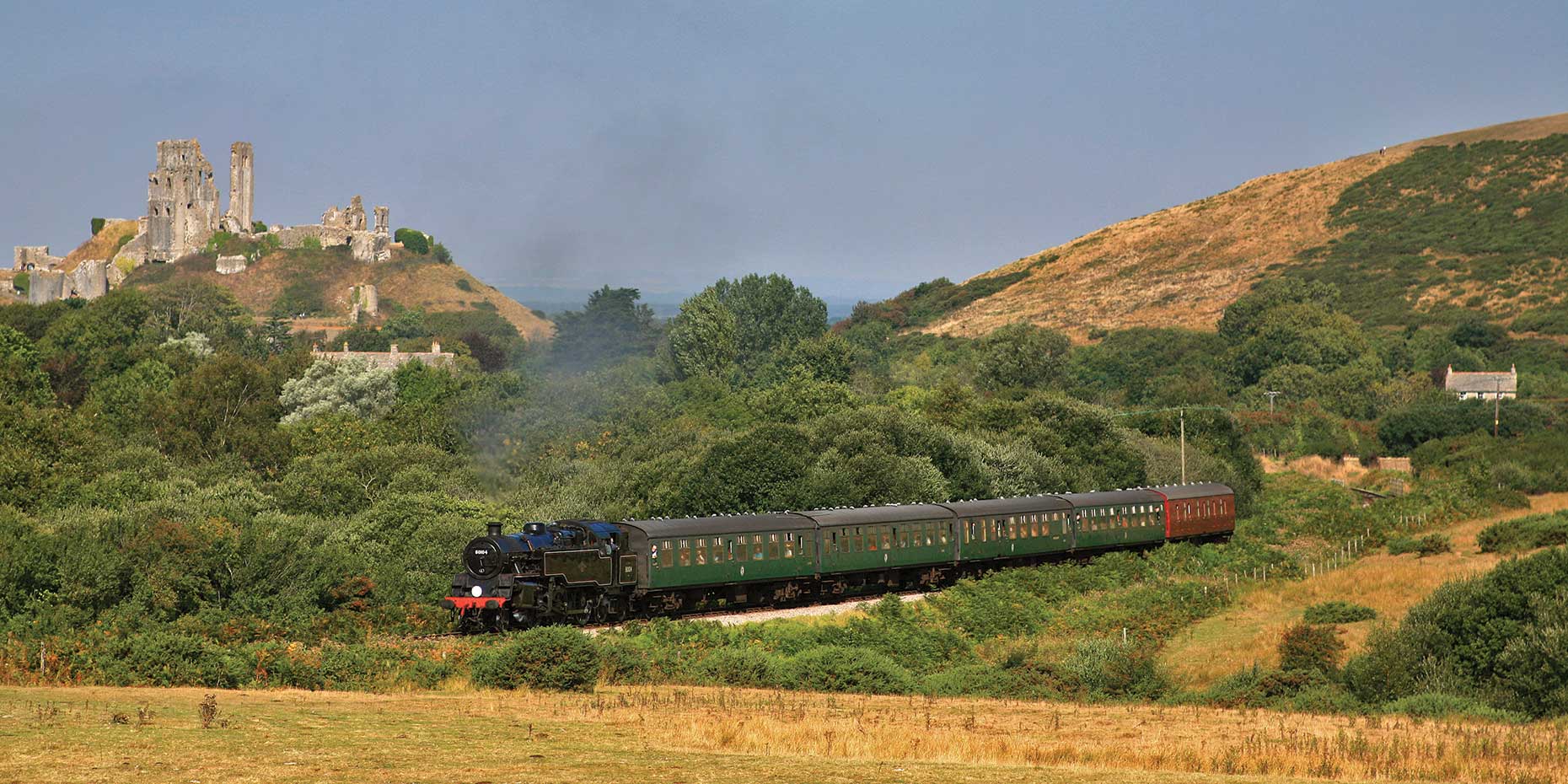
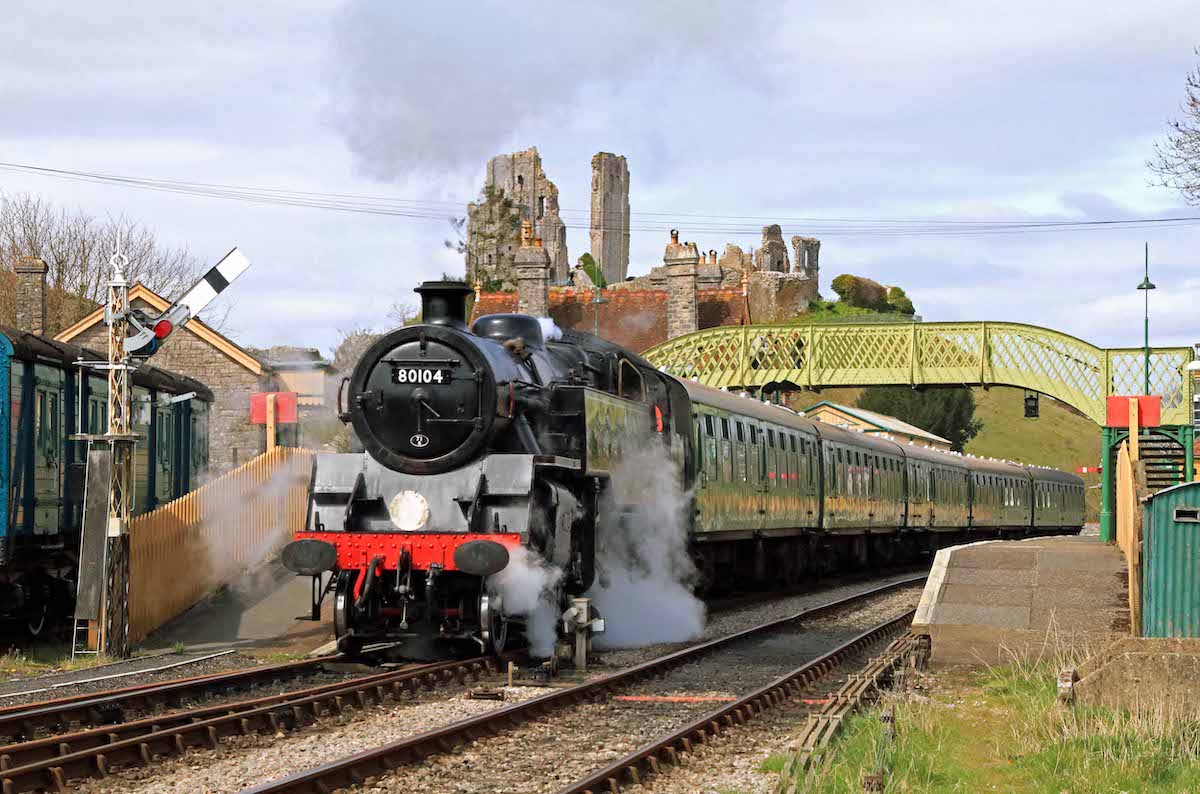
Arguably the most photogenic station in the south of England, Corfe Castle station sits in the dramatic shadow of its namesake fortress. To alight here is to step directly into a postcard. The beautifully preserved waiting rooms and platforms offer an unparalleled view of the castle ruins looming on the hill above. But the station is more than just a pretty picture. It serves as a small museum complex, free for all to enter. Visitors can explore the goods shed museum, which delves into the history of the railway, or step inside the unique cinema coach, complete with original flip-down seating, to watch archive films of the line in its heyday. These thoughtful additions provide a deeper historical context, enriching the visitor’s understanding of the thirty-year battle to save and rebuild this vital link.
Norden ‘Park & Ride’
In stark contrast to the Victorian charm of Swanage and Corfe, Norden station is a testament to the railway’s forward-thinking approach. It is not a historic station but a modern, strategic hub designed to meet the needs of today’s visitor. Its primary function is to host the large Purbeck Park car park, a 350-space facility that allows travellers to leave their cars and the traffic of the busy A351 behind. This clever piece of infrastructure solves the perennial problem of limited parking in Corfe Castle and Swanage, making it the most practical and stress-free starting point for many. Norden is also the gateway to the area’s industrial heritage, co-located with the award-winning Purbeck Mineral & Mining Museum, where visitors can learn about the region’s history of ball clay mining.
Minor Halts
Beyond the main stations, smaller stops like Herston Halt and Harmans Cross serve as vital links for the local community. Herston, a request stop, is particularly useful for those staying at the numerous nearby campsites, while Harmans Cross provides access to a network of footpaths perfect for walkers keen to explore the Purbeck Hills on foot. These halts underscore the railway’s dual identity: a major tourist attraction that remains deeply embedded in the fabric of local life.
The Iron Horses of Purbeck
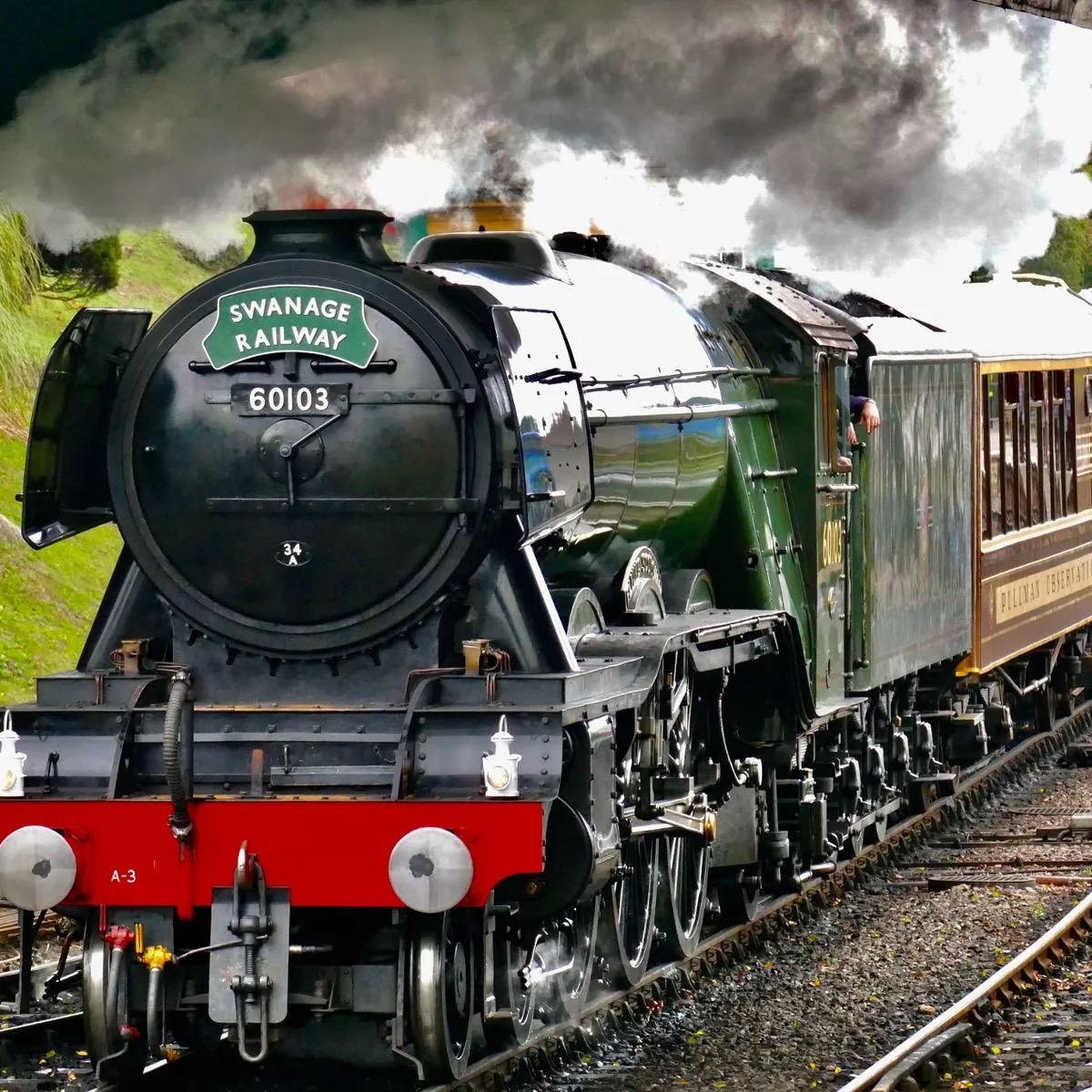
The true stars of the Swanage Railway are, of course, the locomotives. These are not static museum pieces but living, breathing machines, each with a unique history and character, lovingly restored and maintained by a dedicated team. The fleet includes both powerful steam engines and heritage diesel locomotives, offering a varied experience for visitors.
To stand on the platform as a steam engine approaches is a multi-sensory event. You feel the rumble through the soles of your feet before you see it. Then, it rounds the bend, a magnificent beast of polished brass and black steel, wreathed in clouds of white steam and trailing the evocative, slightly sulphurous scent of burning coal. You see the fireman, his face smudged with soot, expertly shovelling coal into the roaring firebox, and the driver, leaning out in his traditional attire, hand resting on the regulator. It is a scene of raw mechanical power and human skill, a world away from the silent, automated transport of today.
Stepping inside the vintage carriages continues the immersion. The compartments, with their comfortable seats and large windows, are designed for a different pace of life—one where the journey itself is the destination. For a truly special occasion, the railway runs dining trains throughout the year, including the chance to enjoy a Champagne Afternoon Tea in the rare ‘Devon Belle’ Pullman observation car, offering panoramic views of the countryside through its curved glass windows.
Through the Canvas of Dorset
The twelve-mile return journey from Swanage to Norden is a slow, unfolding masterpiece of pastoral English scenery. As the train leaves the coast, it chuffs leisurely along the foot of the Purbeck Hills, passing through a landscape of lush green meadows dotted with grazing ponies and ancient woodlands. The gentle pace allows you to absorb the details—a flash of a deer in a distant field, the lazy circling of a buzzard overhead.
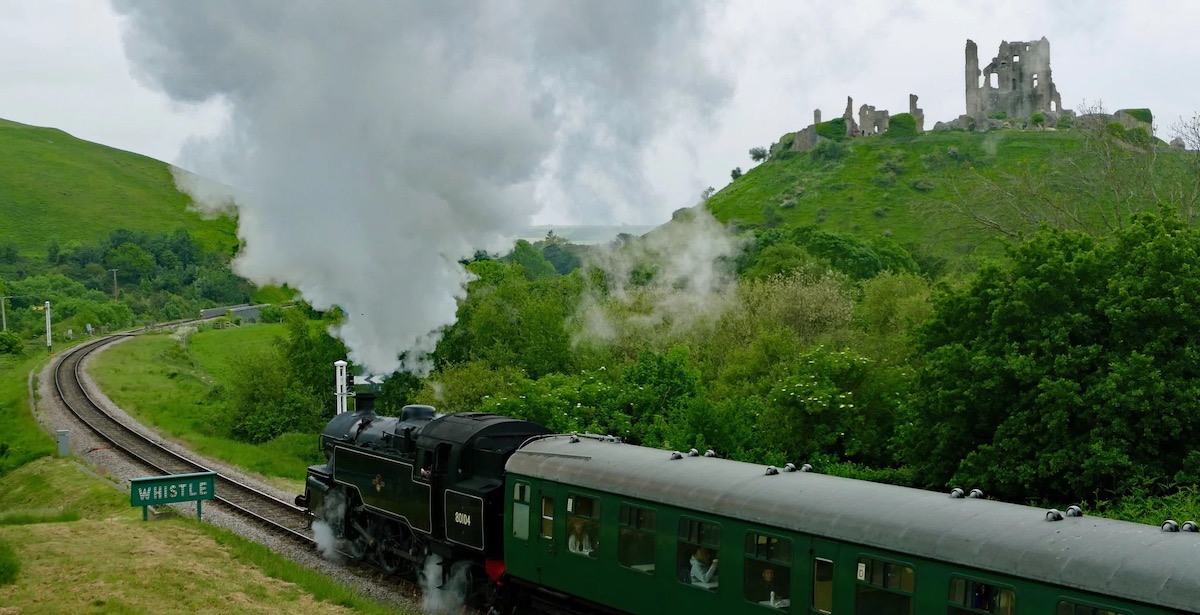
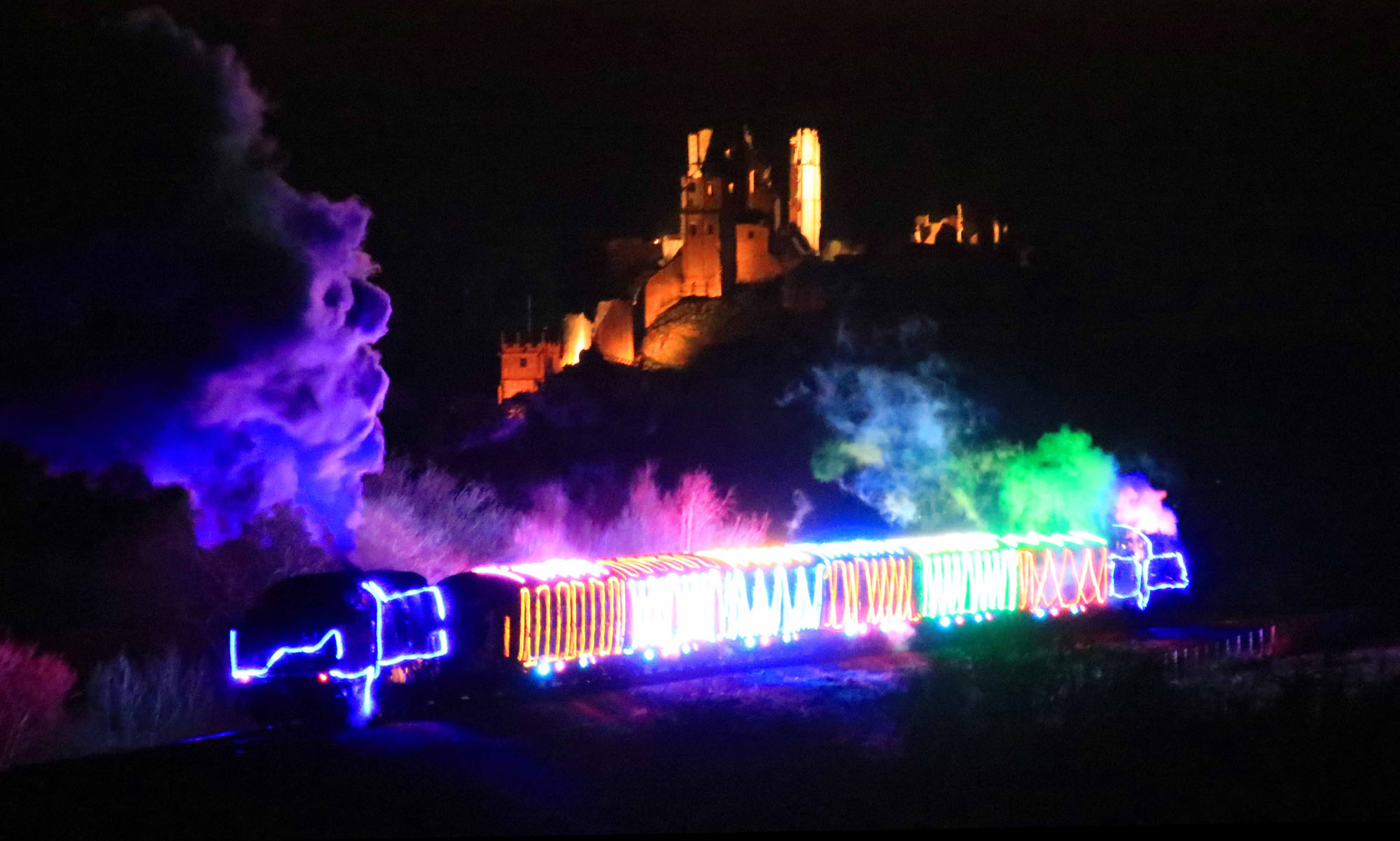
The undisputed visual climax of the journey, however, is the approach to Corfe Castle. The railway line curves gracefully, offering a series of stunning and ever-changing perspectives of the iconic ruins. One moment, the castle is framed by ancient trees; the next, it stands stark and proud against the skyline, its broken towers telling a story of siege and civil war. This cinematic approach offers a unique, ground-level vantage point that is far more dramatic and intimate than the fleeting glimpse one gets from the road. It is a moment of pure magic, where the heritage of the railway and the deep history of the landscape become one.
This landscape has inspired artists and writers for generations, most notably Enid Blyton. A regular holidaymaker in the area, Blyton often travelled on the railway, and these journeys directly inspired the adventures of the Famous Five. Knowing that Kirrin Castle was based on Corfe, and that the children would have ridden this very line, adds a delightful layer of literary nostalgia to the trip, especially for families travelling with young readers.
From Ruin to Revival – The Unbreakable Spirit of the Railway
The Swanage Railway of today, with its gleaming locomotives and bustling platforms, is a testament to one of the most remarkable heritage preservation stories in Britain. Its existence is not a happy accident of history but the result of a half-century of tireless, back-breaking work by a dedicated community who refused to let their railway die. Understanding this story of ruin and revival adds a profound emotional depth to any journey on the line.
The Golden Age and the Beeching Axe
The original line opened on 20 May 1885, built by the London and South Western Railway to serve two key industries: the quarrying of valuable Purbeck stone and the burgeoning Victorian tourist trade flocking to the seaside resort of Swanage. For decades, it was a vital artery, transporting goods and people and playing a crucial role in the region’s economic development.
However, the post-war rise of the motor car and an improved road network led to a steady decline in traffic. The line survived the initial wave of closures in the 1960s, known as the Beeching cuts, but its fate was sealed. Despite local protests, the last passenger train ran on 1 January 1972, and the line was officially closed. The aftermath was swift and brutal. British Rail, in an act that seemed to signal absolute finality, tore up six-and-a-half miles of track and sold off Swanage station, with plans to convert it into a shopping facility. The story of the Purbeck line appeared to be over.
The Volunteer Army
But in the face of this destruction, a group of determined local residents and railway enthusiasts formed the Swanage Railway Society (now the Swanage Railway Trust), convinced that the line could be reborn as a heritage attraction. What followed was a monumental, decades-long campaign of fundraising, lobbying, and sheer hard graft. Their achievement is a powerful case study in how heritage preservation can become a catalyst for profound economic regeneration. The initial passion to save a piece of history has ultimately secured the region’s economic future, creating a premier tourist attraction that now draws over 200,000 visitors a year and provides a vital boost to the local economy.
The scale of their task was immense. The laborious process of re-laying the entire line began in 1976, with much of the work done by hand by an army of volunteers. The railway’s revival was a slow, incremental victory, a testament to the strategic, patient, and financially astute management of the Trust. This was no amateur effort; it was a professionally managed, long-term project that required immense vision. The timeline of its rebirth tells the story:
- 1979: A short section of track at Swanage is reopened.
- 1982: Swanage station, having been repurchased, officially reopens.
- 1988: The line is extended to reach the village of Harman’s Cross.
- 1995: In a major milestone, the railway finally reaches Corfe Castle and the newly constructed park-and-ride facility at Norden. This was a particularly complex and forward-thinking piece of infrastructure, demonstrating the Trust’s ability to plan for the future.
- 2002: The track is physically reconnected to the national rail network at Worgret Junction, near Wareham, completing the physical link that had been severed thirty years prior.
- 2009: The first steam and diesel trains in decades run all the way from London to Swanage on special excursions.
- 2017-2023: Following a £5.5 million investment, a trial summer service to the mainline station at Wareham begins, marking the first time in over 50 years that passengers could buy a single ticket from a national rail station to Corfe or Swanage.
Today, that volunteer spirit remains the beating heart of the railway. The Swanage Railway Trust, a registered charity, continues to oversee the line’s development, relying on the support of its members and the dedication of people from all walks of life who give their time to restore locomotives, maintain the track, and welcome visitors. The gleaming engine that pulls your carriage is more than just a machine; it is a living monument to community spirit and a powerful symbol of what can be achieved against all odds.
Adventures Beyond the Tracks – Your Guide to the Isle of Purbeck
The Swanage Railway is the key that unlocks the Isle of Purbeck. It functions as the logistical and narrative spine of the region, seamlessly connecting its most captivating attractions into a cohesive and unforgettable itinerary. A day out is not just about the train ride; it is about the world the train allows you to explore. By parking at one end and using the railway as your shuttle, you can effortlessly experience a day of dramatic history, classic seaside fun, and wild coastal beauty.
The Silent Sentinel: Corfe Castle
There is no better way to approach Corfe Castle than by steam train. The journey builds anticipation, and arriving at the station in the village below allows you to appreciate the fortress’s scale and majesty while completely avoiding the notorious parking challenges.
Managed by the National Trust, the castle boasts a history stretching back over a thousand years. Founded by William the Conqueror shortly after the Norman Conquest of 1066, its position dominating a strategic gap in the Purbeck Hills made it a formidable royal fortress. It was a favoured residence of King John, who lavished money on its defences and used its dungeons as a high-security prison. It was here that 22 knights, captured after a failed rebellion, were thrown into an
oubliette—a “place of forgetting”—and starved to death. The castle’s final, dramatic chapter came during the English Civil War, when it was besieged twice and ultimately betrayed from within, leading Parliament to partially demolish it with gunpowder to prevent it from ever being used as a royalist stronghold again.
Today, exploring these romantic ruins is a captivating experience. Visitors can wander among the fallen walls, peer through arrow loops, and discover “murder holes” through which defenders would drop unpleasant substances on attackers below. A highlight is the new “King’s View” experience, a viewing platform atop the Keep that offers breathtaking panoramic views once reserved for royalty—a perspective that has been inaccessible for over 350 years. The castle is also a haven for wildlife, with ravens and a breeding pair of peregrine falcons often seen nesting high in the ruins. After exploring the fortress, the charming village square awaits, with its quaint stone cottages, independent shops, and the delightful 18th-century National Trust Tea-room, which offers uninterrupted castle views from its garden.
Seaside Splendour: The Charms of Swanage
The journey’s end at Swanage station deposits you in the heart of a town that embodies the timeless appeal of the Great British seaside. Swanage has gracefully retained its Victorian character, offering a nostalgic and family-friendly atmosphere that feels a world away from the hustle of modern life.
The town’s crown jewel is its magnificent beach. A wide arc of golden sand shelves gently into the calm, clear waters of the bay, making it a perfect and safe environment for families. Its exceptional water quality and cleanliness have been recognised with a prestigious Blue Flag award for over 22 consecutive years, a testament to the town’s commitment to maintaining its pristine environment. On a sunny day, the beachfront is a vibrant scene of striped deckchairs, sandcastle construction, and the gentle splash of swimmers, all overseen by RNLI lifeguards during the summer season.
Stretching gracefully into the bay is the Grade II listed Victorian pier, an integral part of the town’s historic character. Originally built in 1895 for passenger steamers, the pier is now a popular spot for a leisurely stroll, offering the finest views back across the bay to the town and the Purbeck Hills beyond. It remains a hub of activity, serving as the departure point for coastal cruises to Poole and Old Harry Rocks, a favourite spot for anglers, and home to the oldest diving school in the UK, which takes advantage of the sheltered waters and abundant marine life beneath its timbers. The pier’s trust maintains a small exhibition, a gift shop, and a café, making it a delightful destination in its own right. Beyond the beach and pier, the town offers plenty more, from the Swanage Museum, which tells the story of the area from the age of dinosaurs to a fine selection of independent shops and, of course, numerous establishments serving a quintessential fish and chip supper.
A Walk on the Wild Side: Durlston Country Park
For those wishing to exchange seaside charm for raw natural beauty, Durlston Country Park and National Nature Reserve is an essential visit. Located just a scenic 30-minute walk from Swanage town centre, this 320-acre expanse of countryside is a paradise for walkers, wildlife enthusiasts, and anyone seeking spectacular coastal views.
The park offers a diverse landscape of clifftop paths, ancient meadows bursting with wildflowers in spring and summer, and quiet woodland trails. Five waymarked trails of varying difficulty start from the visitor centre, catering to all abilities. These range from the gentle, well-surfaced Woodland Trail to the more dramatic Clifftop Trail, which forms part of the long-distance South West Coast Path and offers views stretching to the Isle of Wight on a clear day. The park is a crucial habitat for a variety of wildlife; its sea-cliffs are home to the second-largest guillemot colony on the south coast, and the meadows are a haven for butterflies.
At the heart of the park stands Durlston Castle. This is not a medieval fortress but a magnificent Victorian folly, built by local benefactor George Burt as the centrepiece of his estate. Today, it houses an excellent free visitor centre with interactive displays on the area’s geology and wildlife, a gallery with changing exhibitions, a café, and a shop. Nearby is another of Burt’s creations: the Great Globe, a remarkable 40-tonne sphere of Portland stone, three metres in diameter, engraved with a 19th-century map of the world. In a testament to its commitment to inclusivity, the park has won national awards for its accessibility, offering all-terrain “Tramper” mobility scooters for hire, ensuring that everyone has the opportunity to experience its stunning landscapes.
The Purbeck Planner – A Practical Guide to Your Journey
Planning your visit to the Swanage Railway is straightforward, with excellent transport links from the nearby hub of Bournemouth. A little forward planning, particularly regarding travel and parking, will ensure a seamless and enjoyable day out.
Getting to the Platform: A Traveller’s Guide from Bournemouth
Bournemouth serves as the main gateway to the Isle of Purbeck for many visitors, offering several convenient options for reaching the railway.
By Car
Driving from Bournemouth offers flexibility and two distinct routes. The most direct is the inland route, taking the A35 and then the A351 towards Wareham. This road leads you directly past the Norden Park & Ride and Corfe Castle before arriving in Swanage. The journey typically takes between 35 and 50 minutes, though traffic can build up around Corfe Castle in peak season.
Alternatively, the more scenic route takes you via the Sandbanks Ferry. This involves driving to the Sandbanks peninsula and taking the charming four-minute chain ferry across the mouth of Poole Harbour to Studland. From there, a beautiful drive through the Studland and Godlingston Heath National Nature Reserve brings you to Swanage. While the journey time is longer (around 50 to 75 minutes), it is an experience in itself. Be aware that queues for the ferry can be substantial during summer weekends and school holidays.
By Bus (The Purbeck Breezer)
For a relaxing, scenic, and excellent value journey, the “Purbeck Breezer 50” bus service is highly recommended. This double-decker bus, often open-top in summer, runs a spectacular route from Bournemouth station and square directly to Swanage. The journey is an adventure, as the bus itself drives onto the Sandbanks Ferry, offering passengers wonderful views of Poole Harbour from the upper deck. With single fares currently capped at a very affordable rate and dayrider tickets available for unlimited travel, it is a fantastic car-free option. The journey takes approximately 1 hour and 15 minutes.
By Train & Bus Combination
For those who prefer rail travel, a reliable option is to take a mainline South Western Railway service from Bournemouth to Wareham station, a journey of around 30 minutes. From Wareham station, you can seamlessly connect to the “Purbeck Breezer 40” bus service, which takes you the rest of the way to Corfe Castle or Swanage in about 40 minutes. This combination avoids any potential road congestion and offers a comfortable and scenic transfer.
| Mode of Transport | Approx. Journey Time | Key Considerations |
| Car (Inland Route) | 35-50 mins | Most direct but misses coastal views; risk of congestion at Corfe. |
| Car (Ferry Route) | 50-75 mins (plus ferry wait) | Highly scenic, but queues for the ferry can be long in summer. |
| Bus (Purbeck Breezer 50) | 1h 15m | Excellent value, very scenic, bus goes on the ferry. Can be slow. |
| Train & Bus Combo | 1h 10m | Reliable and avoids road traffic. Requires a change at Wareham. |
The Smart Traveller’s Secret: The Norden Park & Ride
For visitors arriving by car, the single most valuable piece of advice is to use the Norden Park & Ride facility at Purbeck Park (postcode: BH20 5DW). The narrow streets of Corfe Castle village and the seaside town of Swanage were not designed for modern traffic, and parking, particularly in high season, can be both challenging and expensive.
The Norden facility provides the perfect solution. This large, 350-space car park is situated just off the main A351, before you reach the potential bottleneck of Corfe Castle. From here, you can park for the day (charges apply) and step directly onto the platform of Norden station to begin your heritage railway adventure. As the railway’s motto suggests, you can simply “let the train take the strain”. The benefits are numerous: you are guaranteed a parking space, you avoid all the traffic stress, and you begin your day with the magical experience of a steam train journey through the countryside. It is, without question, the most intelligent way to visit the railway and its surrounding attractions.
Know Before You Go: Tickets, Events, and Accessibility
- Tickets and Timetables: The railway operates daily from April to October, with a more limited schedule during the rest of the year, including popular festive services. It is essential to check the official Swanage Railway website (swanagerailway.co.uk) for the most up-to-date timetables, fares, and to book tickets in advance. Booking ahead is particularly crucial for special events and dining experiences, which often sell out. A variety of ticket options are available, from simple one-way and return fares to all-day “Freedom Of The Line” tickets that allow you to hop on and off at your leisure.
- Special Events: The railway hosts a vibrant calendar of events throughout the year, offering something for every interest. Highlights include:
- Steam and Diesel Galas: Held in spring and autumn, these events are a celebration of locomotive power, often featuring special visiting engines from other heritage railways.
- Classic Transport Rallies: A nostalgic showcase of over 300 vintage cars, motorcycles, and engines, typically held at Harman’s Cross.
- Dining Experiences: From elegant Afternoon Teas and Prosecco Cream Teas to the evening “Sunset Shuttle,” these offer a unique way to enjoy the scenery.
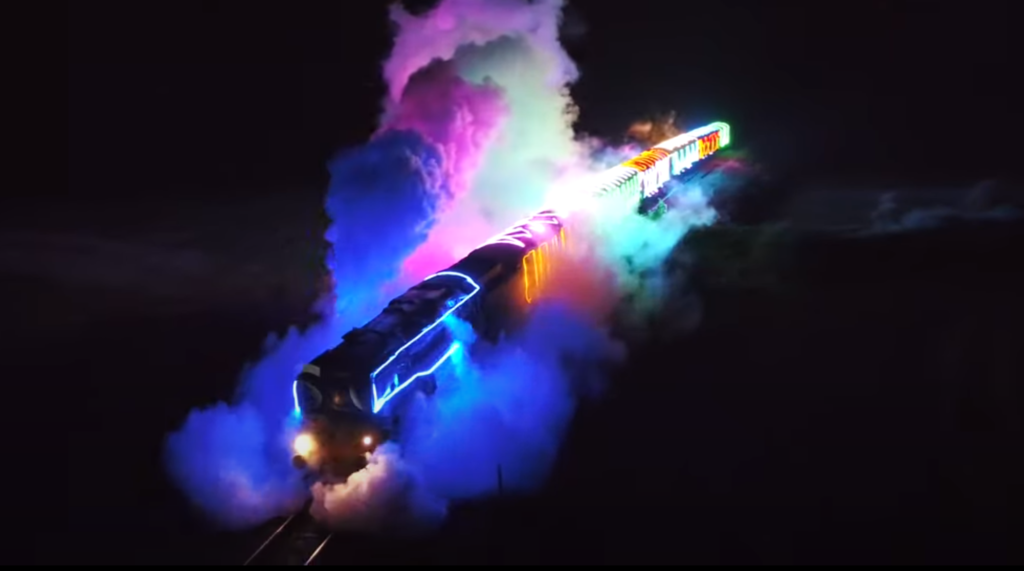
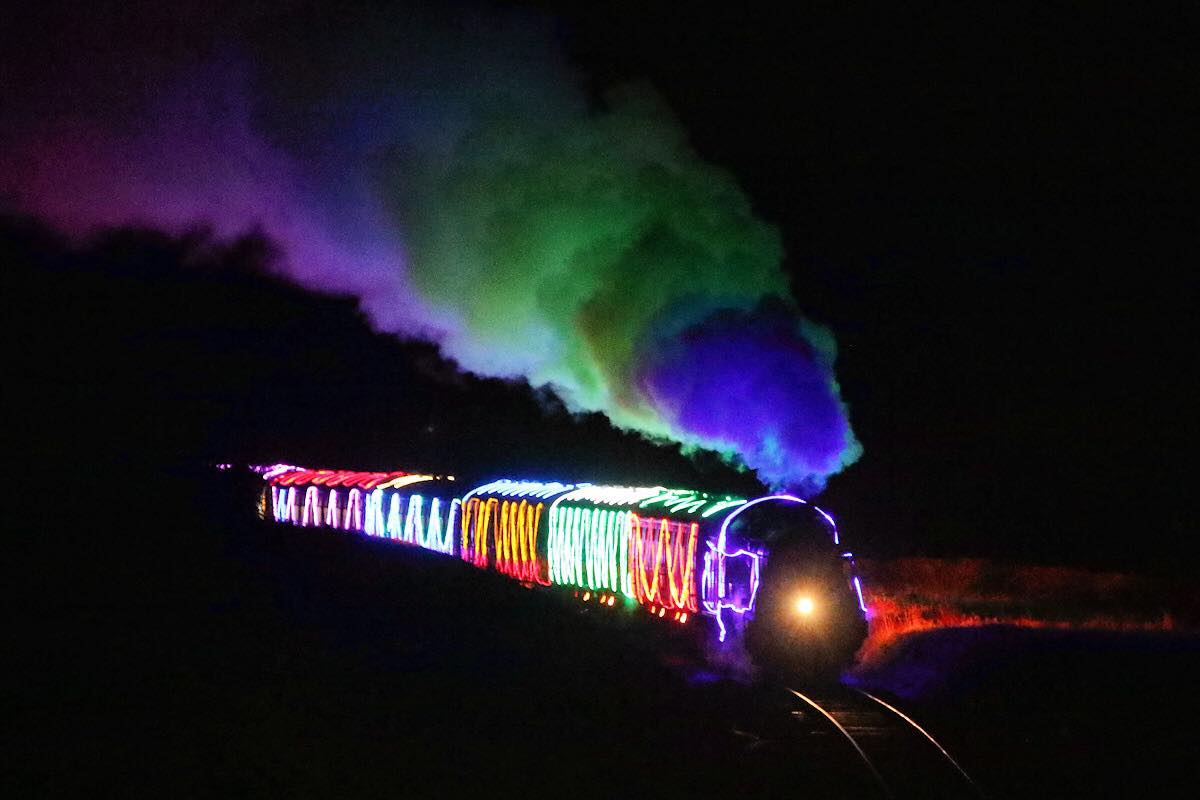
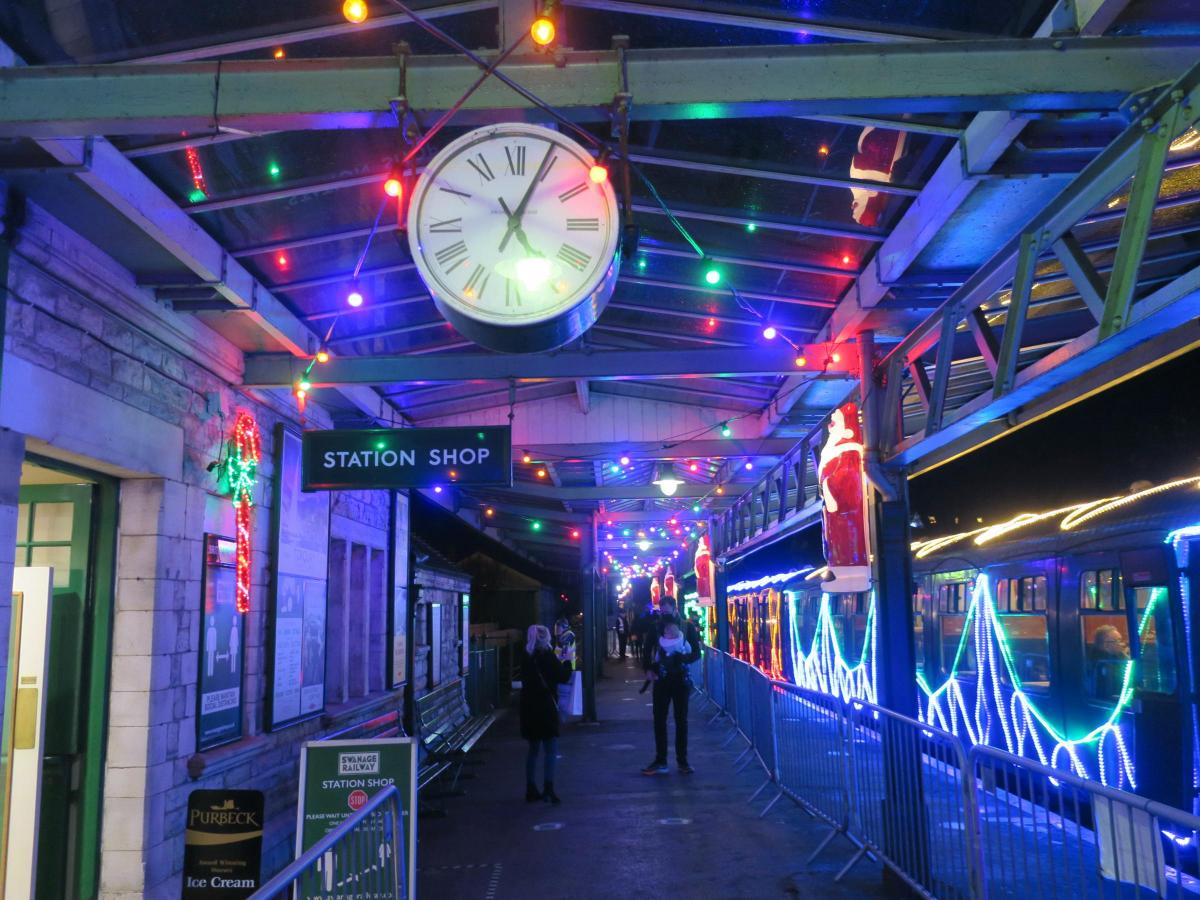
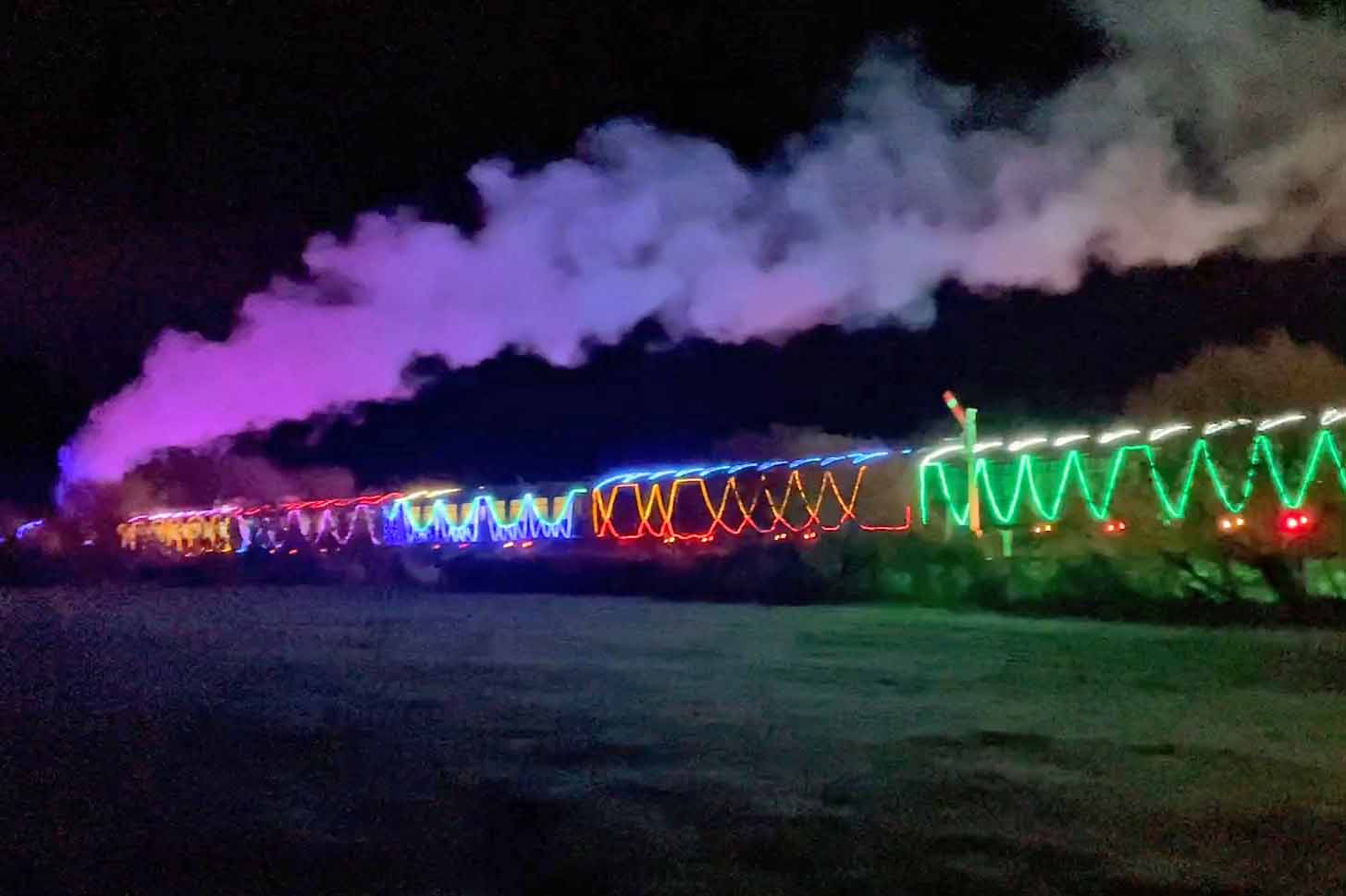
- Festive Services: The “Santa Express” and the magical “Steam and Lights” illuminated evening trains are hugely popular during the Christmas season.
- Accessibility: The Swanage Railway is committed to welcoming all visitors. All station platforms offer step-free access, and ramps are available at all stations to provide wheelchair access to most trains. Wheelchairs can be carried in the Guard’s Van, and passengers with some mobility can sit in nearby seats. It is worth noting that due to the historic design of the carriages, some larger mobility scooters cannot be accommodated. Registered carers are entitled to travel free of charge on standard services when accompanying a disabled passenger; proof of eligibility is required to obtain the ticket from the booking office.
The Lingering Magic
To travel on the Swanage Railway is to do more than just see the sights of Dorset; it is to feel its history in the rhythmic pulse of the engine and the gentle sway of the carriage. It is a journey that connects the dramatic, thousand-year silence of Corfe Castle’s ruins with the cheerful, timeless holiday spirit of Swanage Bay. It is an experience that wraps you in a warm blanket of nostalgia, reminding you of a time when the journey was as important as the destination.
But the most enduring magic of the Swanage Railway lies in its own story. Every puff of steam, every polished piece of brass, every foot of hand-laid track is a testament to the extraordinary power of community. This is not a railway preserved by government decree or corporate sponsorship; it is a living, breathing monument to the passion and perseverance of thousands of volunteers who refused to let a vital piece of their heritage be erased. They fought for decades to bring their railway back from the dead, and in doing so, they gifted an invaluable economic and cultural asset to future generations.
As your day ends and the train makes its final journey back through the Purbeck Hills, listen for the sound of the whistle one last time. As it echoes and fades into the twilight, it leaves behind more than just a memory. It leaves a sense of profound admiration and a powerful desire to return, to once again ride the dragon through this enchanting corner of England.
Leave a Reply
You must be logged in to post a comment.