
Introduction: The Silent Giants of Salisbury Plain
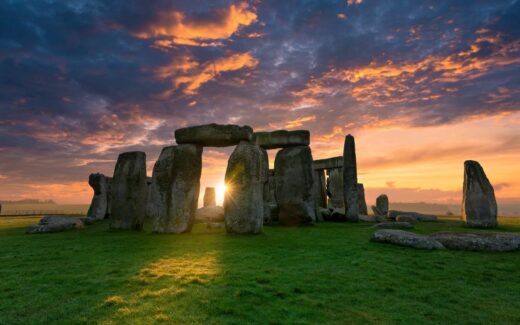
They appear on the horizon with a sudden, silent power. Against the vast, rolling chalk downlands of Salisbury Plain, the stones of Stonehenge stand as colossal, grey sentinels, their forms both impossibly ancient and strikingly familiar. To approach them is to feel a palpable connection to a past so distant it defies easy comprehension. This is not merely a ruin; it is perhaps the world’s most famous prehistoric monument, a British cultural icon, and the heart of a sprawling UNESCO World Heritage Site that includes the equally significant monuments at Avebury.
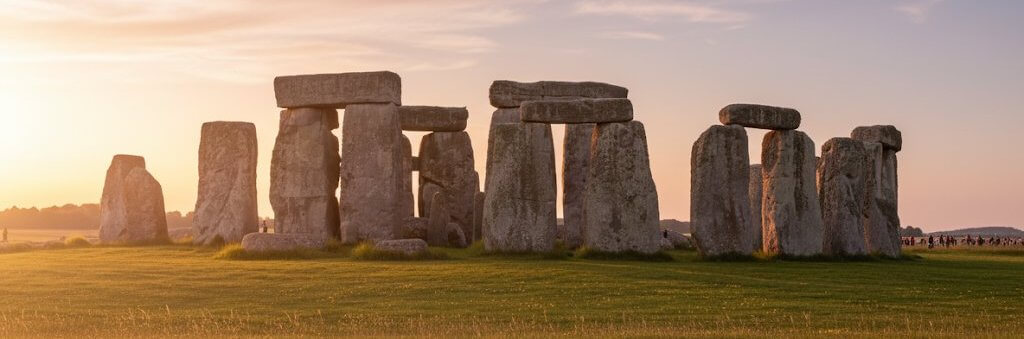
For millennia, this circle of stones has posed the same fundamental questions to all who stand before it: How did a Neolithic people, with only the simplest of tools, engineer such a masterpiece? And the more profound and enduring question: Why? What drove them to dedicate generations of effort, to haul stones weighing tens of tons across vast distances, and to align them with the heavens? This article is a journey into the heart of that mystery. It explores the story of Stonehenge not as a single, static creation, but as a place that evolved over 1,500 years of continuous construction, alteration, and reimagination—a powerful testament to the ingenuity and spiritual depth of our most distant ancestors. Here, the allure lies not in definitive answers, but in the profound ambiguity of the questions themselves, making a visit a deeply personal exploration of our shared human past.
A Story in Stone: Charting 5,000 Years of History
The monument we see today is but the final chapter in a long and complex story written upon the landscape. The physical evolution of Stonehenge directly mirrors the profound social, technological, and spiritual changes of the people who built and revered it. To trace its history is to witness the biography of a culture transforming itself over a millennium and a half.
Before the Stones (8500–3500 BC)
The story of Stonehenge begins long before the first stone was raised. Archaeological discoveries reveal that this part of Salisbury Plain was a significant location for thousands of years prior to the henge’s construction. In the Mesolithic period, between 8500 and 7000 BC, at least four or five large pits were dug to hold massive pine posts, akin to ‘totem-poles’. At a time when much of southern England was covered in dense woodland, this area may have been an unusually open landscape, drawing people to it for reasons that remain unknown. These early structures suggest that the site held a ritual significance for hunter-gatherer communities long before the arrival of the first farmers who would later build the monument we recognise. By approximately 3500 BC, these early Neolithic people had constructed the Stonehenge Cursus, a huge rectangular earthwork enclosure nearly 3 km long, just north of the future stone circle, further cementing the area’s importance as a ceremonial centre.

Phase 1: The First Henge (c. 3000 BC)
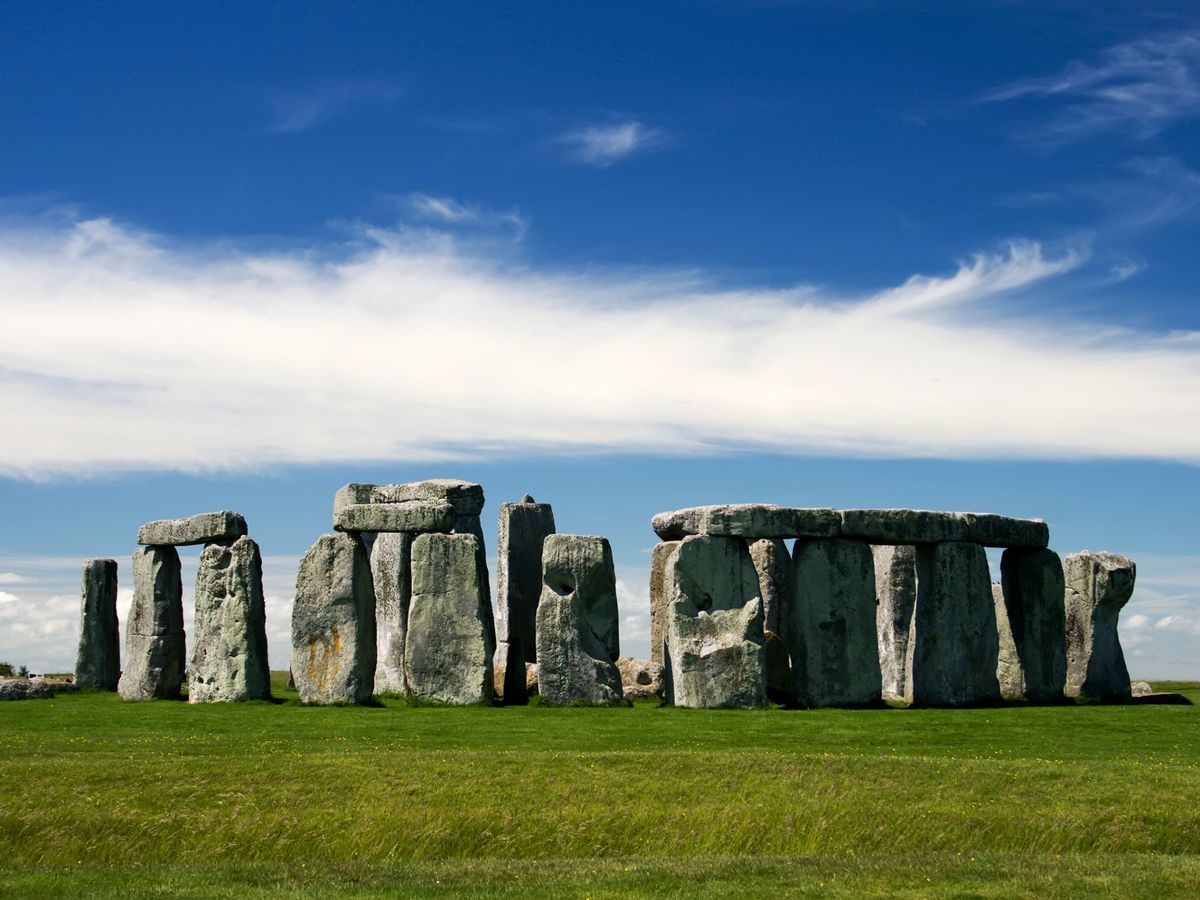
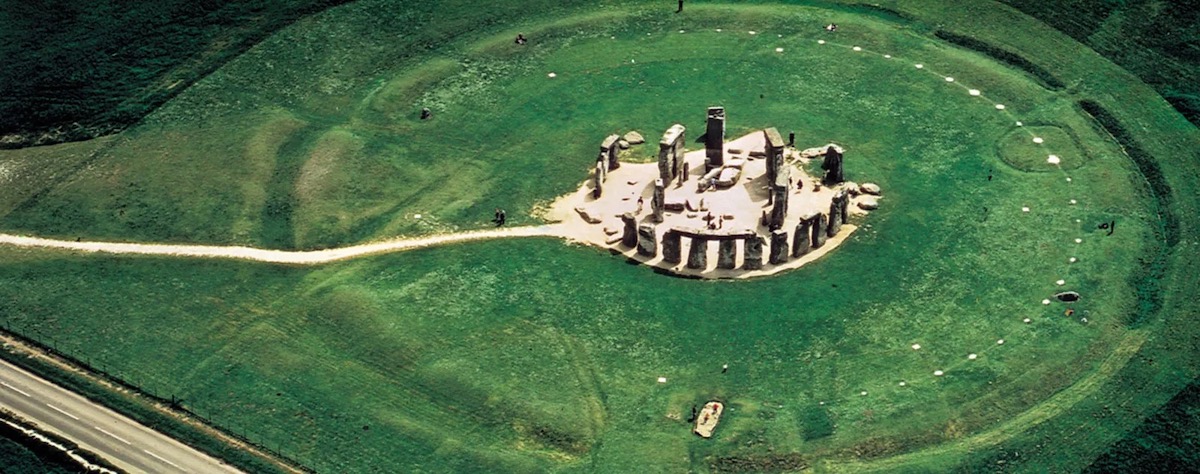
The first major monument at Stonehenge was constructed around 3000 BC. Using primitive tools fashioned from deer antlers, its builders excavated a massive circular ditch, nearly 100 metres in diameter, piling the excavated chalk into an inner and outer bank. This earthwork enclosure, an early form of henge, had two entrances. Just inside the inner bank, a ring of 56 pits was dug, known today as the Aubrey Holes, named after the 17th-century antiquarian John Aubrey who first identified them. For many years, it was believed these holes held timber posts, but recent theories suggest some may have held bluestones even at this early stage. What is certain is that for several hundred years, this first henge served as a large cremation cemetery. The remains of at least 60 individuals have been found within the Aubrey Holes and the surrounding ditch, making Stonehenge the largest known cemetery of the 3rd millennium BC in Britain. This initial phase represents a place of communal remembrance, a monument dedicated to the collective dead.
Phase 2: The Arrival of the Beaker People (c. 2500–2400 BC)
Around 2500 BC, a profound cultural shift occurred across Britain, coinciding with the most dramatic transformation of the Stonehenge site. New people arrived from continental Europe, bringing with them knowledge of metalworking and distinctive ‘Beaker’ pottery. They also brought new beliefs about the afterlife, favouring the burial of individuals in single graves accompanied by prestigious goods. This change is starkly illustrated in the landscape around Stonehenge, where richly furnished graves from this period have been discovered, including that of the ‘Amesbury Archer’, a man buried with gold ornaments and copper tools who had travelled from the Alpine region of Europe. It was during this period of immense social change that the decision was made to transform the ancestral cemetery into the monumental stone circle we know today.
Phase 3: The Age of Megaliths (c. 2500–1600 BC)
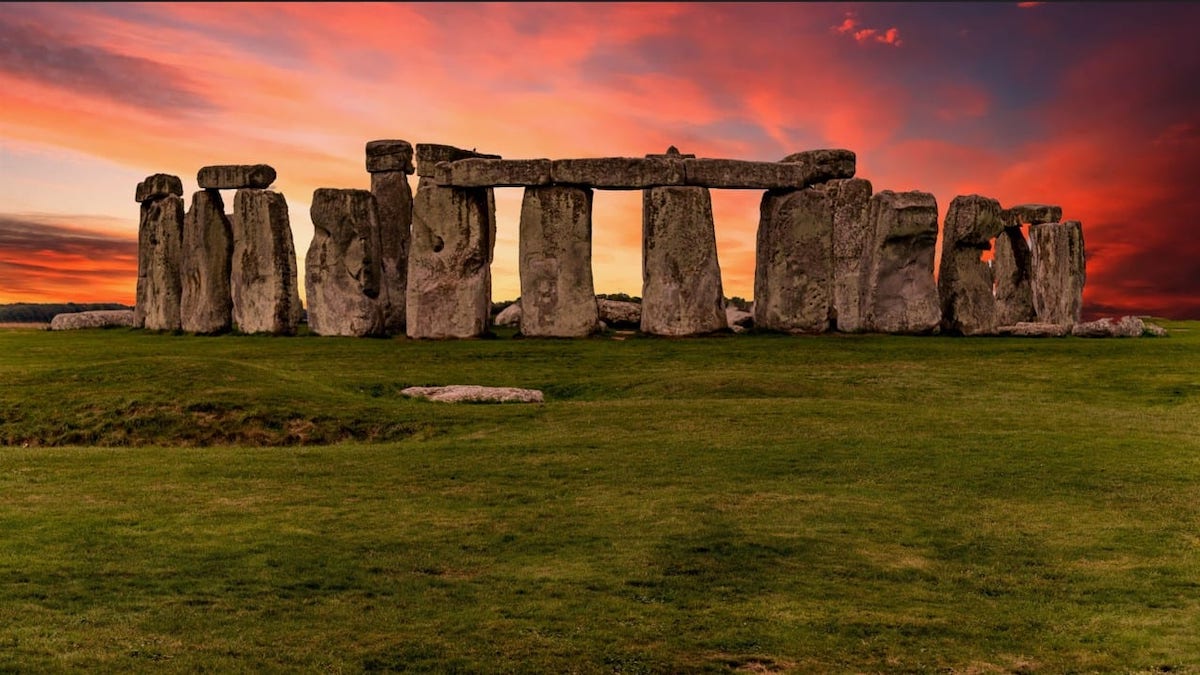
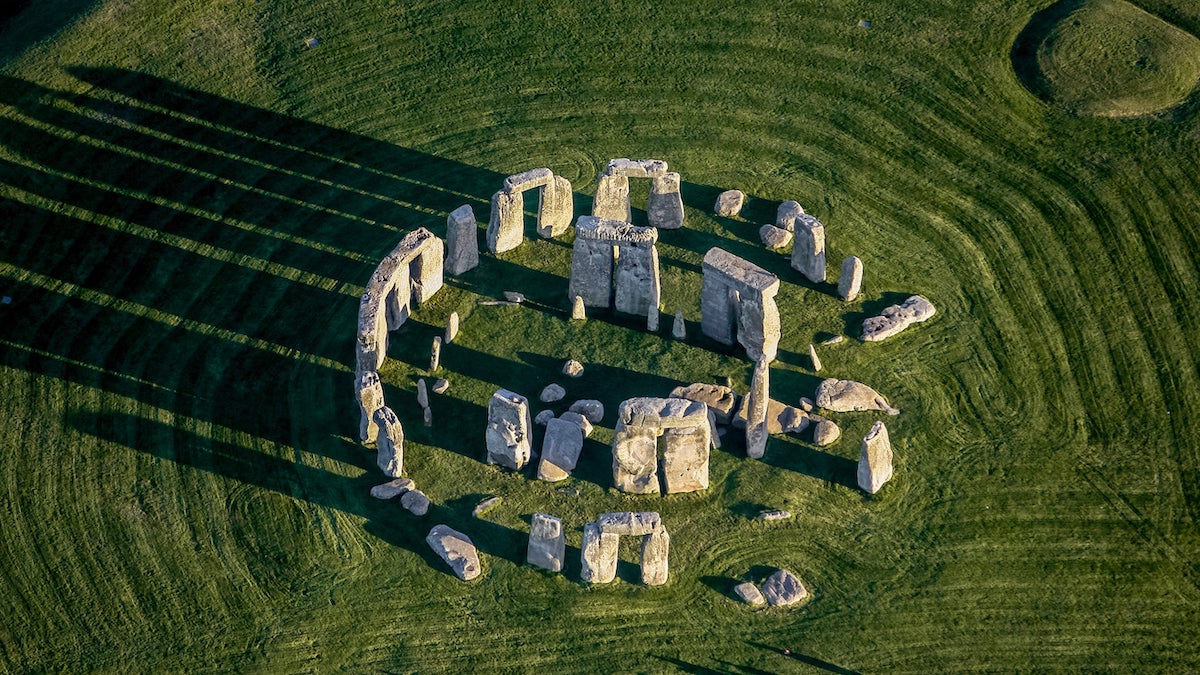
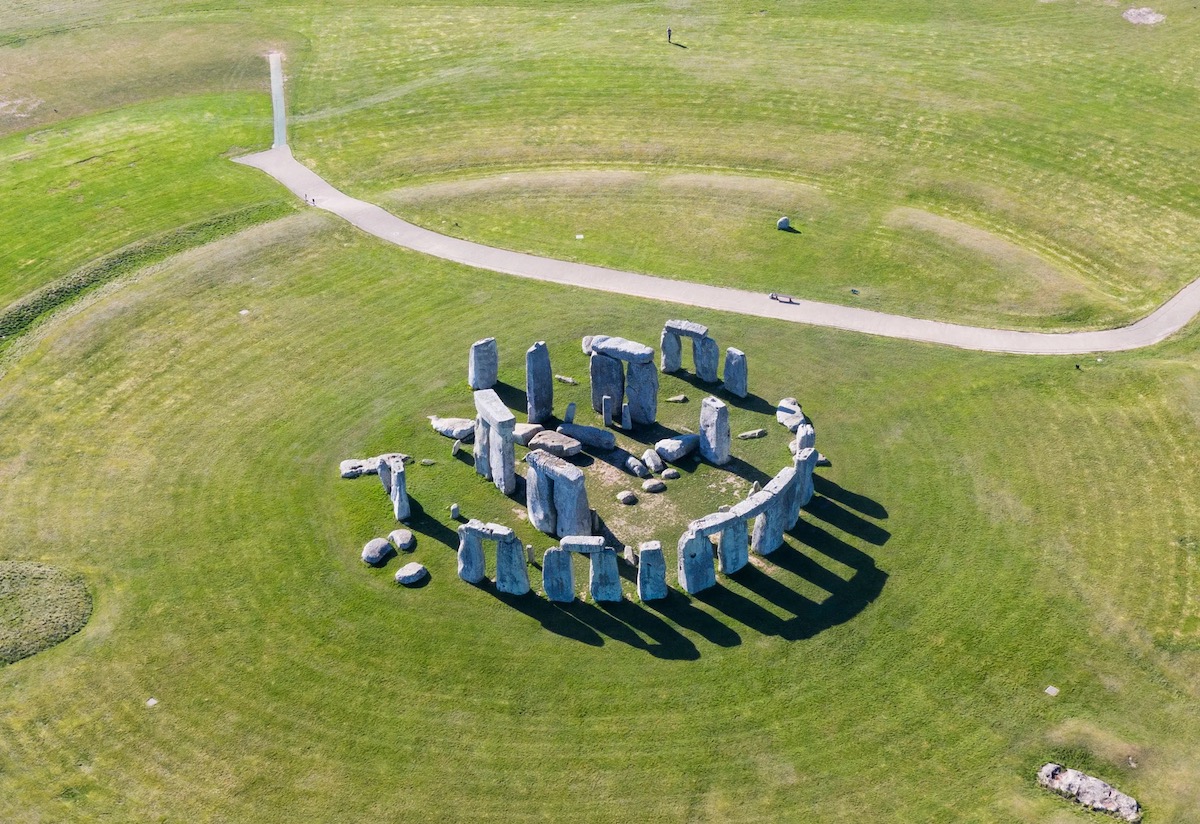
This final, major phase of construction was a multigenerational undertaking of breathtaking ambition. Over 80 colossal sarsen stones were transported to the site and erected in the centre of the henge. They were arranged into the iconic outer circle with its continuous lintels and an inner horseshoe of five massive trilithons—each comprising two upright stones capped by a third. The smaller bluestones were also brought to the site and arranged in a double arc between the sarsen settings. Over the following centuries, these bluestones were rearranged into their current configuration of an inner circle and horseshoe. A great ceremonial Avenue was also constructed, forming a processional route nearly 3 km long that connected Stonehenge to the River Avon. The monument’s purpose had clearly evolved from a cemetery to a grand temple, its architecture reflecting a new, more hierarchical society with the power to command immense resources and labour.

Later History
Even after the main construction ceased, Stonehenge continued to be a focus of activity. Around 1750–1500 BC, during the Bronze Age, carvings of over 100 axe-heads and a few daggers were etched onto the surfaces of some of the sarsens, perhaps as symbols of power or status. Gradually, however, communal effort shifted away from building great ceremonial monuments and towards more practical concerns like creating fields for agriculture. The monument fell into disuse and disrepair over the centuries, fascinating later Roman visitors and medieval writers but suffering from the ravages of time. After being in private ownership for centuries, it was gifted to the nation in 1918 by a local man named Cecil Chubb. Today, it is cared for by English Heritage, ensuring its preservation for future generations to ponder.
The Great Stone Debate: A Tale of Two Herculean Journeys
The story of how the stones arrived at Stonehenge is a scientific detective story, a tale of logistical marvels and enduring controversy. It is a narrative that pits a romantic vision of Neolithic determination against a more pragmatic story of geological chance, and the truth of how the bluestones, in particular, made their journey remains one of the monument’s most fiercely debated secrets.
The Local Titans: Sourcing the Sarsens
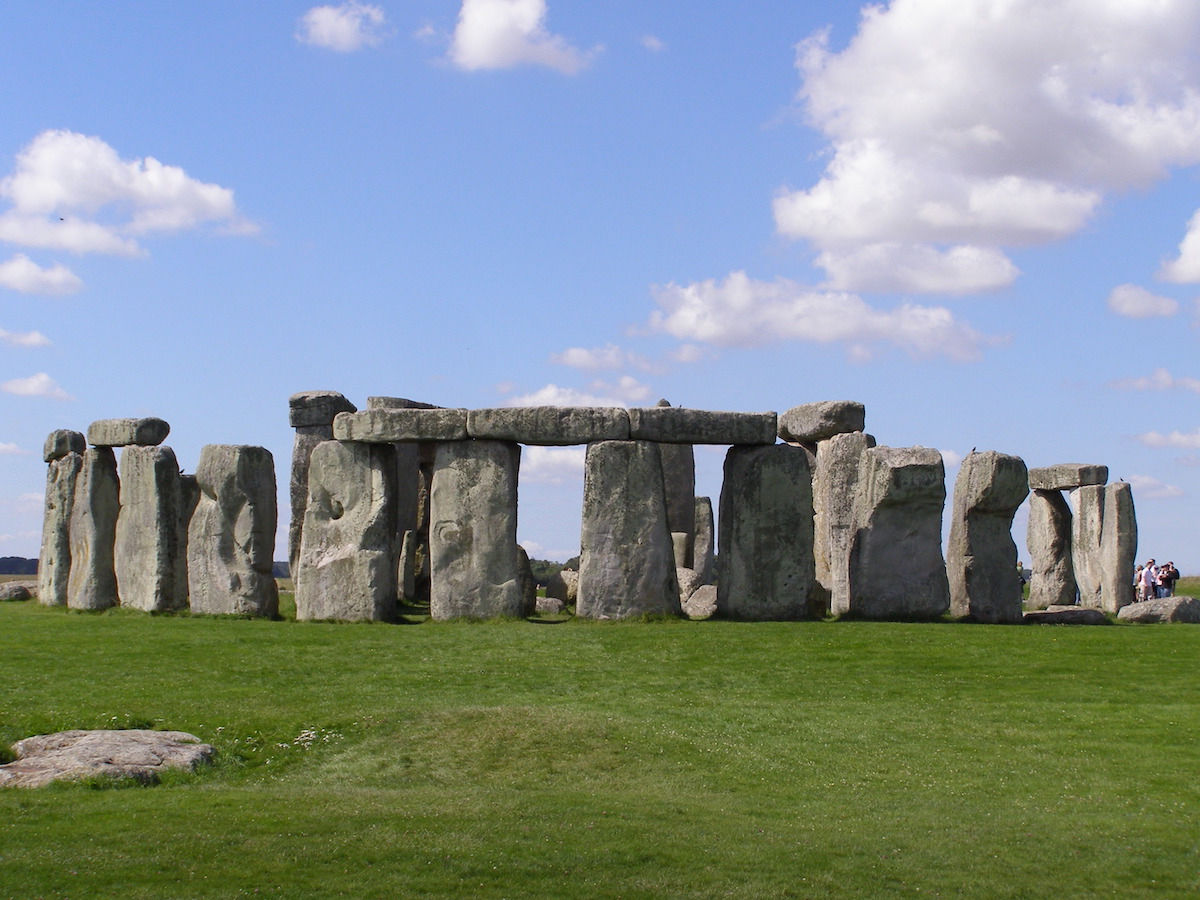
The colossal stones that form the main architecture of Stonehenge are known as sarsens. These are a type of silcrete sandstone, incredibly hard and durable. The uprights of the outer circle weigh an average of 25 tons, while the largest stones of the central trilithons can weigh up to 50 tons. For centuries, it was assumed these megaliths were sourced from the Marlborough Downs, some 20 miles (32 km) to the north, the closest area with an abundance of large sarsen boulders.
This long-held theory was dramatically confirmed and refined in 2020. A scientific team used a novel geochemical analysis, comparing the chemical signature of the sarsens at Stonehenge with that of boulders from across southern England. The results were conclusive: 50 of the 52 sarsens came from a common source, and that source was pinpointed to a specific area known as West Woods, about 15 miles (25 km) north of the monument. This discovery was a major breakthrough, solving a 400-year-old mystery. The feat of transporting these giants remains staggering. With no wheels or metal tools, hundreds of people would have been needed to move each stone, likely using a combination of wooden sledges, log rollers, ropes, and sheer human force over a landscape of hills and valleys—an undertaking of immense organisation and social cohesion.

The Welsh Wanderers: The Mystery of the Bluestones
If the journey of the sarsens was a challenge, the story of the smaller ‘bluestones’ is an epic. This term refers to around 43 stones of various igneous and volcanic rock types, each weighing between 2 and 5 tons. Their geological origin is not in doubt: they have been definitively traced to the Preseli Hills in Pembrokeshire, south-west Wales, over 150 miles (240 km) away. How they completed this incredible journey is the subject of two competing and compelling theories.
Theory 1: The Epic Human Feat
The dominant archaeological theory for nearly a century has been that Neolithic people transported the bluestones themselves in an unparalleled feat of prehistoric engineering and devotion. Proponents of this view argue that the stones were quarried from specific outcrops in the Preseli Hills and then moved overland and by water—perhaps on rafts down the Bristol Channel and up the River Avon—to Salisbury Plain. This theory is supported by the discovery of what appear to be Neolithic quarries in the Preseli Hills and, most tantalisingly, the remains of a dismantled stone circle at a site called Waun Mawn. Archaeological evidence suggests this Welsh circle was taken down just before the bluestones appeared at Stonehenge, leading to the theory that it was the original monument, moved wholesale as a symbol of ancestral identity by a migrating community.
Theory 2: The Glacial Transport Hypothesis
A compelling counter-argument, long championed by a number of geologists, proposes a natural, rather than human, agent of transport: ice. According to this hypothesis, the bluestones were not quarried by humans in Wales but were instead scraped from the Preseli Hills by a massive glacier during a past Ice Age, perhaps as long as 400,000 years ago. This glacier would have carried the stones eastwards, eventually melting and depositing them on Salisbury Plain as ‘glacial erratic’. The builders of Stonehenge would then have found these sacred or unusual stones available locally, collecting them from the surrounding landscape. Evidence for this theory includes the sheer variety of bluestone rock types at the monument, which seems more consistent with a jumbled glacial deposit than a selective quarrying operation. This debate fundamentally alters our perception of the builders. Were they undertaking a legendary pilgrimage to bring sacred stones from an ancestral homeland, or were they pragmatically using remarkable materials that nature had conveniently delivered to their doorstep? The answer remains buried in time.

The Eternal Question: Decoding the Purpose of the Stones
For as long as people have gazed upon Stonehenge, they have asked what it was for. Early theories, now disproven, imagined it as a temple for Druids or a creation of the wizard Merlin. Modern archaeology has moved beyond such myths, but the monument’s true purpose remains a subject of intense study. The most profound modern understanding suggests that Stonehenge was not a single-purpose structure but a complex, multi-functional site whose meaning is found not in isolation, but in its relationship to the vast ritual landscape surrounding it.
An Ancient Observatory
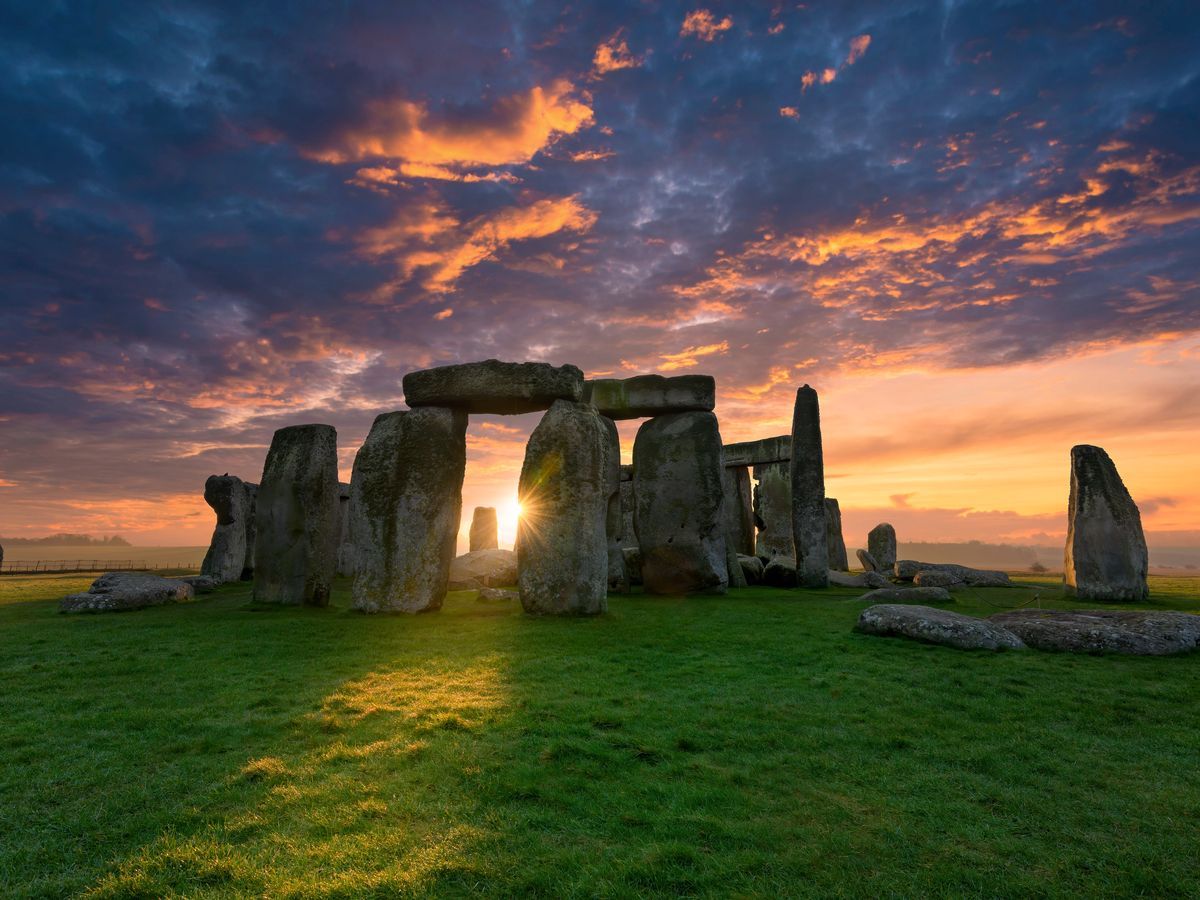
The most famous theory about Stonehenge is that it was a sophisticated astronomical observatory or calendar. This idea is rooted in the monument’s most dramatic feature: its precise alignment with the movements of the sun. On the longest day of the year, the summer solstice, the rising sun appears directly over the Heel Stone, which stands just outside the main circle. On the shortest day, the winter solstice, the setting sun aligns perfectly through the heart of the great trilithons. In the 1960s, astronomer Gerald Hawkins identified 165 separate points on the monument that he claimed aligned with solar and lunar events, suggesting it could be used to predict eclipses. While few modern archaeologists believe it was a scientific ‘computer’ in this sense, its role in memorialising these key celestial events is undeniable. The solstices likely marked crucial turning points in the annual cycle for these farming communities, symbolising themes of life, death, and rebirth.
A Prehistoric Lourdes
Another compelling theory suggests Stonehenge was a place of healing, a Neolithic ‘Lourdes’ where people travelled from far and wide seeking cures for their ailments. This theory is closely tied to the bluestones. The immense effort required to transport them from Wales suggests they were considered to have extraordinary, perhaps magical, properties. The Preseli Hills, their source, are known for their many natural springs, which were often associated with healing in the ancient world. Evidence at Stonehenge supports this idea: a number of the skeletons buried there show signs of serious injury or disease, suggesting they had made a pilgrimage to the site in hope of a cure. Furthermore, archaeologists have found many small chippings of bluestone around the monument that appear to have been deliberately carved off, possibly to be kept as protective amulets.

A Realm of the Ancestors
The leading modern theory, developed by archaeologist Mike Parker Pearson and the Stonehenge Riverside Project, synthesises many of these ideas into a grand, unified vision. It posits that Stonehenge was one half of a vast ritual complex, a ‘domain of the dead’, which stood in direct contrast to a nearby ‘domain of the living’ at Durrington Walls.
- Durrington Walls: Located 2 miles north-east of Stonehenge, this was a huge settlement where the builders of the stone circle lived and feasted. Its own monuments, including a large henge and timber circles, were built of wood—a perishable material symbolising the transient nature of life. Its alignments are oriented towards the sunrise at the winter solstice, celebrating rebirth and the beginning of the new year.
- Stonehenge: In contrast, Stonehenge was built of stone—an eternal, unchanging material representing the permanence of the afterlife. It was a place for the dead, as evidenced by the hundreds of cremation burials found there. Its primary alignment is towards the sunset at the winter solstice, marking the death of the old year and the passage into the other world.
The River Avon, which flows near both sites, is believed to have been the ceremonial link between these two realms. Processions may have travelled along the river, making a symbolic journey from the world of the living at Durrington Walls to the world of the ancestors at Stonehenge. This holistic view reveals a sophisticated and deeply symbolic cosmology, where the entire landscape was a map of the people’s beliefs about life, death, and the cosmos.
The Living Landscape: New Secrets Unearthed
The story of Stonehenge is not confined to the past; it is a narrative that is still being written. The ground beneath Salisbury Plain is an unread manuscript, and 21st-century technology is providing archaeologists with revolutionary tools to decipher it. Far from being a static monument whose secrets have all been told, Stonehenge is the centre of a dynamic, active field of discovery, with new revelations transforming our understanding of this ancient landscape.
The “Stonehenge Hidden Landscapes Project” has been at the forefront of this new wave of research. Using advanced, non-invasive technologies like ground-penetrating radar, magnetometry, and remote sensing, a consortium of archaeologists has been able to map the landscape in unprecedented detail without digging a single trench. This work led to an astonishing discovery in 2020.
Hidden in terabytes of data were anomalies suggesting the presence of a series of massive pits encircling the ‘super henge’ at Durrington Walls. Subsequent fieldwork confirmed their existence and staggering scale. Archaeologists have identified a ring of at least 20 enormous prehistoric shafts, with estimates suggesting there may have been more than 30 originally. Each shaft measures over 10 metres in diameter and 5 metres deep, dug into the hard chalk bedrock around 4,500 years ago.
Together, these pits form a vast circle spanning 2 km (1.2 miles) in diameter, with the Durrington Walls henge precisely at its centre. This makes it the largest prehistoric structure ever discovered in Britain, dwarfing Stonehenge itself by a factor of 20. Archaeologists believe this ring of shafts acted as a massive boundary, guiding people towards the sacred ceremonial area at its heart and warning others to keep their distance. The discovery is significant not only for its scale but also for what it reveals about the society that created it. To lay out such a vast and geometrically precise circuit demonstrates a sophisticated understanding of counting and surveying, a form of Neolithic sacred geometry operating on a scale previously unimagined. This find fundamentally expands our concept of the Stonehenge landscape, proving that what we know today may only be a fraction of the secrets it still holds.

Your Journey to the Stones: A Practical Guide from Bournemouth
A trip to Stonehenge from the south coast is a straightforward and rewarding day out. Located just under 40 miles from Bournemouth, the journey is an easy one, with several options to suit different preferences and budgets.
To help plan the journey, the following table provides a comparison of the main travel options from Bournemouth:
| Mode of Transport | Estimated Journey Time (One Way) | Estimated Cost (Return) | Key Considerations & Benefits |
| By Car | ~ 1 hour | £10-£15 (petrol) + £3 parking | Most flexible; allows for exploring the wider area. Best for families or groups. |
| Train & Bus | ~ 2 hours | £40-£60 (train + tour bus) | Relaxing and scenic journey. Avoids driving and parking hassle. Tour bus includes Old Sarum. |
| Direct Coach Tour | Full Day | £60-£80+ | All-inclusive (transport & entry). Guided experience. Hassle-free but least flexible. |
Option 1: The Freedom of the Road (By Car)
Driving is the quickest and most flexible way to reach Stonehenge. The journey typically takes around an hour.
- Route: The most direct route is to take the A338 north from Bournemouth towards Salisbury. From Salisbury, follow the A303 westward towards Amesbury. Stonehenge is well-signposted with brown and white tourist signs from the A303.
- Sat Nav: For satellite navigation systems, the official postcode for the Stonehenge Visitor Centre is SP4 7DE.
- Parking: On-site parking is available. There is a £3 charge for non-members of English Heritage. It is highly recommended to download the PayByPhone app in advance to make payment simple. English Heritage members park for free but must display their membership sticker in their vehicle window.
Option 2: The Scenic Route (By Public Transport)
For a more relaxing journey without the need to drive or park, public transport is an excellent option. The trip is made in two stages.
- Step 1: Train to Salisbury. The journey begins with a train from Bournemouth to Salisbury. Services are run by Southwestern Railway and Cross Country. The trip usually requires a change at Southampton Central, and the total journey time is approximately 1 hour and 30 minutes. An alternative is the Morebus X3 service, which runs directly from Bournemouth to Salisbury.
- Step 2: The Stonehenge Tour Bus. From Salisbury, the dedicated Stonehenge Tour Bus, operated by Salisbury Reds, provides the final leg of the journey. The bus departs hourly directly from the forecourt of Salisbury railway station and also picks up in the city centre. It is a hop-on, hop-off service that also stops at the historic site of Old Sarum. An all-in-one ticket can be purchased, which conveniently covers both the bus journey and admission to Stonehenge. The bus journey itself takes about 30 minutes.
Option 3: The Guided Experience (Coach Tours)
For those who prefer a fully organised day, several companies offer coach tours directly from Bournemouth. These tours typically include round-trip transport and admission to Stonehenge, and often combine the visit with other nearby attractions like the city of Bath or Salisbury Cathedral. For example, Yonder Tours offers a full-day trip to Stonehenge and Bath departing from the Bournemouth Interchange coach station at 8:30 AM. This is an ideal, hassle-free option for visitors wanting a comprehensive guided experience.
Planning the Perfect Visit
- Booking: It is essential to pre-book tickets online via the English Heritage website. Visitor numbers are limited for each time slot to ensure a better experience, so booking in advance is highly recommended to avoid disappointment.
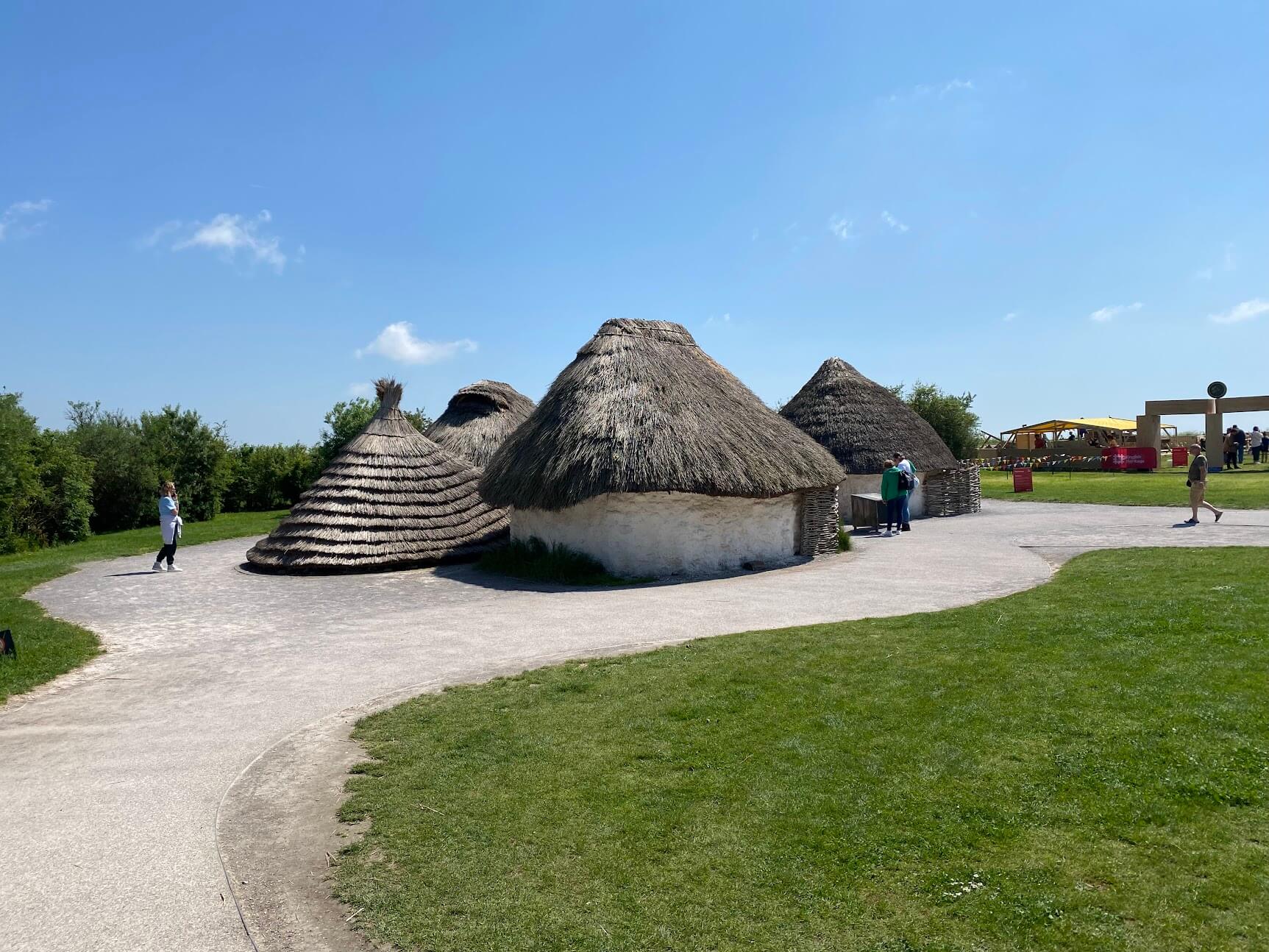
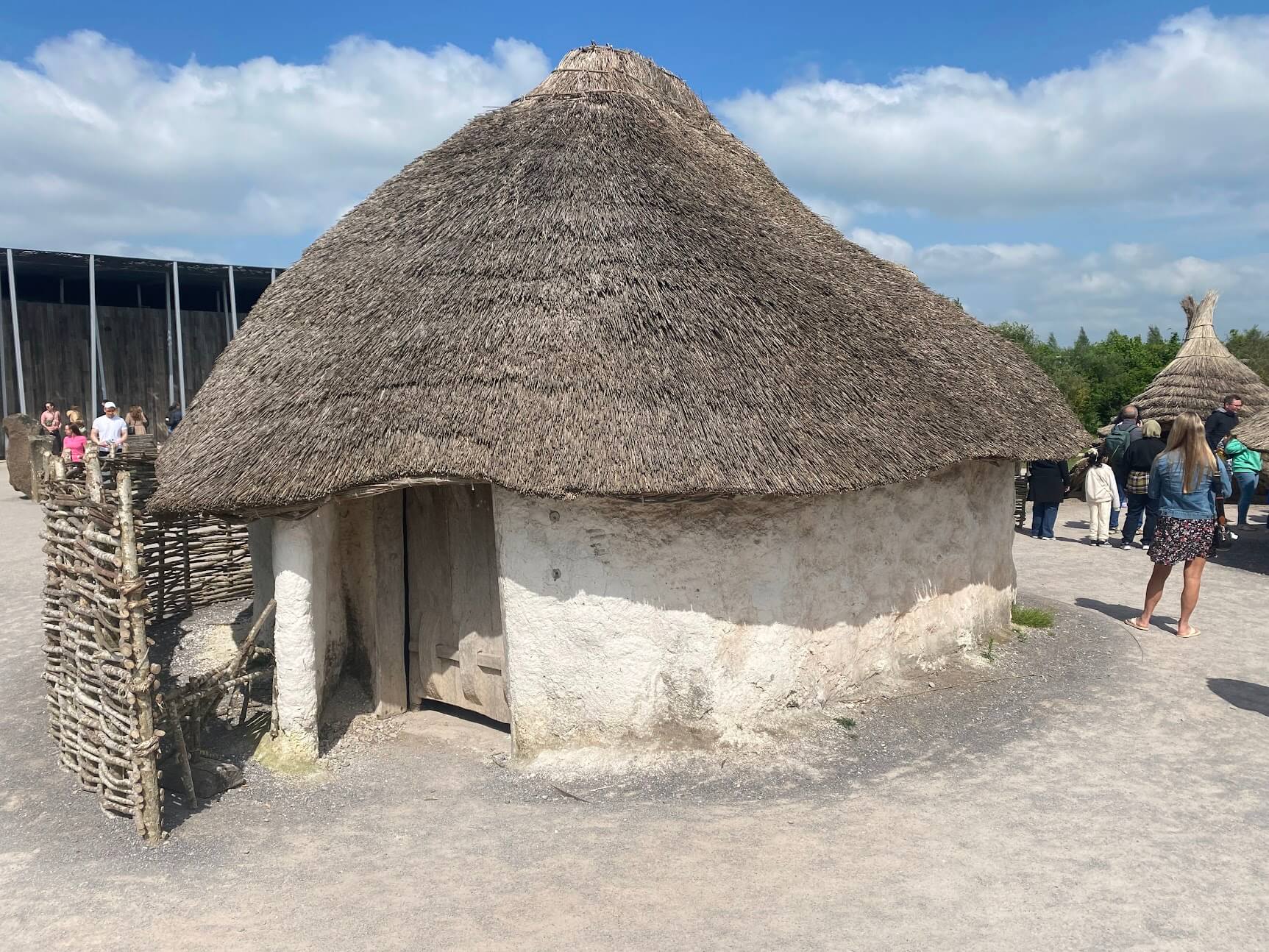
- Visitor Centre: Before heading to the stones themselves, allow plenty of time to explore the world-class visitor centre. The exhibition features nearly 300 archaeological artefacts found in the surrounding landscape, including pottery, tools, and jewellery. A highlight is the forensic reconstruction of the face of a Neolithic man who lived 5,500 years ago. Outside, a cluster of reconstructed Neolithic houses offers a glimpse into how the builders of Stonehenge might have lived.
- Facilities: The visitor centre is well-equipped with a large café serving hot and cold food, a gift shop, toilets, and designated picnic areas.
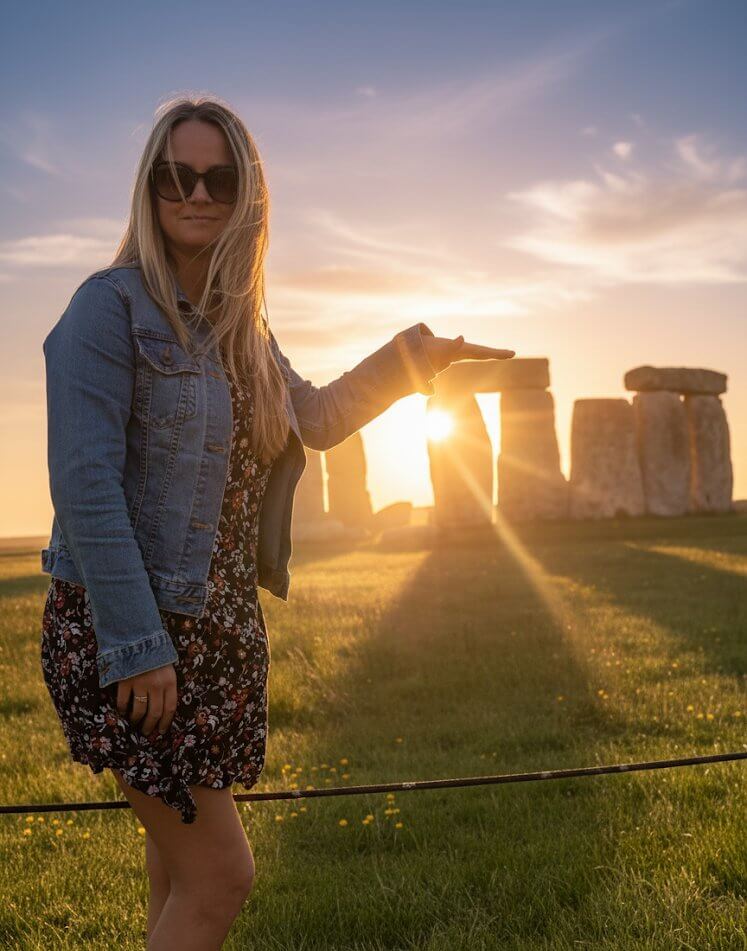
- Insider Tip: To enhance the visit, download the free audio guide from the App Store or Google Play in advance. It is available in 12 languages and provides fascinating commentary as one walk around the monument. For a truly unforgettable experience, consider booking the exclusive “Stone Circle Experience,” which allows small groups to go inside the stone circle itself for a tour at sunrise or sunset, outside of normal public opening hours.
Conclusion: Feeling the Echoes of the Past
A journey to Stonehenge is a journey back in time. From the first breathtaking glimpse of the stones rising from the plain, through the millennia of their complex history, to the cutting-edge science that continues to unearth their secrets, the monument captivates and confounds in equal measure. Despite all that has been learned about its construction, its alignments, and its people, the central, animating mystery of why remains. It is this enduring enigma that gives Stonehenge its unique and powerful mystique.
To stand before the Stone Circle is more than an item on a travel itinerary; it is an opportunity for profound reflection. It is a moment to contemplate the immense ambition and deep spiritual conviction of a people who lived over 4,000 years ago, and to feel a tangible connection to the unbroken chain of human history that has unfolded on this sacred spot. Visiting Stonehenge is about standing in the presence of giants and listening to the silent, powerful echoes of a world long vanished, yet still deeply, inexplicably, connected to our own.
Leave a Reply
You must be logged in to post a comment.