
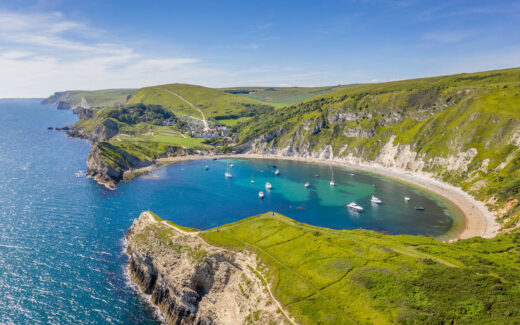
Have you ever seen a place that just stops you in your tracks and makes you stare in awe? For me, that place is Lulworth Cove. Nestled on Dorset’s stunning Jurassic Coast, a UNESCO World Heritage Site, this almost perfectly circular bay with its turquoise water is like something straight out of a fairy tale.

But Lulworth is so much more than just a pretty view. It’s a place where you can literally touch millions of years of Earth’s history, feel the same sea breeze that greeted Roman soldiers and even smugglers, and walk the paths where dinosaurs once roamed. Come on, let me tell you why this spot should be at the very top of your UK travel list.
How Was This Natural Wonder Formed? (Geology for the Curious)
The story of Lulworth Cove is absolutely fascinating! Imagine stepping back 10,000 years to the end of the last Ice Age. A huge river, swollen with glacial meltwater, punched through the hard outer layer of Portland limestone that ran parallel to the coast.

Once the river carved its path to the sea, the waves began to pour in, rapidly eroding the much softer clays and sands that lay behind the hard barrier. The result? The beautiful, almost perfectly circular cove we see today. It’s a textbook example of what geologists call a concordant coastline.
As you stroll along the beach, look out for the incredible folded rock layers in the cliffs, known as the ‘Lulworth Crumple’. These rocks were literally squashed and bent millions of years ago when the African and European tectonic plates collided. You’re standing in a place that is a living testament to the powerful forces that shape our planet.

Things You Absolutely Must Do
Lulworth Cove and its surroundings offer a wealth of things to see and do. Here are my favourites:
1. The Classic Walk to Durdle Door
You can’t visit Lulworth and not see its famous neighbour! The South West Coast Path leading to Durdle Door is steep, but the views along the way are worth every single step. After about a 20-30 minute climb, you’ll be greeted by one of the most iconic rock arches in the world. The view over Durdle Door and the adjacent Man O’ War bay is simply breathtaking. Bring sturdy shoes!

2. Explore the Cove Itself
The calm, sheltered waters of Lulworth Cove are perfect for a swim on warmer days. It’s also a fantastic spot for kayaking or paddleboarding, allowing you to see the cliffs from a completely different perspective. At low tide, the pebble beach reveals numerous rock pools teeming with marine life. It’s great fun for the whole family!
3. A Journey Back in Time to the Fossil Forest
To the east of the cove lies one of the most remarkable sites on the Jurassic Coast – the Fossil Forest. This isn’t a forest in the modern sense. These are the fossilised remains of cypress tree stumps that grew here 145 million years ago! These incredible, doughnut-like rock formations are the remnants of an ancient forest that was flooded by the sea.
Important Tip: The Fossil Forest is located on the Lulworth Ranges military firing grounds. Access is only possible on most weekends and during school holidays. Always check the official opening dates before you set off!
4. Peek into Stair Hole
Just next to Lulworth Cove, you’ll find Stair Hole, which looks like a ‘cove in the making’. It’s a fantastic place to get an up-close look at the folded rock strata and understand how the forces of nature are slowly carving out caves and arches that might one day become another cove.

Practical Tips for Your Trip
- Parking: There is a large pay-and-display car park by the visitor centre, but it fills up very quickly during peak season and on sunny weekends. Arrive early to guarantee a space.
- What to eat: In the village of West Lulworth, right by the cove, you’ll find several charming pubs and cafes, perfect for lunch or a pint of local ale after a long walk.
- Safety: The cliffs are beautiful but can be unstable. Always stay well away from the base of the cliffs and pay attention to any warning signs about rockfalls.
- Dogs: Good news for dog owners! Dogs are allowed on the beach at Lulworth Cove all year round (to the left of the main slipway).
Farewell to Lulworth
Lulworth Cove is a place with a unique kind of magic. It’s a rare combination of dramatic beauty, fascinating history, and pure, natural joy. Whether you’re a keen geologist, an avid hiker, or simply looking for one of the most beautiful spots in England to spend the day, Lulworth is sure to enchant you. So pack your boots, your camera, and your sense of wonder – an unforgettable adventure awaits!
Leave a Reply
You must be logged in to post a comment.